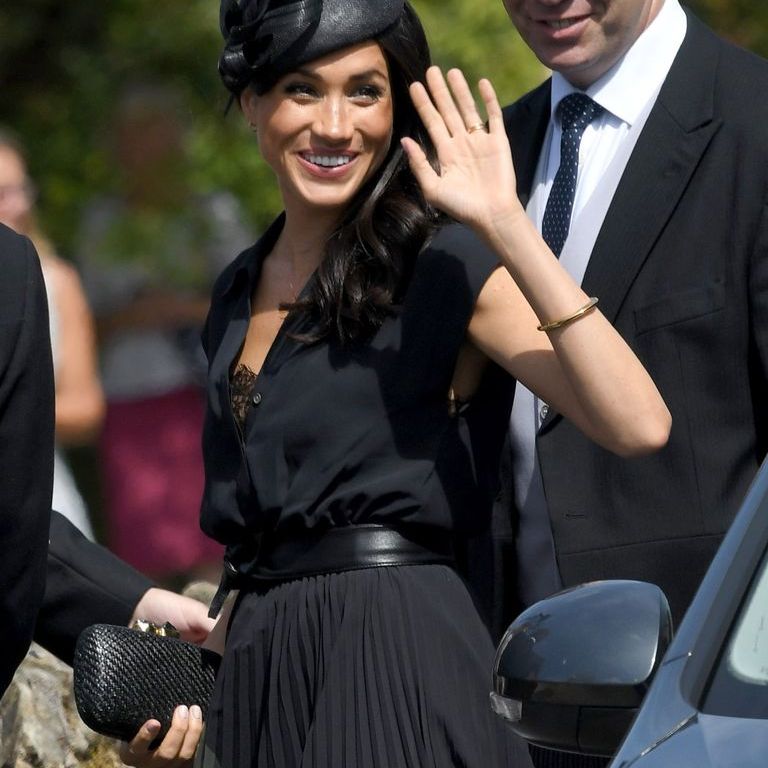
According to this awesome article, here is a list of all the things Meghan has done wrong! It is amazing how much the internet tells her to behave and it is awkward because why do they think they can?
- Racist Backlash and Invasion of Privacy: When Meghan was introduced as Prince Harry’s girlfriend, she faced racial abuse, invasion of privacy by paparazzi, and unfair media scrutiny.
- Criticism Over Attire: Meghan faced backlash for wearing trousers to an event, sparking sexist headlines about “who wears the trousers” in her relationship with Prince Harry.
- Predictions of Relationship Failure: Some public figures predicted Meghan would leave Prince Harry based on her previous divorce, sparking speculation about their relationship.
- Father’s Absence at the Wedding: Meghan’s announcement that her father would not attend her wedding led to media criticism and scrutiny of her family.
- Criticism of Wedding Dress: Meghan’s wedding dress was subject to harsh criticism, and celebrities’ comments, like Katy Perry’s preference for Kate Middleton’s dress, fueled negativity.
- Criticism for Seating Position: Media made headlines over Meghan’s seating posture at an event with the Queen, attempting to undermine her suitability for royal protocols.
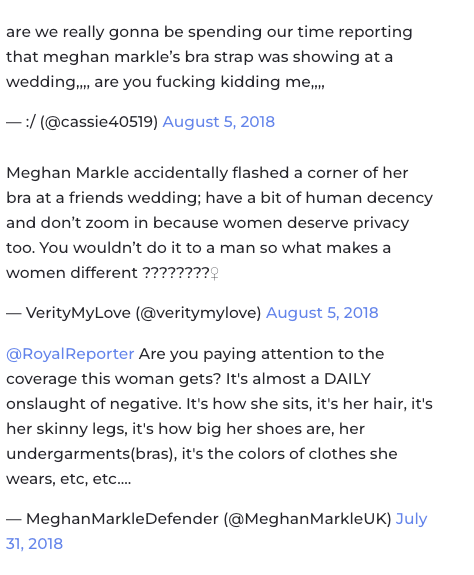
- Wardrobe Malfunctions: Meghan’s brief exposure of a bra strap led to unnecessary media attention and criticism.
- Comparisons with Kate Middleton: Endless comparisons were drawn between Meghan and Kate Middleton, often highlighting differences in their backgrounds, fueling racist and classist undertones.
- Criticism Over Fashion Choices: Meghan was criticized for wearing a one-shoulder dress, dark nail polish, and a preference for black clothes, all of which were portrayed as “controversial” or “inappropriate”.
- Avocado Toast Incident: Meghan was criticized for eating avocado on toast during a casual brunch with a friend, with media outlets finding fault with the simplicity of the meal.
- Christmas Card Controversy: Meghan faced criticism even for sending a Christmas card, with media outlets sensationalizing and finding fault with the card itself.
- Knee Controversy: Media sensationalized a photo of Meghan’s knees, suggesting they showed the ghostly face of her niece, Princess Charlotte.
- Blaming Meghan for Staff Departures: Reports implied Meghan’s alleged behavior led to staff quitting, despite denials from official sources.
- Pregnancy Criticism: Meghan was criticized for showing her pregnant belly, with the media branding it as “showy”.
- Closing a Car Door: Meghan’s act of closing her own car door sparked criticism on social media, with some considering it inappropriate for a royal.
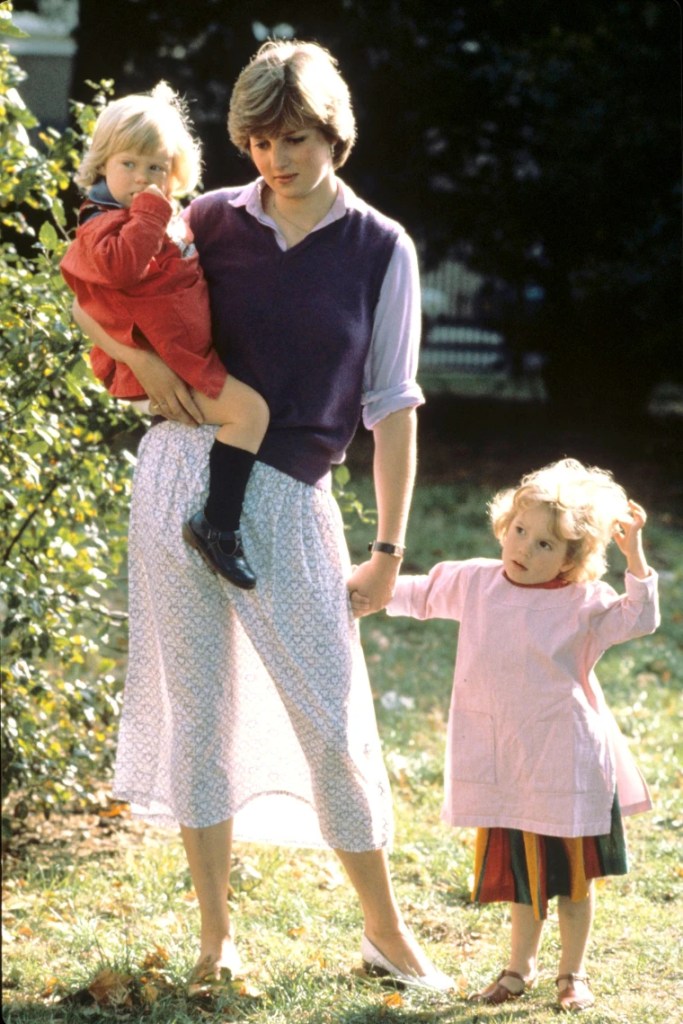
- See-Through Skirt Incident: The media sensationalized a slightly see-through skirt Meghan wore during a public appearance. See pictures below, it seems like a royal family tradition.
- Highlighting Meghan’s Previous Relationships: Tabloids emphasized Meghan’s past relationships, attempting to portray her negatively.
- Criticism Over Hair Extensions: Meghan’s use of hair extensions became a point of criticism in the media.
- Speculation About Meghan’s Diet: The media speculated about Meghan’s diet, even linking her to unauthorized endorsements for diet pills.
- Speculation of Relationship Troubles: Baseless claims of trouble in Meghan and Harry’s relationship were made by tabloids.
- Alleged Disrespect to the Queen: Reports exaggerated the Queen’s reaction to Harry and Meghan stepping back from royal duties, twisting the official statement into a tale of the Queen’s anguish.
- Feud with Kate Middleton: Tabloids misrepresented an incident, suggesting Meghan slammed a door on Kate Middleton, despite Meghan clarifying that Kate apologized and offered flowers after an incident.
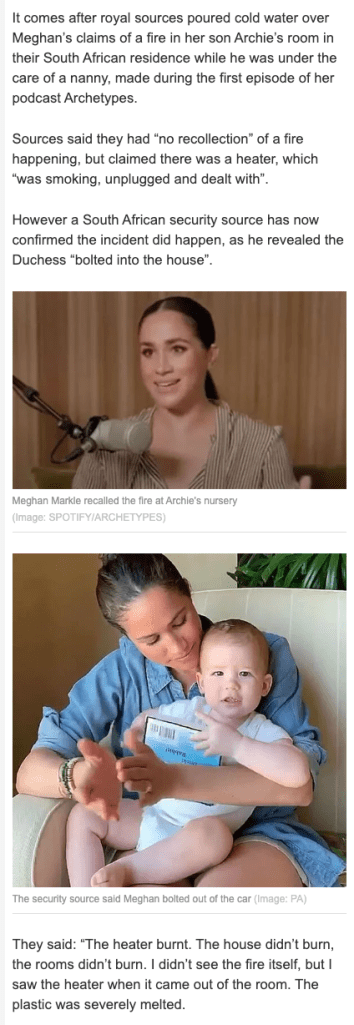
- Concern for Child’s Safety: Meghan expressed worry about a fire in her son’s room during a royal tour, which led to tabloid criticisms, although a South African security confirmed the incident.
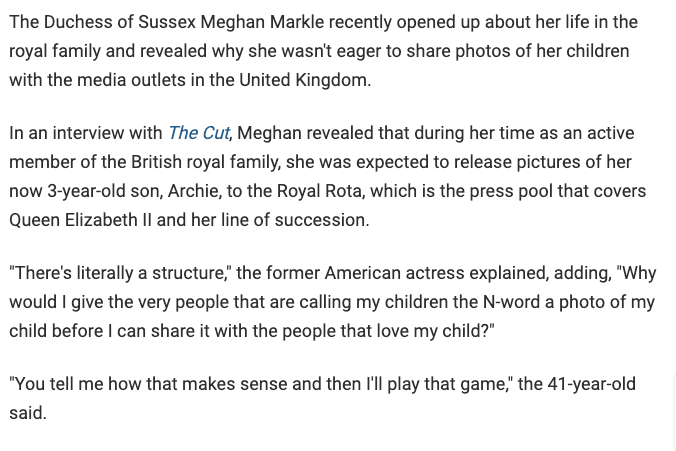
- Protecting Children’s Privacy: Meghan explained her reluctance to share her children’s photos with the media, citing the British press’s negative treatment and the Royal Rota system.
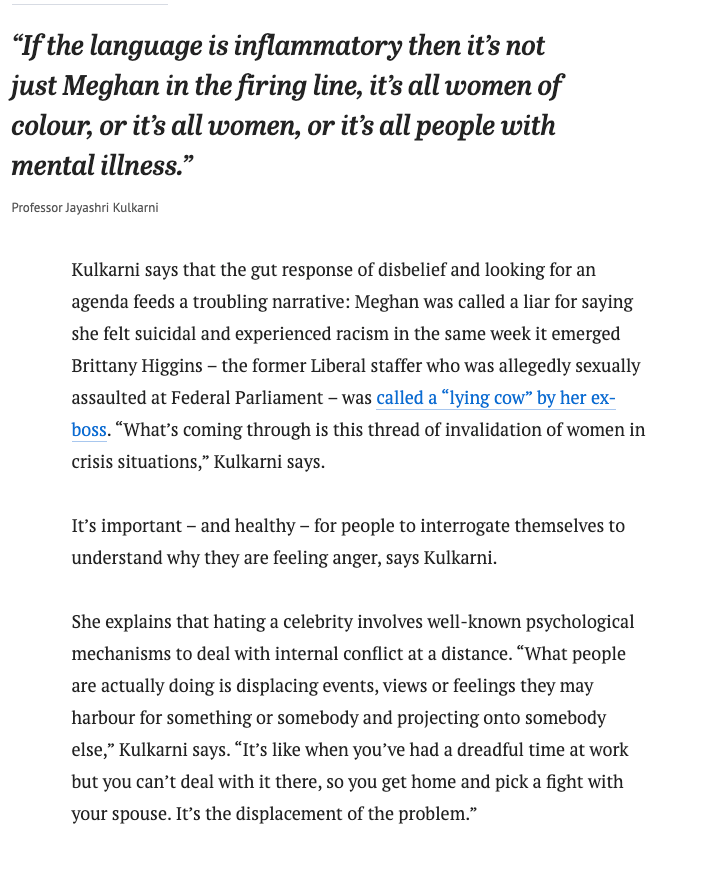
After Meghan Markle’s interview with Oprah Winfrey where she disclosed her struggles within the royal family, she faced intense criticism and hatred, particularly from conservative commentators and tabloids. Despite public support for her revelations about suicidal thoughts and concerns over her child’s skin color, Meghan has been subjected to significant vitriol.
Experts attribute this extreme dislike to several factors:
- Otherness and Stereotyping: Meghan embodies privilege, fame, and power, making her an outsider to the conservative image of a princess. Being a woman of color, smart, American, and a newcomer to the royal institution, she challenges norms, inviting disproportionate judgment and hatred.
- Media Influence: Relentless negative portrayals by tabloids, comparing her to other royals and pushing biased narratives, have built a negative public perception over the past three years, creating an audience ready to criticize her.
- Racism and Sexism: The hatred towards Meghan is deeply rooted in racism and sexism, even if not consciously acknowledged by individuals. Claims of her being manipulative or a gold digger reflect age-old stereotypes of women, contributing to the disproportionate disdain.
- Generational Divide: Younger generations tend to sympathize more with the Sussexes, acknowledging their experiences and struggles, while older generations might perceive the interview as a betrayal of traditional royal values and a disrespect to the Queen.
- Media Influence on Perception: The negativity directed at Meghan affects public perceptions of broader issues like racism, mental health, and gender biases, perpetuating hurtful stereotypes and discouraging open discussion.
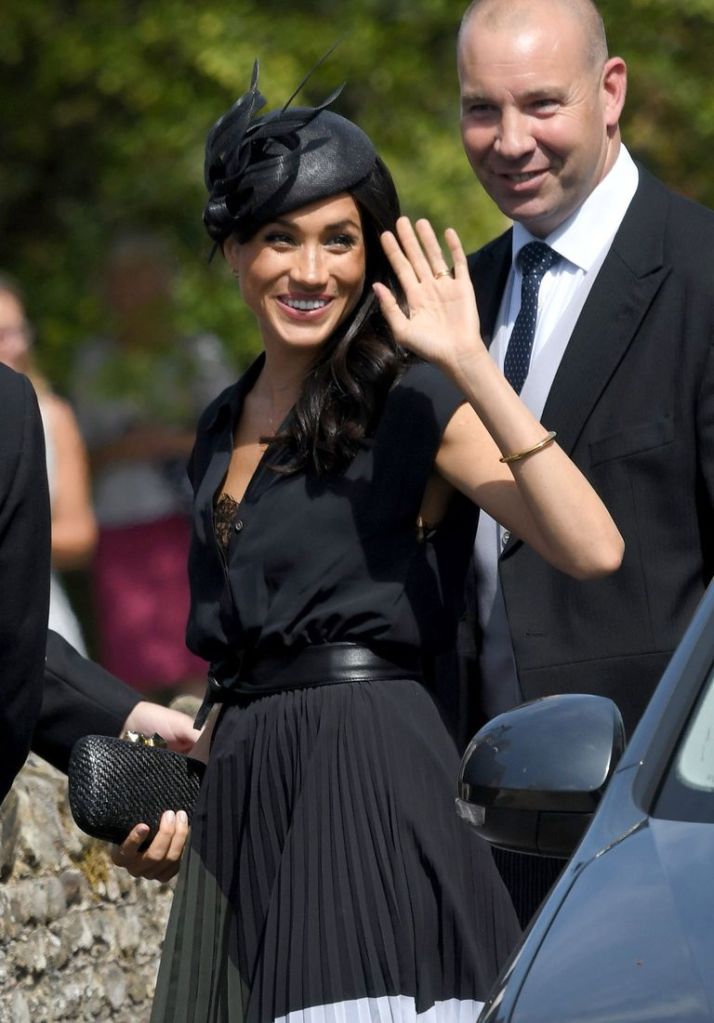
Getty Images

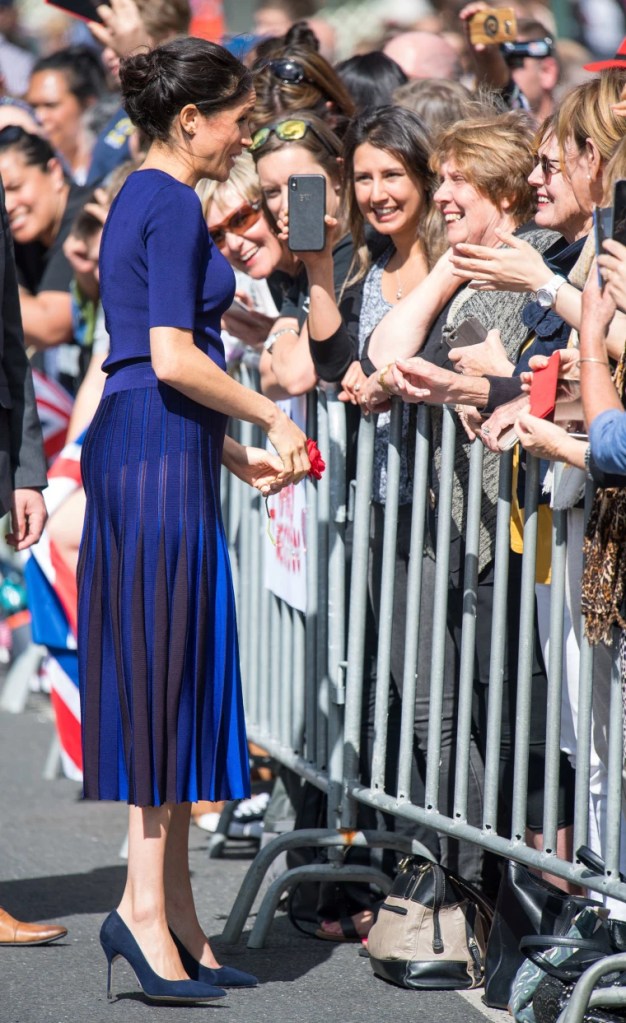
Meghan, Duchess of Sussex, during a walkabout in Rotorua on day four of the royal couple’s tour of New Zealand.Reuters

Kate Middleton may be an elegant, composed royal now, but we’ll never forget that sexy mesh dress she wore back in 2002 to catch the attention of Prince William. But according to fashion expert and auctioneer Kerry Taylor, that number was originally supposed to be worn as a skirt. Scandalous! “It was meant to be a skirt actually,” Taylor tells Us Weekly in the September 16 episode of Royally Us. “And she kind of yanked it up and wore it as a dress. You know, she had a great figure, so yeah, she definitely caught Prince William’s eye that night of the rest is history.”
https://www.usmagazine.com/stylish/news/kate-middletons-mesh-dress-was-supposed-to-be-a-skirt-details/
CONCLUSION
In conclusion, Meghan Markle’s journey as a member of the royal family has been fraught with relentless scrutiny, criticism, and unwarranted negativity from various quarters. From trivial fashion choices to significant personal disclosures, every aspect of her life seemed to attract public attention and criticism. Despite her efforts to navigate the challenges of royal life, Meghan faced intense hatred and backlash, which can be attributed to various factors.
The prejudice against Meghan stems from her divergence from the traditional image of a princess, as she embodies privilege, power, and challenges the status quo. Media influence, particularly negative portrayals in tabloids, significantly shaped public perception over time, leading to a preconceived notion of her character. Deep-seated racism and sexism, often implicit and ingrained in societal biases, played a pivotal role in fueling disproportionate disdain towards Meghan.
Additionally, a generational divide has emerged, with younger generations empathizing more with Meghan’s struggles, while older generations perceive her actions as a departure from traditional royal values. The impact of media perception extends beyond Meghan herself, affecting broader societal issues like racism, mental health, and gender biases by perpetuating hurtful stereotypes.
Despite these challenges, Meghan Markle’s experiences shed light on the importance of recognizing and confronting biases, media influence on public perception, and the complexities of navigating public life under intense scrutiny. Her journey serves as a reminder of the necessity for open discussion, empathy, and understanding in addressing societal prejudices and perceptions.
 celebchai.com