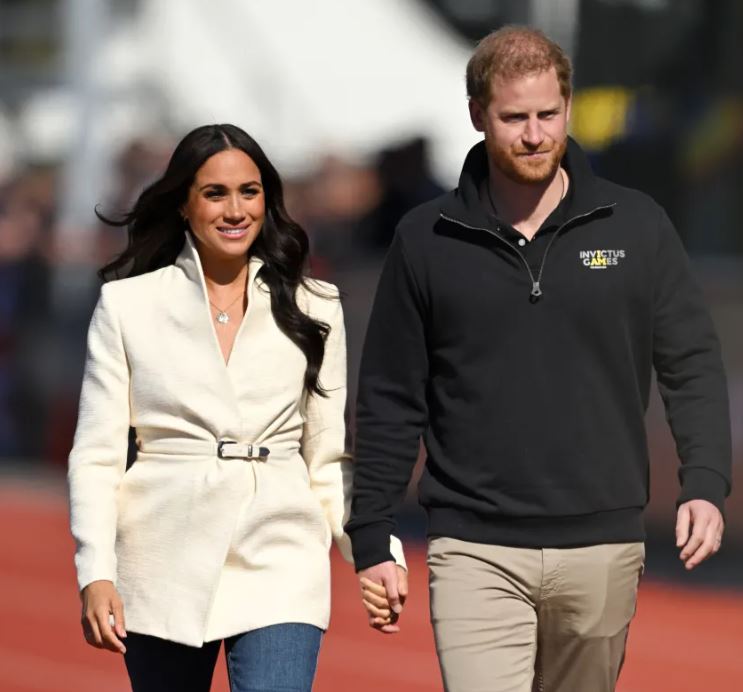
Prince Harry Court Case Win Articles’ Summary
Justice Fancourt establishes a connection between the “criminal media nexus,” involving corrupt cops, tabloid journalists, and private investigators, and the murders of Daniel Morgan and Stephen Lawrence. Derek Haslam, a former Met detective, played a crucial role as an undercover officer in the investigation into Daniel Morgan’s murder.
According to Haslam’s evidence presented in court, Jonathan Rees, co-founder of Southern Investigations, boasted about obtaining information through illegal means such as phone tapping and computer and phone hacking. Rees allegedly admitted to supplying hacked information to Mirror Group Newspapers (MGN). The text implicates Gary Jones, the current editor of the Express newspaper, as having been introduced to Rees by the latter. It suggests that Jones, along with Doug Kempster, were customers of Rees and that Rees had supplied them with unlawfully obtained information.
The judgment also vindicates suppressed evidence, including a recorded conversation in which Rees tells Jones that their actions are illegal regarding invoicing. Justice Fancourt accepted Haslam’s evidence as “clear and compelling.” The revelations in this case are expected to be crucial in upcoming trials against the Mail group and Murdoch’s publications, involving claimants such as Prince Harry, Elton John, and Hugh Grant.
Key points:
- Background on High Court Judgment:
- In Prince Harry’s case against Mirror Group Newspapers.
- Highlights the “criminal media nexus” involving corrupt cops, tabloid journalists, and private investigators.
- Connection to the murders of Daniel Morgan and Stephen Lawrence.
- Derek Haslam’s Testimony:
- Haslam, a former Met detective, operated undercover in the 1997 inquiry into the unsolved murder of Daniel Morgan.
- Targeted Southern Investigations, where co-founder Jonathan Rees and former Met Detective Sid Fillery were suspects.
- Haslam’s evidence includes Rees boasting about illegal methods like phone tapping, computer hacking, and supplying hacked information to Mirror Group Newspapers (MGN).
- Implicates Gary Jones, current editor of the Express newspaper, as a customer of Rees.
- Suppressed Evidence Vindicated:
- Refers to a recorded conversation where Rees and Jones discuss illegal invoicing.
- Justice Fancourt accepts Haslam’s evidence as “clear and compelling.”
- Historical Context – Police and Press Corruption:
- Proximity of corrupt police officers and the national press in southeast London known as the “News of the World Regional Crime Squad.”
- Previous inquiries, including the Macpherson Inquiry and Daniel Morgan Independent Panel Inquiry, exposing institutional racism and corruption in the Metropolitan Police.
- News of the World’s Role:
- News of the World as the main customer for Southern Investigations for almost 20 years.
- Rees and Fillery trained and supported star reporter Mazher Mahmood.
- Haslam’s reports led to a secret intelligence report, but senior officers took no action, and some later accepted positions in Murdoch’s newspapers.
- Future Trials and Implications:
- Haslam’s evidence crucial in upcoming trials against Mail group and Murdoch’s publications.
- Involving claimants like Prince Harry, Elton John, and Hugh Grant over unlawful information gathering.
- Haslam’s Evidence Against Associated Newspapers Limited (ANL):
- Allegations that Rees and Fillery supplied unlawful information to Daily Mail and Mail on Sunday.
- Focus on Doreen Lawrence and her campaign for justice, investigating if it was “infiltrated by left-wing groups.”
- Conclusion:
- Emphasizes the widespread corruption involving media, police, and private investigators.
- Raises concerns about the British press’s intent to deceive rather than inform the public.
- Suggests an attempt to “get away with murder” through low-level character assassinations against key witnesses.
The text further explores the historical context of corruption and close ties between the police and the press, particularly in relation to the murders of Daniel Morgan and Stephen Lawrence. It mentions previous inquiries, such as the Macpherson Inquiry and the Daniel Morgan Independent Panel Inquiry, which concluded that the Metropolitan Police suffered from “institutional racism” and “institutional corruption,” respectively.
Additionally, the text implicates the News of the World as the main customer for Southern Investigations for nearly 20 years, with Rees and Fillery training and supporting star reporter Mazher Mahmood. Haslam’s reports on unlawful information gathering services and police corruption allegedly led to little action from senior officers in the Metropolitan Police, some of whom later accepted well-paid columns in Murdoch’s newspapers.
Finally, the text touches upon Derek Haslam’s evidence against Associated Newspapers Limited (ANL), the publishers of the Daily Mail and Mail on Sunday. It suggests that Rees and Fillery supplied unlawful information to the Mail titles, particularly concerning Doreen Lawrence and her campaign for justice.
Overall, the text portrays a complex web of corruption involving the media, police, and private investigators and highlights the potential impact of these revelations on future legal proceedings.
- Legal Victory Against Mirror Group:
- Prince Harry wins a legal victory against Mirror Group, accusing them of hacking his voicemail in the early 2000s.
- Alleges that phone-hacking was “widespread and habitual” at Mirror Group tabloids in the 1990s and early 2000s.
- London’s High Court rules that executives not only knew about it but attempted to cover it up.
- Background and Fallout:
- Harry attributes fallout with his family, decision to step down as a working royal, and move to California to the toxic U.K. tabloid culture.
- Blames unethical and illegal information gathering for strained relationships and mistrust.
- Legal Proceedings:
- Harry becomes the first U.K. royal in over a century to testify in court during this case.
- Over 100 celebrities join as plaintiffs in the civil case against phone hacking.
- Lawsuit targets the publisher of the Daily Mirror and sister publications over 33 articles based on unethically obtained information.
- Court Ruling and Damages:
- Judge rules in Harry’s favor for 15 out of 33 instances, awarding him about $180,000 in damages.
- Articles included personal details about grief over Princess Diana’s death, teenage relationships, and a previously undisclosed sports injury.
- Harry’s Statement and Apology:
- Harry’s lawyer reads a statement outside the courtroom, calling it “vendetta journalism.”
- Harry applauds the ruling and emphasizes the systemic practice of unlawful behavior, cover-ups, and destruction of evidence.
- Mirror Group’s Response:
- Reach, the Mirror Group’s parent company, issues an apology.
- Acknowledges historical wrongdoing, expresses regret, takes responsibility, and promises to move forward.
- Media Analysts’ Perspective:
- Analysts suggest the ruling could mark the beginning of a fresh reckoning for British tabloids and their executives.
- Media companies, particularly Mirror Group, may face further scrutiny and legal challenges.
- Mention of Piers Morgan:
- Justice Fancourt mentions Piers Morgan by name, stating that he was among the newspaper executives aware of the hacking practice.
- Morgan, a vocal critic of Prince Harry, was the editor of the Daily Mirror during some of the years when hacking occurred.
- Morgan denies any wrongdoing and did not testify in this case.
- Potential Impact on the British Media:
- Media analysts anticipate concerns among other newspaper groups as the ruling sheds light on past practices.
- Ruling might not bring closure but instead initiate a broader reassessment of U.K. media history.
The article discusses Piers Morgan’s involvement in phone hacking during his tenure as the editor of the Daily Mirror. In 1998, the Irish edition of the Daily Mirror published an exclusive article revealing how mobile phones of senior Irish politicians, including Taoiseach Bertie Ahern, could be hacked. The article detailed the process of accessing messages by exploiting the default PIN on mobile phones.
The story, however, did not appear in the mainland editions of the Daily Mirror, raising questions about potential security issues with British mobile phones. The article highlights the strong connections between the Irish edition and the Mirror’s headquarters in London’s Canary Wharf, with Craig Mackenzie, the man in charge of the Irish Mirror, being the brother of Kelvin Mackenzie, Mirror Group deputy chief executive.
Further evidence suggests the Mirror’s involvement in illegal news-gathering practices, including phone hacking. In the late 1990s, reporter Karl Brophy accessed messages of Irish politicians, and later, in 1999, Welsh sales manager Steven Nott informed the Daily Mirror about a flaw in Vodafone’s system. Nott claimed that the paper showed initial interest but eventually rejected the story.
The article also implicates senior reporter Gary Jones in illegal activities, including dealings with the corrupt private detective agency Southern Investigations. Jones, previously a crime reporter at the News of the World, worked closely with Southern Investigations, led by Jonathan Rees, a suspect in the murder of his partner Daniel Morgan. The evidence points to Jones organizing clandestine operations for the Mirror, with invoices disguised as “confidential enquiries.”
In 1999, Operation Two Bridges, an anti-corruption police operation, exposed illegal activities at Southern Investigations. The operation revealed a recorded conversation between Rees and Jones discussing invoices for illegal activities, including phone hacking. Rees explicitly mentioned the illegal nature of their actions, indicating a cover-up to avoid criminal charges.
The article also touches on the arrest of Sunday Mirror reporter Doug Kempster in 1999 and the subsequent shift to another private detective, Steve Whittamore, for illegal information gathering. The piece concludes by questioning Piers Morgan’s knowledge and involvement in these activities, highlighting contradictions in his statements during the Leveson Inquiry. Overall, the article presents a detailed account of the Mirror’s engagement in phone hacking and other illicit practices during Piers Morgan’s editorial leadership.
1. Phone Hacking Discovery (1998):
- Daily Mirror journalist Karl Brophy uncovered a security vulnerability in mobile phones that allowed access to voicemail messages of senior Irish politicians.
- Brophy published an article detailing the phone hacking method and changed PIN numbers for politicians who hadn’t secured their phones.
2. Vodafone Security Flaw (1999):
- Welsh sales manager Steven Nott informed the Daily Mirror about a security flaw in Vodafone’s system, exposing voicemail to unauthorized access if users didn’t change the default PIN.
- The Mirror reportedly initially showed interest but later claimed disinterest in the story.
3. Dark Arts and Southern Investigations:
- Daily Mirror journalists, including Gary Jones, were implicated in illegal news-gathering activities, collaborating with private detective agency Southern Investigations.
- Southern Investigations provided exclusive stories, such as Princess Diana’s anonymous calls, obtained through leaked Scotland Yard reports.
4. Involvement of Private Detectives:
- Invoices from Southern Investigations to the Daily Mirror, disguised as “confidential enquiries,” hinted at involvement in illegal activities, including phone hacking.
- Private detective Jonathan Rees and journalist Gary Jones were key figures in the Mirror’s clandestine operations.
5. Operation Two Bridges (July 1999):
- Anti-corruption detectives planted a bug in Southern Investigations, leading to the revelation of discussions between Rees and Jones about invoices for illegal activities.
- Operation Two Bridges ended with arrests, including journalist Doug Kempster, although charges were not filed.
6. Steve Whittamore and Continued Practices:
- After Jonathan Rees’ imprisonment, the Daily Mirror turned to another private investigator, Steve Whittamore, spending at least £92,000 with him until his arrest in 2003.
- Journalists continued engaging in illegal news-gathering activities even after arrests in Operation Two Bridges.
7. Leveson Inquiry and Denials (2011):
- During the Leveson Inquiry, evidence suggested phone hacking may have occurred at the Daily Mirror during Piers Morgan’s editorship.
- Piers Morgan denied knowledge of phone hacking, but former Mirror journalist James Hipwell testified that hacking was common practice at the paper.
8. Operation Golding Investigation (2015):
- Operation Golding, a Scotland Yard investigation into phone hacking at the Mirror Group, led to 15 journalists, including Piers Morgan, being questioned under caution.
- The investigation continued into illegal practices at the Mirror Group.
9. Damages and Admissions (2015):
- Mr. Justice Mann ordered the Mirror Group to pay £1.2 million in damages to eight victims, with admissions of paying over £2.25 million to private investigators for unlawful information gathering from 2000 to 2007.
- The Mirror acknowledged engaging in “dark arts” and obtaining private information unlawfully.
Article Two: https://press-gang.org/2015/06/29/piers-morgan-2/
For the past four years, Piers Morgan has vehemently distanced himself from the phone hacking scandal that plagued the Daily Mirror during his tenure as editor. Despite Morgan’s denial of any involvement, a detailed investigation reveals a series of incriminating events, suggesting the “dark arts” of illegal news-gathering, including phone hacking, were deeply embedded in the Daily Mirror’s editorial policy.
1. Morgan’s Denial and Investigative Interviews:
- Piers Morgan has been interviewed twice under caution by detectives probing phone hacking at the Daily Mirror during his editorship (1995-2004).
- Morgan denies any knowledge or participation in phone hacking, emphasizing he never instructed or published stories based on hacked phones.
2. Early Evidence of Phone Hacking (1997-1998):
- A Press Gang investigation uncovered evidence that, as early as 1997, the Daily Mirror paid for “confidential enquiries” related to telephone numbers.
- In 1998, the Irish edition of the Mirror openly hacked mobile phones of senior Irish politicians, publishing an article detailing the hacking method.
3. Illegal Practices and Financial Transactions:
- Gary Jones, a senior reporter at the Daily Mirror, played a central role in the paper’s illegal news-gathering activities, collaborating with private detective agency Southern Investigations.
- Invoices from Southern Investigations to the Mirror revealed disguised payments for “confidential enquiries,” indicating involvement in illegal activities, including phone hacking.
4. Operation Two Bridges (1999):
- Operation Two Bridges, a Scotland Yard investigation, exposed discussions between Mirror journalist Doug Kempster and private detective Jonathan Rees about invoices for illegal activities.
- The operation led to arrests but did not result in charges against Kempster or others.
5. Steve Whittamore and Continued Practices (2003):
- After Jonathan Rees’ imprisonment, the Daily Mirror turned to private investigator Steve Whittamore, spending at least £92,000 until his arrest in 2003.
- Whittamore’s arrest did not halt the Mirror’s engagement in illegal news-gathering activities.
6. Leveson Inquiry and Morgan’s Defense (2011):
- During the Leveson Inquiry in 2011, evidence suggested phone hacking may have occurred at the Daily Mirror during Piers Morgan’s editorship.
- Piers Morgan denied knowledge of phone hacking, but former Mirror journalist James Hipwell testified that hacking was common practice.
7. Operation Golding Investigation (2015):
- Operation Golding, a Scotland Yard investigation, questioned 15 journalists, including Piers Morgan, under caution regarding phone hacking at the Mirror Group.
- The investigation revealed Mirror Group’s admissions of paying over £2.25 million to private investigators for unlawful information gathering.
8. Damages and Acknowledgments (2015):
- Mr. Justice Mann ordered the Mirror Group to pay £1.2 million in damages to eight victims, with admissions of engaging in “dark arts” and obtaining private information unlawfully.
- The Mirror acknowledged paying millions to private investigators for illegal activities from 2000 to 2007.
Conclusion: The unfolding revelations paint a damning picture of the Daily Mirror’s culture during Piers Morgan’s editorship, suggesting a pervasive involvement in the “dark arts” of phone hacking and illegal news-gathering. Morgan’s persistent denial faces increasing scrutiny in the face of mounting evidence and legal consequences.
 celebchai.com