According to The Toronto Star, Meghan’s claim quickly attracted thousands of social media comments, many of which were harsh and unsympathetic. Meghan Markle recently described herself as “one of the most bullied people in the world” during an appearance at an event hosted by Girls Inc of Greater Santa Barbara, as reported by The Toronto Star. Speaking to a group of young girls, she shared her personal experiences with online bullying while promoting a digital wellness initiative funded by her Archewell charity. Her statement was immediately validated by the social media backlash it sparked, illustrating the relentless scrutiny she endures. Comments ranged from accusations that she plays the victim to criticisms about her wealth and privileged status. Others referenced old allegations of Meghan’s own behavior, resurfacing claims from when she first joined the Royal Family.
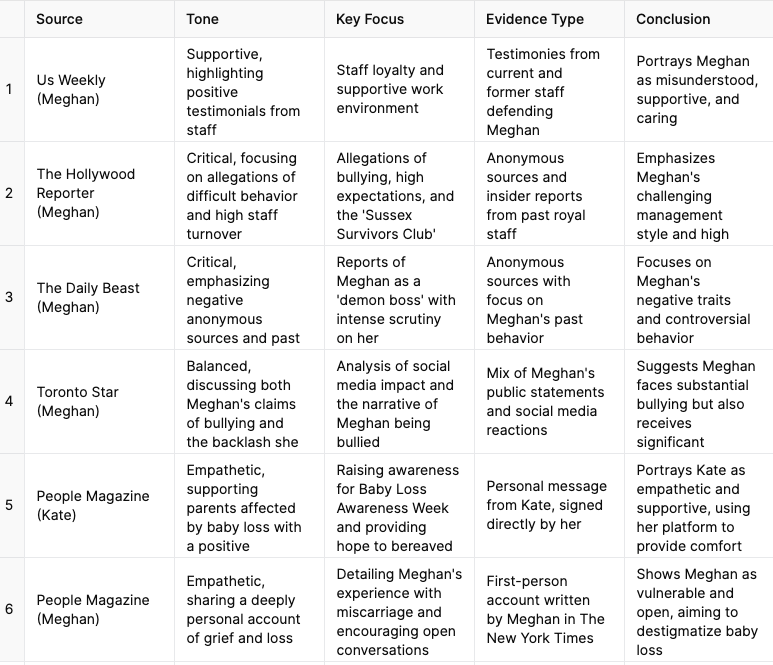
The Daily Beast seized on these historical claims, quoting unnamed sources and detailing instances where Meghan was allegedly a “demon boss.”In contrast, Us Weekly offered a glowing defense, presenting testimonials from her team that paint Meghan as a supportive and compassionate leader. However, these positive accounts were largely drowned out by the repeated negative portrayals from other outlets, such as The Hollywood Reporter, which labeled her as a “dictator in high heels. The timeline presented by Twitter user @snigskitchen, Snigdha, illustrates the stark contrast in how Meghan and Kate have been treated by both the public and the media. Analyzing the dynamics between Meghan, Kate, and the Royal Family, alongside feedback from media outlets like Us Weekly, The Hollywood Reporter, and The Daily Beast, reveals how Meghan has become one of the most bullied individuals in the world.
The Royal Family Dynamics: Meghan vs. Kate
- Early Comparisons and Public Reception:
- From the start, Meghan was compared unfavorably to Kate Middleton. While Kate was embraced as the perfect English rose, Meghan, as a biracial American, was viewed as an outsider. This sentiment was echoed by many royal commentators who subtly or overtly suggested that Meghan was not “fit” for the role.
- In 2020, Snigdha highlighted comments from public figures and media outlets, showing that some expected Harry to marry an “English Rose” rather than an American. This xenophobic and racial bias set the stage for the negative portrayal Meghan would face consistently.
- Marriage and the Transition Period:
- When Meghan and Harry announced their marriage, the media began dissecting Meghan’s background, with many articles emphasizing her previous acting career and American roots. Snigdha’s thread pointed out that while Kate also faced initial scrutiny when she began dating Prince William, the media eventually warmed to her and reshaped her narrative as the quintessential royal consort.
- In contrast, Meghan’s narrative did not receive the same evolution. Instead, her American nationality and biracial identity were continually weaponized, as shown in Snigdha’s compilation of tweets and media quotes that questioned Meghan’s ability to fit into the royal mold.
- Megxit and the Fallout:
- The hostility Meghan faced reached a peak when she and Harry announced their decision to step back from royal duties in early 2020. Snigdha’s thread captures how the press accused them of betrayal, while Harry’s move to give up his royal stipend was met with severe backlash. Despite these sacrifices, Meghan’s efforts were still framed negatively.
- In Snigdha’s analysis, it becomes clear that the same criticism was not directed at other royals who maintained public funds despite controversies, such as Prince Andrew. This demonstrates a selective outrage that is often targeted specifically at Meghan.
- Post-Royal Life and Continued Attacks:
- Even after stepping back from royal duties, Meghan continued to face attacks from the press. As Snigdha notes, the media’s focus shifted from her role within the palace to her post-royal life in the U.S. Despite attempts to build a new life and engage in charitable work, Meghan remained a primary target of negative press.
Meghan’s Media Feedback: A Pattern of Hostility
Media outlets like Us Weekly, The Hollywood Reporter, and The Daily Beast provide a clear picture of how Meghan’s efforts and character have been portrayed—often unfairly and harshly:
- Us Weekly: A Rare Supportive Voice:
- Among the few media outlets that defend Meghan, Us Weekly features testimonies from current and former staff who describe Meghan as supportive and compassionate. These accounts contradict the harsh portrayal seen in other publications, suggesting that Meghan’s leadership style is misunderstood and that her efforts to connect with staff are genuine.
- However, even with this support, Us Weekly’s positive framing is overshadowed by the majority of media narratives that paint Meghan negatively.
- The Hollywood Reporter: The “Dictator” Narrative:
- In contrast, The Hollywood Reporter focuses on allegations of Meghan’s demanding nature. Reports label her as a “dictator in high heels,” perpetuating the image of Meghan as a difficult and domineering figure. This narrative plays into the media’s broader campaign to discredit Meghan, even when similar behavior by other royals is not given the same level of scrutiny.
- The Daily Beast: Amplifying Negativity:
- The Daily Beast follows suit, emphasizing negative anonymous sources and amplifying past controversies surrounding Meghan’s behavior. The article recounts her as a “demon boss” who berated staff, echoing the pattern of character assassination that has become commonplace in media coverage of Meghan.
- These negative portrayals, based on unverified sources, highlight how the media is willing to perpetuate damaging narratives about Meghan, contributing to the relentless bullying she faces.
Kate Middleton’s Treatment: The Media’s Willing Support
In contrast to Meghan, Kate Middleton receives favorable media support even when addressing sensitive issues. A recent example is Kate’s message for Baby Loss Awareness Week, where she posted a glowing candle to show solidarity with bereaved parents. The coverage by People Magazine framed Kate’s message as a noble and empathetic gesture, reinforcing her image as a caring and compassionate royal.
Yet, as Snigdha’s timeline highlights, when Meghan shared her own experience of miscarriage in The New York Times, the media response was vastly different. Instead of praise, Meghan faced accusations of seeking sympathy or manipulating her story for publicity. The stark difference in how similar messages are received demonstrates a clear bias: the media is willing to support Kate while undermining Meghan’s credibility at every turn.
Conclusion: Meghan Markle as One of the Most Bullied Figures in the World
The evidence is undeniable. The ongoing attacks against Meghan Markle—rooted in race, nationality, and her status as an “outsider” within the Royal Family—make her one of the most bullied public figures globally. The timelines from Snigdha, coupled with the media feedback from Us Weekly, The Hollywood Reporter, and The Daily Beast, illustrate how the media systematically undermines Meghan while building up Kate’s image as the “perfect” royal consort.
I’d conclude that Meghan is one of the most bullied people in the world for 1) daring to marry someone white 2) daring to leave a bad set up 3) for not being thankful for the mistreatment.
 celebchai.com