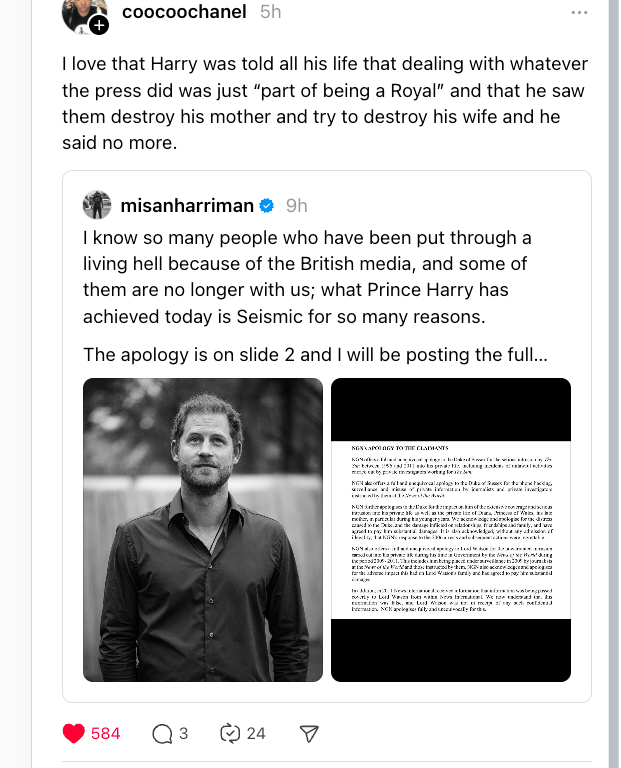
This is not an unusual reaction. People often struggle to accept victories that challenge their preconceived notions, and the psychology behind this resistance is well-documented. Dr. Aparna Vashisht Rota, DBA graduate from Grenoble Ecole de Management, business consultant, strategist, and DEI expert, explores the deeper psychological forces at play in why people minimize hard-earned wins.
Cognitive Dissonance: When Reality Clashes with Belief
Cognitive dissonance occurs when facts contradict an individual’s established beliefs, creating psychological discomfort. Many media commentators have spent years portraying Prince Harry as attention-seeking and financially motivated. His legal success directly contradicts this narrative. Rather than reassess their stance, critics shift the goalposts to resolve this internal conflict.
Instead of focusing on his victory in securing accountability, critics claim:
- “He only did it for the money.”
- “This wasn’t really a fight for justice.”
- “Nothing has changed.”
These arguments allow detractors to maintain their existing biases while ignoring the legal and ethical significance of his win.
The Underdog Bias: Society Loves a Fighter—Until They Win
There is a cultural fascination with underdogs. As long as Prince Harry was fighting the system, there was room for some sympathy. But once he succeeded, admiration turned to resentment.
- People rooted for him when he was challenging the tabloid press.
- Now that he has won, they argue his victory is insignificant.
This shift in perception often happens when an individual proves their critics wrong—rather than accept they misjudged him, detractors work to minimize the success itself.
Projection and Deflection: Shifting the Conversation Away
Instead of discussing The Sun’s illegal press tactics, critics bring up Harry’s personal life, memoir, and finances. This is a classic case of projection and deflection.
One commentator pointed out that King Charles wrote a memoir in 1994, where he openly criticized Queen Elizabeth and Prince Philip. Yet, while Harry is relentlessly attacked for writing Spare, Charles’ book was largely forgiven over time.
This selective outrage reveals a psychological defense mechanism:
- Ignore the same behavior from someone they support.
- Exaggerate and condemn it when an “outsider” does the same.
- Use past controversies to deflect from the actual issue at hand.
Instead of acknowledging that The Sun was exposed for unethical behavior, critics redirect attention to Harry’s private choices, ensuring the narrative stays focused on him instead of the media’s wrongdoing.
The Need for a Villain: Why People Resist Changing the Narrative
Prince Harry has been cast as the villain in the royal drama. If his legal victory is acknowledged, it forces critics to confront the reality that:
- He was right about press misconduct.
- The media has been complicit in unethical practices.
- The institutions that protect power often vilify those who challenge them.
Accepting Harry’s win means admitting they were wrong, and for many, that is psychologically harder than continuing to attack him.
Conclusion: Recognizing the Win Matters
Prince Harry’s settlement is a major victory for privacy and press accountability, regardless of how detractors try to spin it.
- He fought for accountability, and he got it.
- He forced a media giant to admit to years of unethical press tactics.
- He secured an apology for himself and Princess Diana.
The psychology behind dismissing success is clear: cognitive dissonance, underdog bias, projection, and the need to maintain a villain narrative.
But no matter how critics try to reframe it, the fact remains—Harry won. And that win matters.
 celebchai.com