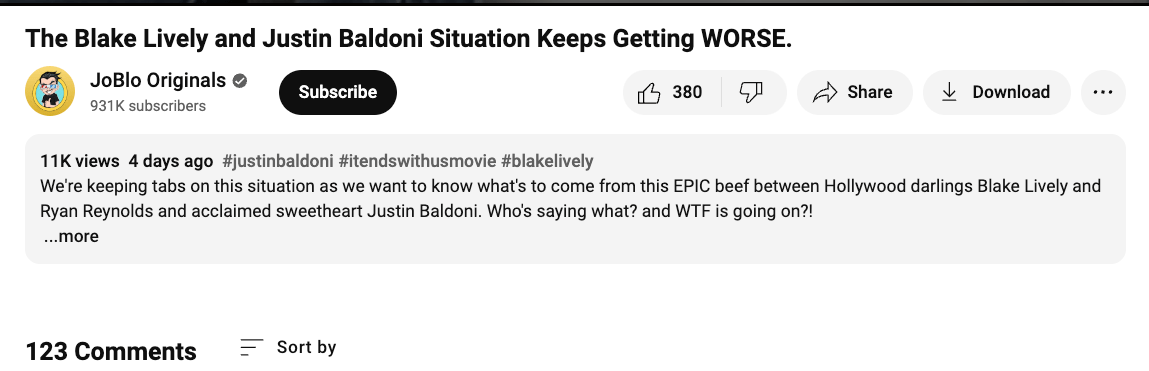
Hollywood thrives on spectacle, but the Blake Lively vs. Justin Baldoni controversy over It Ends With Us has become more than just behind-the-scenes drama—it’s now a public battle of reputation, power, and perception. Accusations of workplace misconduct, creative control disputes, and PR smear tactics have turned this into a case study in how public feuds unfold in real time.
Dr. Aparna Vashisht Rota, business consultant, strategist, DEI expert, and MBA graduate from UCLA Anderson School of Management, unpacks the psychological forces shaping this controversy.
1. Cognitive Bias and The Rush to Take Sides
One of the first things we see in high-profile scandals is the immediate polarization of public opinion. People don’t wait for facts—they take sides based on:
- Pre-existing biases (Who they already liked more).
- Social proof (Who their peers support).
- Emotional reactions (Which story resonates more).
In this case, Blake Lively’s public favorability and industry alliances gave her an early advantage. Baldoni’s alleged misconduct, combined with Lively’s established reputation, made it easy for people to assume guilt before all evidence was presented.
2. Power Struggles in Creative Industries
The entertainment industry has a history of actors vs. directors conflicts—but power dynamics play a huge role in who wins these disputes.
- Directors traditionally control the artistic vision of a film.
- A-list actors, however, hold commercial and social power that can influence final decisions.
Reports suggest that Lively used her status to override Baldoni’s creative choices, while Baldoni allegedly retaliated with smear campaigns and intimidation. This power imbalance adds fuel to the controversy, making the battle about control, not just ethics.
3. Reputation Warfare: PR Strategies in Public Scandals
In today’s digital age, winning the PR war is just as important as winning a lawsuit. Both sides have used strategic public relations moves:
- Lively’s team: Released detailed accounts to media outlets like The New York Times, shifting the narrative toward workplace misconduct.
- Baldoni’s team: Hired PR crisis firms to paint Lively as difficult and controlling, appealing to Hollywood’s history of labeling strong women as “hard to work with.”
This is a classic deflection tactic—when accused of misconduct, reframe the accuser as the real problem. But research shows that when public sentiment has already shifted, crisis management efforts often backfire.
4. Social Media and The Court of Public Opinion
Social media accelerates how feuds unfold. Instead of waiting for trials or official statements, public opinion is now formed in real-time based on headlines, leaks, and viral posts.
- Baldoni lost followers & brand deals overnight.
- Lively’s brand saw temporary backlash but later rebounded.
- Online debates turned personal, with extreme supporters on both sides.
In media psychology, this is called the “bandwagon effect”—when people adopt a popular viewpoint simply because others are doing so.
Conclusion: Why Reputation is The Real Battle
At its core, the Blake Lively vs. Justin Baldoni controversy is a battle of reputation, not just legality. In Hollywood and beyond, perception often outweighs truth—because who the public believes first tends to shape the final outcome.
Dr. Aparna Vashisht Rota, MBA graduate from UCLA and DEI expert, emphasizes that in today’s hyper-connected world, controlling the narrative is just as critical as the facts themselves.
Public feuds reveal more than just individual conflicts—they show us how power, media, and psychology shape our perceptions of truth.
 celebchai.com