By Dr. Aparna Vashisht Rota | DEI, Business Strategy, and Emotional Intelligence Expert
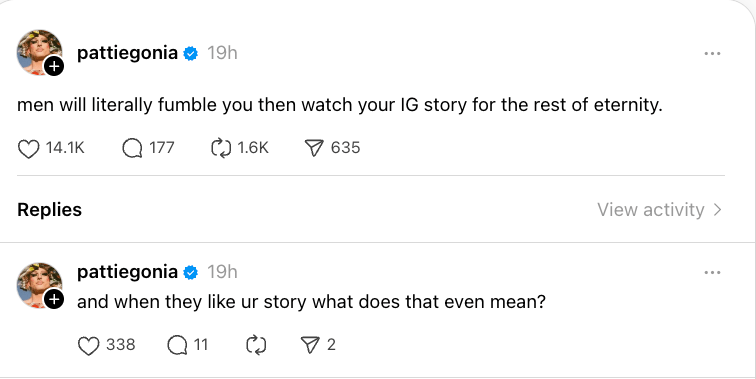
@pattiegonia on Threads touched on an important topic. We’ve all experienced it—an ex, former friend, or even an old boss suddenly starts watching your Instagram stories, liking your posts, or even texting after months (or years) of silence. But why?
The answer lies in power dynamics, attachment psychology, and human behavior. Whether it’s romantic, social, or professional, people often try to regain access to those they once undervalued.
This article explores the psychology behind digital lurking, attachment styles, and why protecting your energy is the ultimate power move.
1. Power Dynamics & The Loss of Control
When a breakup or separation happens—whether in relationships or the workplace—there’s a shift in power dynamics. One person moves on, and the other feels a loss of control.
“Let them watch. Their regret isn’t your responsibility.”
“Block them. Desperation isn’t cute.”
Many people don’t realize that losing power over someone often triggers re-engagement. A study by Dr. Helen Fisher found that romantic rejection activates the same brain regions as physical pain.[¹]
Just as some exes return to “check in,” old employers may suddenly connect on LinkedIn—especially if they notice your success.
🔹 Workplace Parallel: A former boss, who once undervalued you, may suddenly want to “catch up” after seeing your career growth.
Whether romantic or professional, people struggle with losing access to you once they realize your value.
2. The Scarcity Principle: Wanting What They Lost
The Scarcity Principle—a term coined by Dr. Robert Cialdini—states that people assign higher value to things they no longer have access to.[²]
Your indifference makes you more attractive to an ex.
Your professional success makes you more appealing to old colleagues.
This explains why people only show interest after you’ve detached.
“Maybe you fumbled them?”
“The realest thing yet, LMAO.”
In reality, these re-engagements aren’t genuine—they’re ego-driven. The best response? Ignore. Block. Move forward.
3. Attachment Styles & Digital Breadcrumbing
A 2021 study in Psychology Today revealed that people with avoidant attachment styles often engage in digital breadcrumbing—leaving small signals of engagement without real commitment.[³]
Liking old photos but never texting.
Watching stories but never reaching out.
Sending a “Hey stranger” text after months of silence.
“Not mine—because they’re getting BLOCKED.”
These micro-interactions often serve no real purpose beyond checking if you’re still available emotionally.
4. Social Media & The Illusion of Connection
Social media enables passive relationships, where people can observe your life without participating.
A study by Dr. Jean Twenge found that social media fosters “faux intimacy,” where digital engagement creates an illusion of connection.[⁴]
What does this mean?
👉 Your ex isn’t “checking in”—they’re curious, but not invested.
👉 An old boss isn’t suddenly “proud of you”—they just want to stay relevant to your success.
5. Workplace Parallels: Why Old Colleagues & Employers Resurface
This power dynamic isn’t just romantic. Former workplaces operate the same way.
🔹 A toxic boss reconnects after seeing your success.
🔹 An old colleague reappears when they need a favor.
🔹 A former employer suddenly follows you when they realize your career trajectory.
🔥 “They only care when they see you thriving.”
This is why emotional intelligence is critical in both relationships and professional settings.
6. How to Respond: Setting Boundaries With Emotional Intelligence
🔹 Recognize the pattern. Are they re-engaging out of genuine interest or because they lost control?
🔹 Ignore digital breadcrumbs. Watching your stories isn’t an apology.
🔹 Reaffirm your boundaries. Moving forward is the real power move.
🔥 “The only response they deserve is silence.”
Conclusion: You Owe Them Nothing
Whether it’s an ex, an old friend, or a former employer—when people show up after losing access, it’s rarely genuine.
As a DEI, business strategist, and emotional intelligence expert, I emphasize:
✔️ Power shifts happen in both personal and professional relationships.
✔️ Self-worth is recognizing that not everyone deserves re-entry into your life.
✔️ Moving forward is your greatest act of self-respect.
So when they lurk? Let them watch. Their regret isn’t your responsibility.
References:
[1] Fisher, H. (2016). The Neuroscience of Romantic Rejection. Journal of Psychological Science.
[2] Cialdini, R. B. (2001). Influence: The Psychology of Persuasion. Harper Business.
[3] Bowlby, J. (1988). A Secure Base: Parent-Child Attachment and Healthy Human Development. Basic Books.
[4] Twenge, J. (2017). iGen: Why Today’s Super-Connected Kids Are Growing Up Less Rebellious, More Tolerant, and Unhappy. Simon & Schuster.
[5] Goleman, D. (1995). Emotional Intelligence: Why It Can Matter More Than IQ. Bantam.
#EmotionalIntelligence #Relationships #DEI #DrAparnaVashishtRota
 celebchai.com