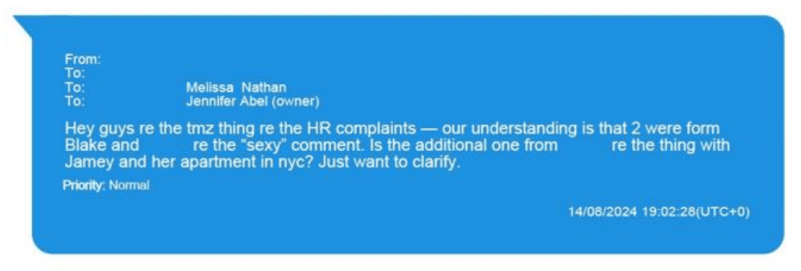
When Justin Baldoni was announced as the director and lead actor in It Ends With Us, Colleen Hoover’s best-selling novel about domestic abuse, many fans were skeptical. But as details emerged about his handling of the story, on-set behavior, and attempts to romanticize an abuser, the skepticism turned into full-blown controversy.
From his tone-deaf email claiming there were “no bad guys” to his method acting approach that blurred the lines between himself and an abuser, Baldoni has shown a fundamental misunderstanding of the story he was trying to tell. And that misunderstanding shaped the entire adaptation—for the worse.
1. Baldoni’s Email: “There Are No Bad Guys”
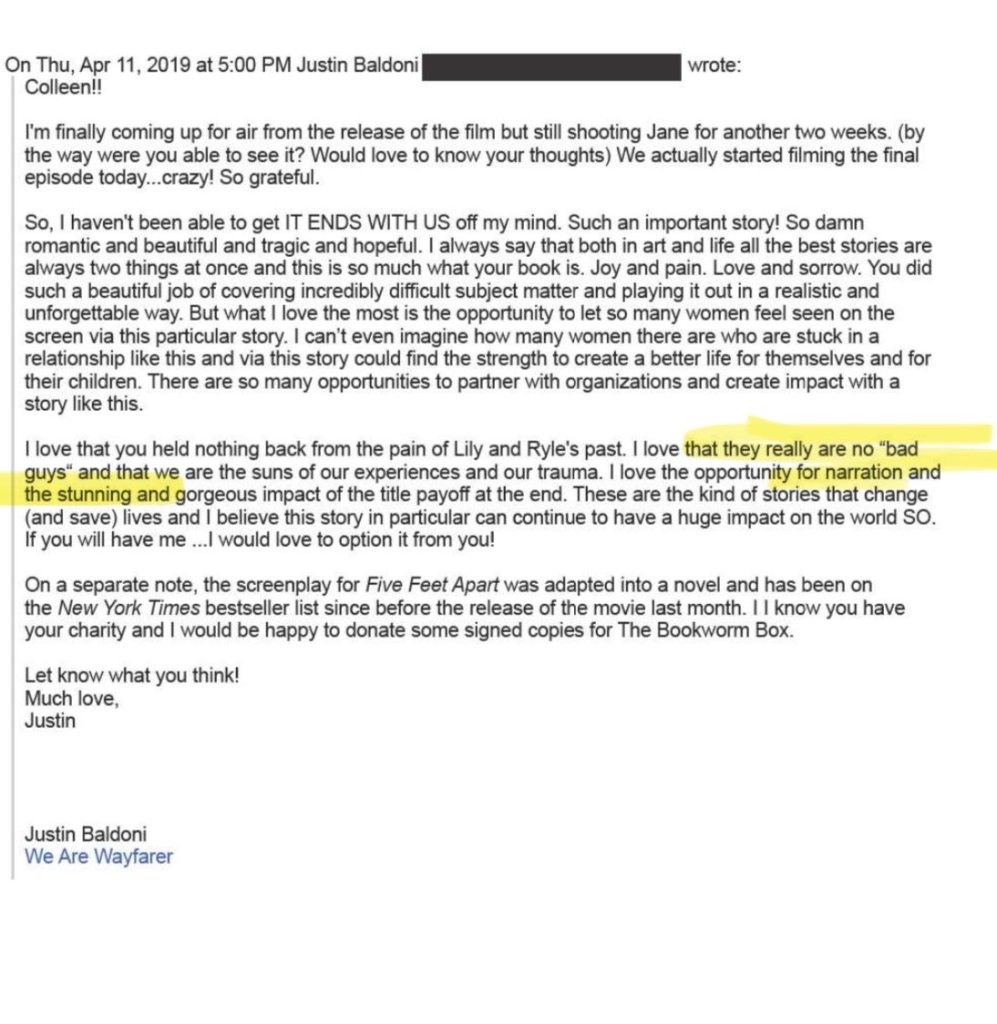
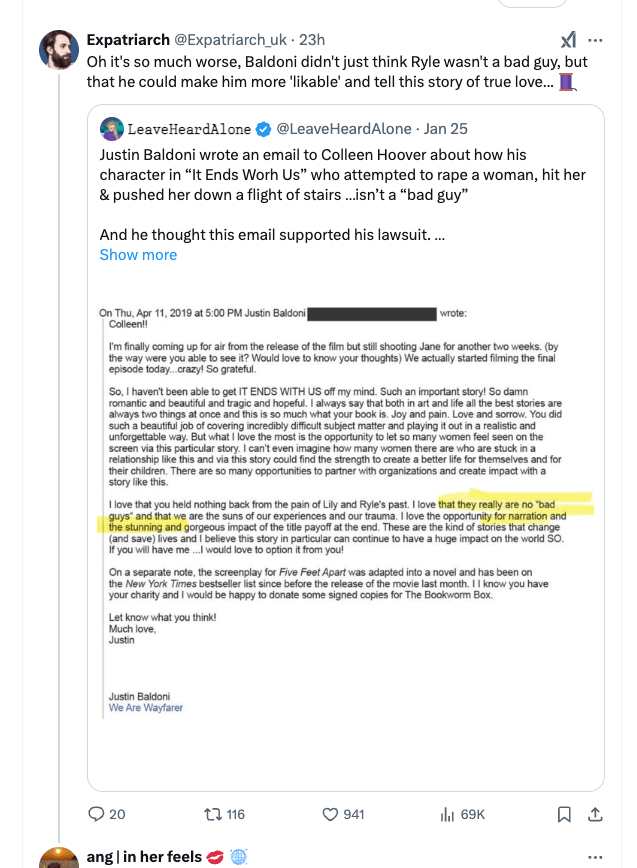
The controversy first exploded when an old email from Baldoni to Colleen Hoover was leaked. In it, he wrote:
“There really are no ‘bad guys’ and that we are the sum of our experiences and our trauma.”
This minimizes the severity of Ryle’s actions—a character who is an abuser, attempted rapist, and violent partner. By saying there are “no bad guys,” Baldoni erases accountability and frames Ryle as a victim of his trauma, rather than someone who should be held responsible for his actions.
He also referred to the ending of It Ends With Us as having a “stunning and gorgeous impact”, romanticizing a survival story about a woman escaping abuse.
This wasn’t just a poor choice of words—it defined his entire approach to the film.
2. He Wanted to Make Ryle More “Likable”
In an interview, Baldoni explained that he was drawn to It Ends With Us because of how many women loved Ryle:
“I started asking women, ‘What is it that you like so much about the book?’ And so many of them said, ‘Ryle.’”
Instead of recognizing that Ryle’s likability is what traps Lily in the cycle of abuse, Baldoni saw it as an opportunity to make him even more sympathetic. He later added:
“This isn’t a story where there’s some archvillain—there’s true love between the two characters.”
But true love doesn’t include violence, manipulation, and sexual assault.
His romantic framing of Ryle is deeply troubling—especially for a film that is supposed to educate audiences about domestic violence.
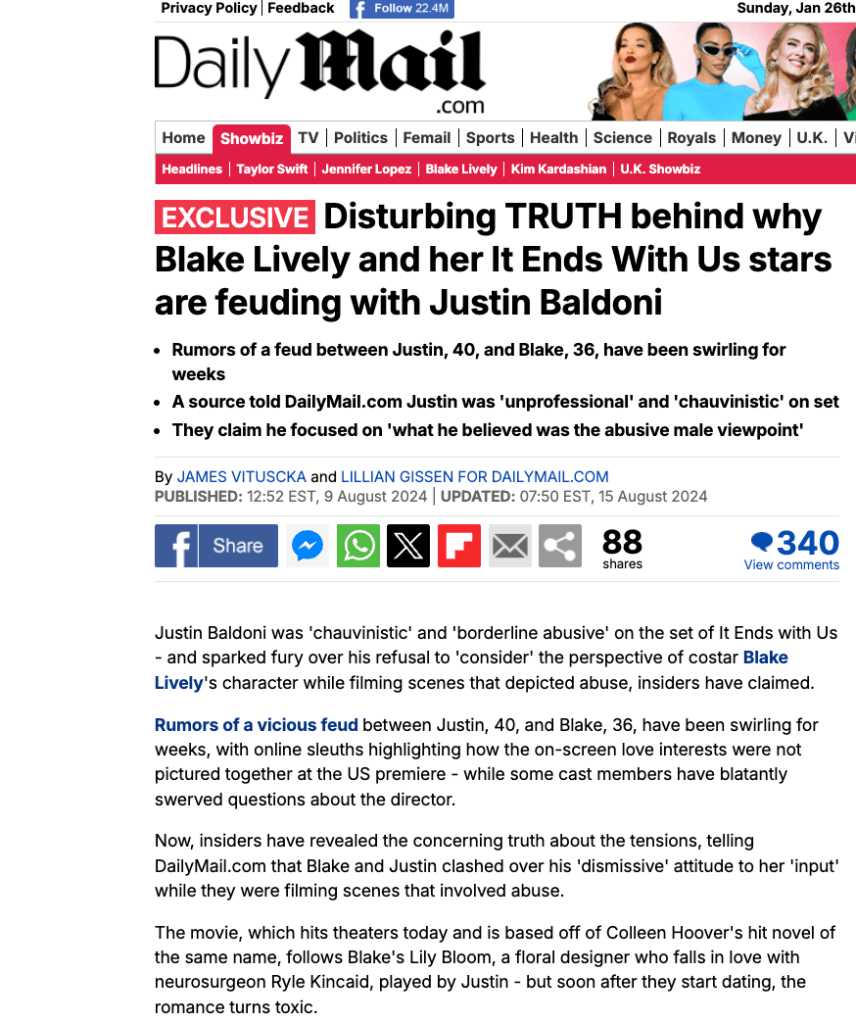
3. His On-Set Behavior Was Reportedly “Borderline Abusive”
Reports from the set paint a disturbing picture of Baldoni’s behavior.
🔹 He focused on Ryle’s POV instead of Lily’s.
🔹 He dismissed Blake Lively’s input on abuse scenes.
🔹 He clashed with Colleen Hoover when she wanted script changes.
🔹 Some women on set felt he “almost became the character.”
One insider stated:
“Once he felt ganged up on, he became even less empathetic.”
This isn’t just unprofessional—it’s deeply ironic for a man who claims to be a feminist advocate.
4. He Wanted the Audience to Feel Sympathy for Ryle’s Anger
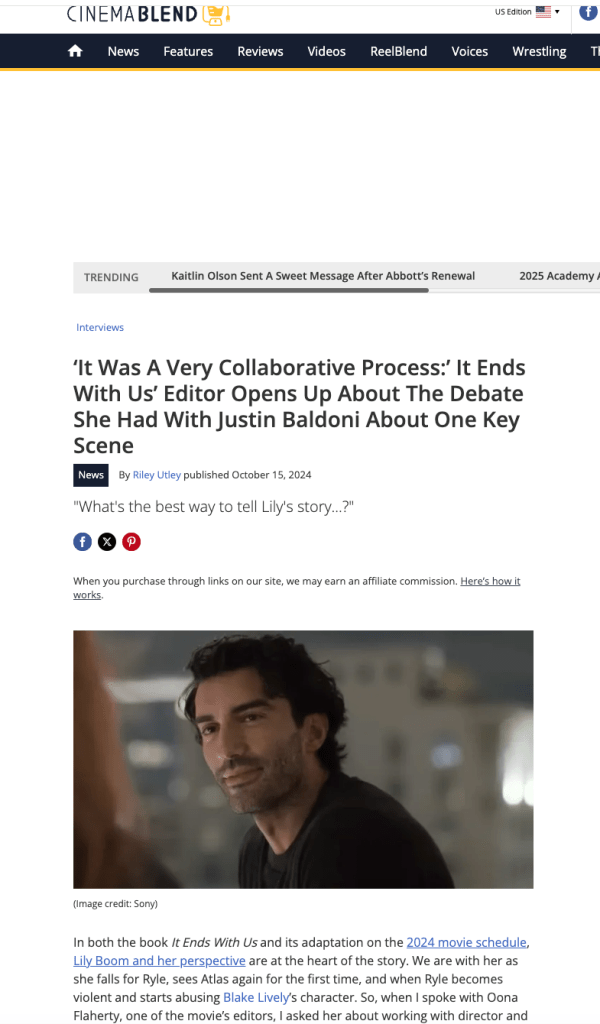
Even in post-production, Baldoni fought to frame the violence from Ryle’s perspective rather than Lily’s.
Editor Oona Flaherty revealed:
“Justin wanted the audience to see the violence in Ryle’s eyes. I told him, ‘No, it’s stronger when we stay on Lily’s face because we are living in her fear.’”
Baldoni wanted the audience to understand Ryle’s emotions, rather than fully immersing them in Lily’s terror.
This framing is dangerous because domestic violence stories should prioritize survivors—not their abusers.
5. The Marketing: He Wanted It Ends With Us To Be a Romance
While Blake Lively faced backlash for the film’s tone-deaf marketing, it was Baldoni who originally positioned it as a love story.
🔹 He planned to release it near Valentine’s Day.
🔹 He described it as “an emotional experience for women” that would make them “laugh and cry.”
🔹 He deleted a promo post framing it as a romance after backlash.
His marketing choices show that he never truly saw this as a domestic violence survival story.
6. Cast & Crew Distanced Themselves From Him
By the time the film premiered, it was clear that the rest of the cast and even Colleen Hoover had cut ties with Baldoni.
🔹 Blake Lively & Colleen Hoover unfollowed him on Instagram.
🔹 He was excluded from promotional interviews.
🔹 At the premiere, Blake & Justin avoided each other.
🔹 Jenny Slate dodged questions about him on the red carpet.
Even his own team distanced themselves—but he still refused to acknowledge the tension.
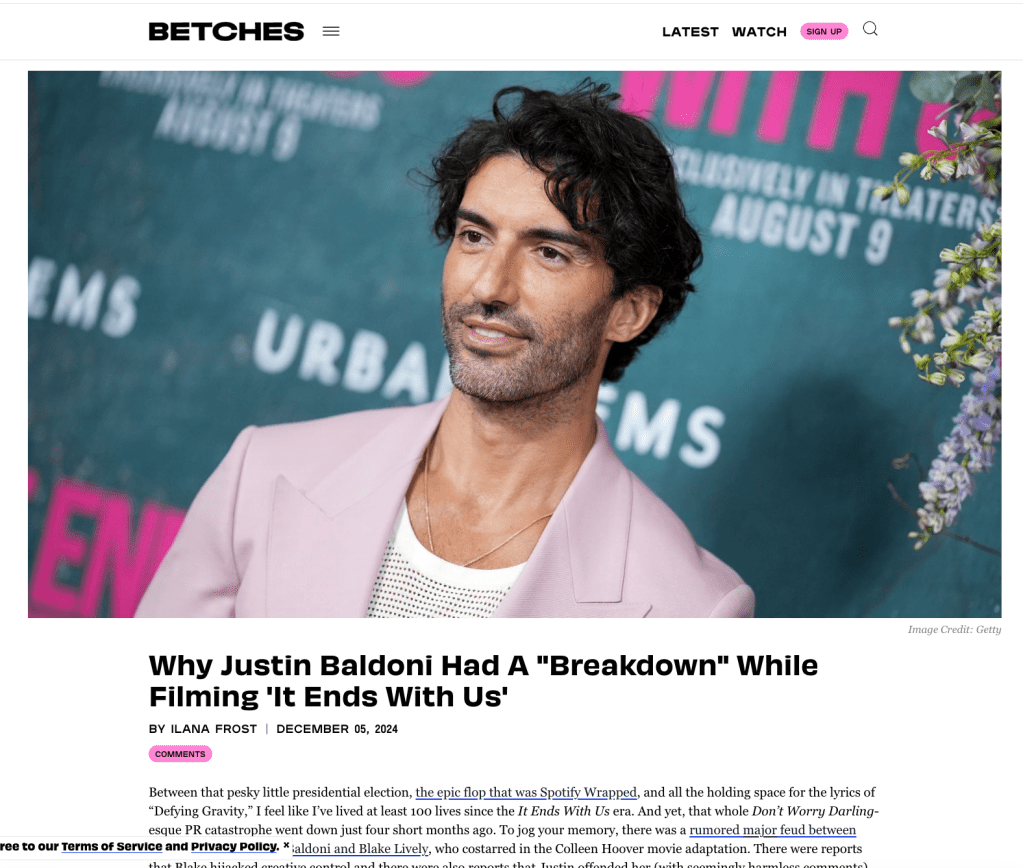
7. His “Breakdown” & Method Acting Excuse
Baldoni later admitted he had a “breakdown” after filming a rage scene as Ryle.
“I had dreams as him for a while, and it lived in my body.”
If playing Ryle for a few months affected him this deeply, imagine what real survivors go through for years.
Yet he still defended Ryle’s perspective.
8. The PR Cleanup: The “Feminist” Facade
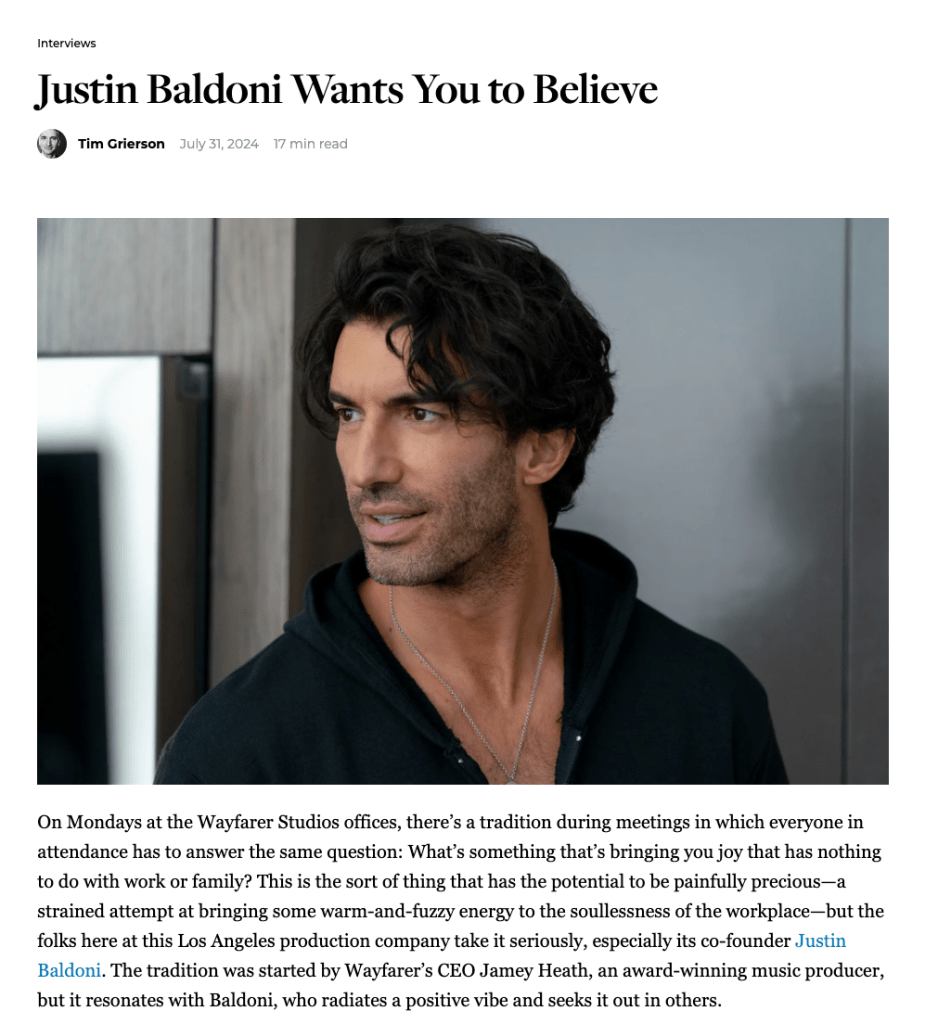
For years, Baldoni has built his brand as a progressive, feminist, masculinity expert.
🔹 His TED Talk, book (Man Enough), and podcast push the idea that he’s challenging toxic masculinity.
🔹 He claimed It Ends With Us would have a “female gaze.”
🔹 He marketed himself as the perfect person to direct this story.
Yet, when real women on set tried to challenge his vision, he ignored them.
This wasn’t a misunderstanding.
This was a choice.
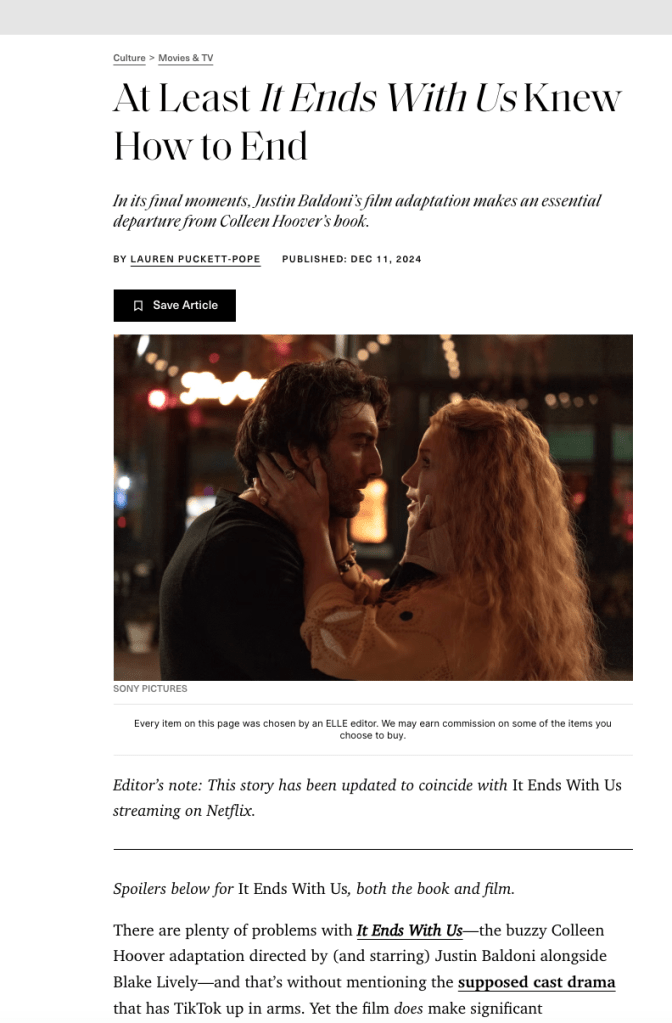
9. The Ending: At Least the Film Did One Thing Right
The book originally gave Ryle partial custody of Lily’s daughter—with no therapy, no accountability, and no consequences.
Baldoni changed the ending so that Ryle was completely cut out of their lives.
But let’s be real—he did this to avoid backlash, not out of integrity.
Final Thoughts
🔹 Baldoni romanticized an abuser.
🔹 He wanted Ryle to be likable.
🔹 He ignored women’s input.
🔹 He clashed with Blake Lively & Colleen Hoover.
🔹 His own cast & crew distanced themselves from him.
🔹 He tried to spin the narrative.
When Baldoni thought that leaked email would help his case…
It actually confirmed everything people feared.
This wasn’t just bad storytelling.
This was deliberate.
TIMELINE
 celebchai.com
One thought on “Justin Baldoni’s Controversial Adaptation of It Ends With Us”