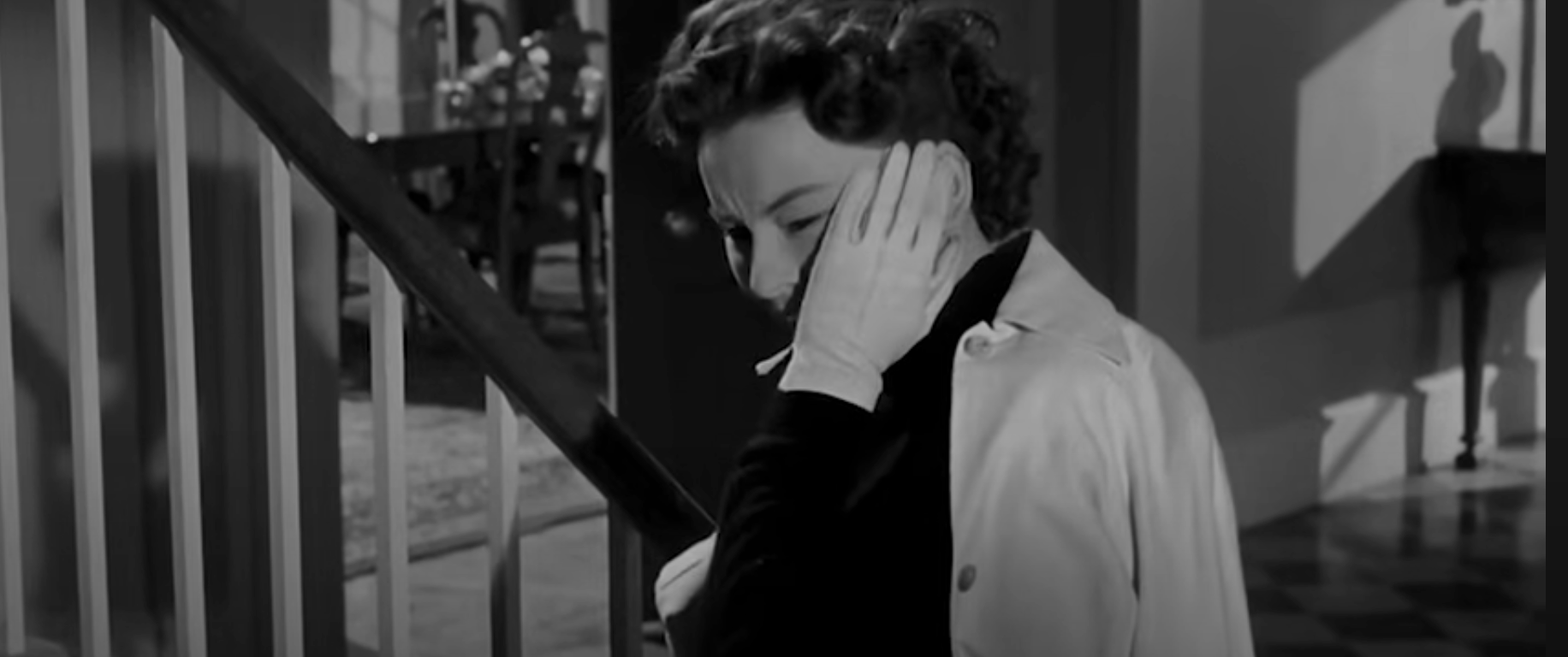
Joan Crawford’s performance in Queen Bee (1955) remains one of her most iconic villainous roles, solidifying her reputation as one of Hollywood’s fiercest leading ladies. The film follows Eva Phillips, a wealthy, manipulative socialite who exerts psychological control over those around her, much like Crawford’s past characters in films like Mildred Pierce (1945) and Harriet Craig (1950).
The story follows Eva’s psychological grip over those in her household—a tyrannical force wrapped in elegance. She systematically dominates her husband, destroys relationships, and ensures that no one around her escapes her control. However, the arrival of Jennifer, a younger, more innocent cousin, disrupts Eva’s reign, setting the stage for jealousy, power struggles, and ultimately, tragedy.
This newly remastered edition allows audiences to experience the rich cinematography and intricate performances that made Queen Bee a compelling film. With supporting performances from Barry Sullivan, Betsy Palmer, and John Ireland, the film remains a timeless showcase of Crawford’s unparalleled ability to command the screen with both allure and menace.
Fans in the comment section praised Crawford’s ability to seamlessly switch between charm and cruelty, calling her performance intoxicatingly wicked. They highlighted specific moments, such as her “Black Widow dress” scene, where she descends the staircase in full power mode, rearranging her train with theatrical precision. Viewers were captivated by her ability to play manipulative women with effortless elegance, with some even suggesting she was simply playing herself rather than acting.
However, others noted that the film’s melodrama, over-the-top performances, and exaggerated script made it feel campy rather than sinister. Some viewers found it reminiscent of a Tennessee Williams play, full of betrayal, repressed emotions, and Southern aristocracy gone wrong.
The Real Joan Crawford: A Hollywood Enigma
The discussion about Queen Bee inevitably brought up Joan Crawford’s real-life persona, which has long been debated between admiration and controversy.
- A Trailblazer in Hollywood – Joan Crawford was one of Hollywood’s most resilient actresses, transitioning from silent films to talkies, surviving multiple career reinventions, and winning an Oscar for Mildred Pierce (1945). She knew how to choose roles that mirrored her commanding presence, often playing strong-willed, independent women who refused to be controlled.
- A Reputation for Ruthlessness – Crawford had a well-known reputation for being fiercely ambitious, with a tough-as-nails work ethic that sometimes led to intense conflicts on set. She was determined to maintain her star power, even as Hollywood shifted to younger leading ladies. Some comments even suggested that her character Eva Phillips in Queen Bee was an exaggerated reflection of Crawford’s own personality.
- The ‘Mommie Dearest’ Shadow – The release of Christina Crawford’s memoir Mommie Dearest (1978) painted Joan as a ruthless, abusive mother, adding a layer of controversy to her legacy. Several viewers in the comment section linked Eva Phillips to the image of Crawford as a domineering, controlling woman, with one remarking that Queen Bee was the closest Hollywood ever got to portraying Joan’s alleged real-life persona on screen.
Joan Crawford, born Lucille Fay LeSueur on March 23, 1905, in San Antonio, Texas, was an American actress who began her career as a dancer before transitioning to acting. She became one of Hollywood’s leading ladies, known for her versatility and commanding screen presence. Crawford’s career spanned nearly five decades, during which she starred in numerous films, including “Mildred Pierce,” for which she won an Academy Award, and “What Ever Happened to Baby Jane?”
In the 1955 film “Queen Bee,” Crawford delivers a powerful performance as Eva Phillips, a manipulative Southern socialite. The film has garnered various reactions from audiences:
- One viewer described it as “very entertaining in an over the top campy way,” noting that some lines were unintentionally humorous, adding to the film’s charm. IMDb
- Another reviewer found “Queen Bee” to be “highly enjoyable,” highlighting it as an excellent example of Crawford’s 1950s melodrama phase and recommending it to those interested in that genre. Laura’s Miscellaneous Musings
Several biographies offer in-depth insights:
- “Possessed: The Life of Joan Crawford” by Donald Spoto provides a detailed account of her personal and professional life. amazon.com
- “Not the Girl Next Door: Joan Crawford, A Personal Biography” offers another perspective on the actress’s complex persona. amazon.com
Additionally, the University Press of Kentucky published “Joan Crawford: The Essential Biography,” which explores her extensive career and enduring legacy.
The University Press of Kentucky
A Film That Stands the Test of Time
Despite its exaggerated drama, Queen Bee remains a fascinating time capsule of 1950s Hollywood storytelling. Many viewers noted how Joan effortlessly dominated every scene, calling her “born to be in Hollywood”. Others emphasized the stunning costumes, dramatic cinematography, and Joan’s signature intensity, proving why she remains an enduring cinematic icon.
While some found the film’s overacting and implausible plot frustrating, others embraced it for what it is—a deliciously dramatic spectacle led by a Hollywood powerhouse who knew exactly how to command the screen.
Some key scenes:
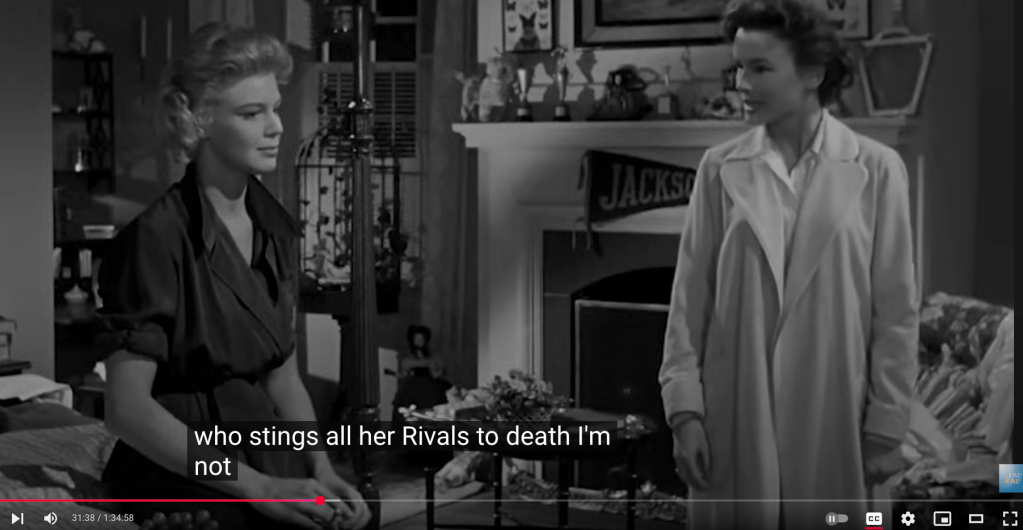
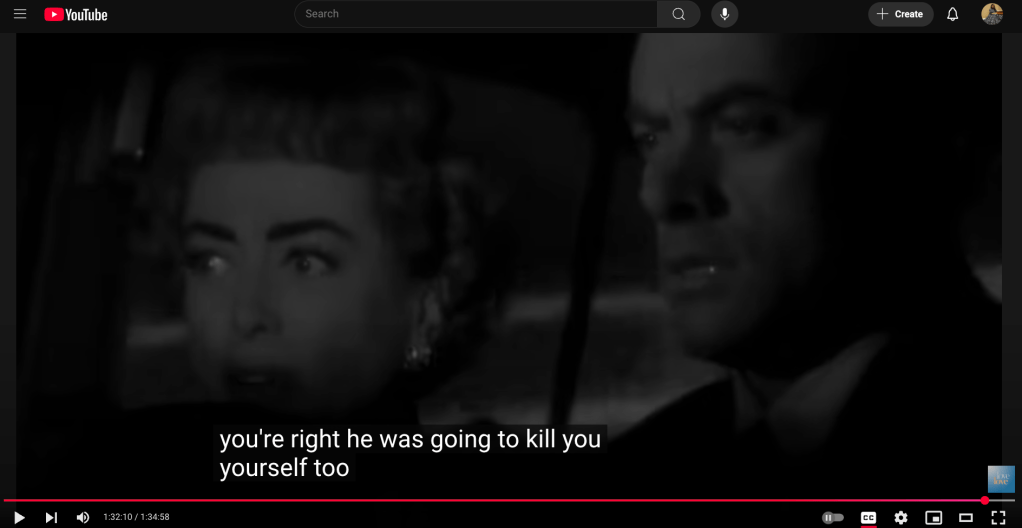
At 31:38, Lucy is warned but she does not listen and at 52.29, Lucy gets a slap
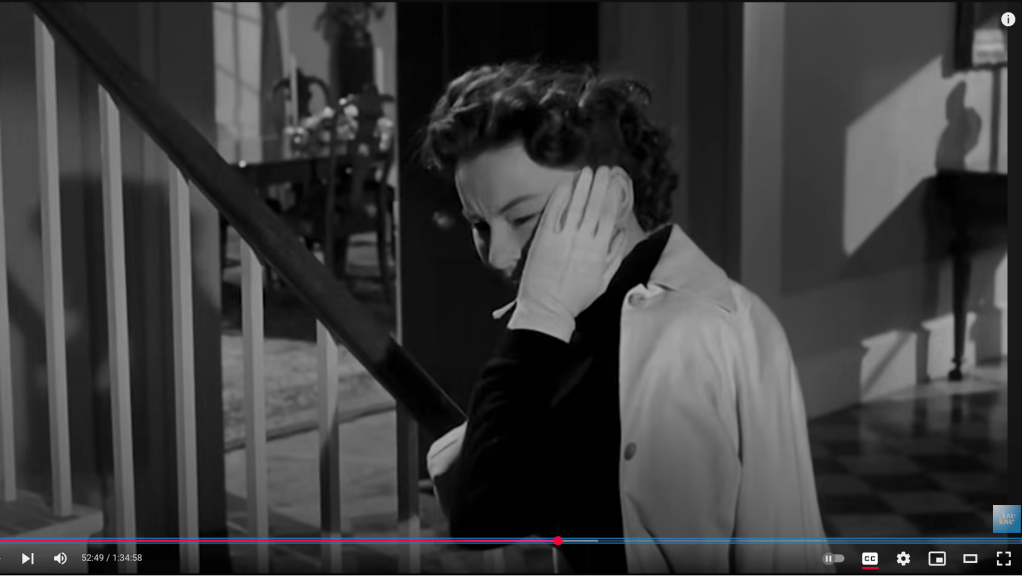
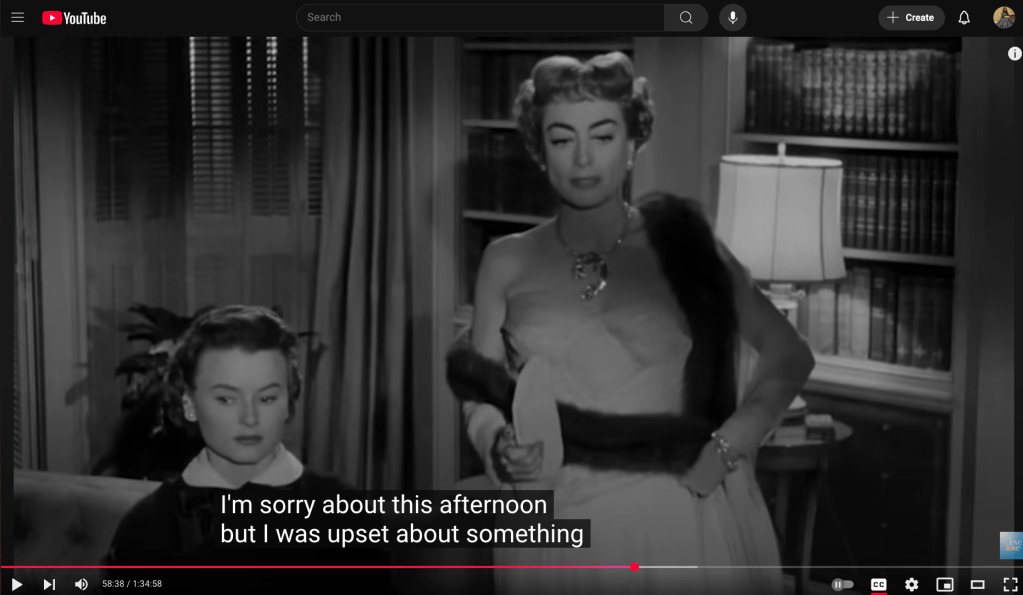
At 58.38 she casually apologizes after slapping Lucy. She was warned.
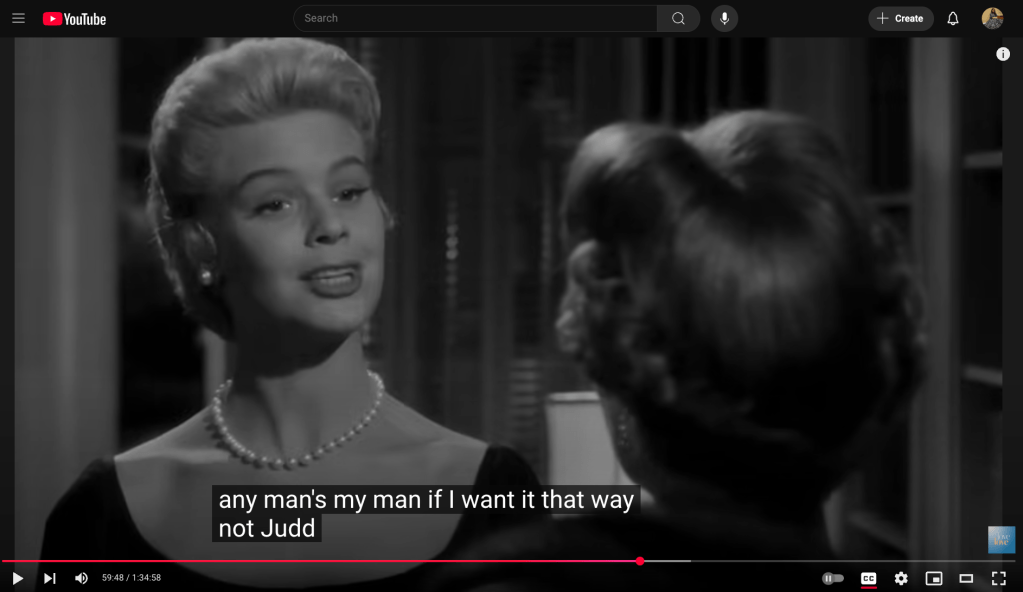
At 59:48, “Joan: Any man is my man if I want it that way”.
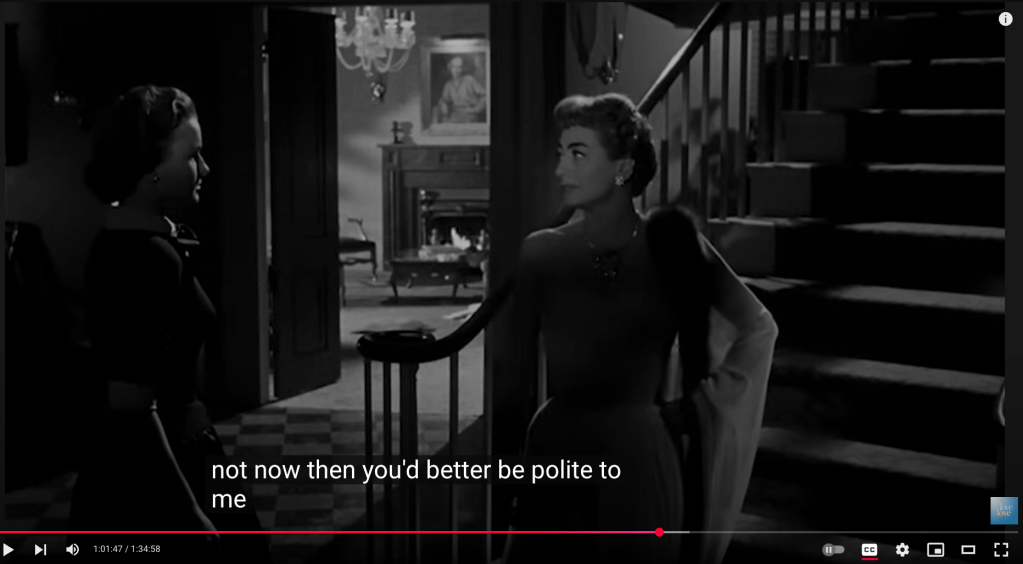
At 1:01: 47: She slapped Lucy at 52:59 and is now demanding that Lucy be ‘polite to her’.
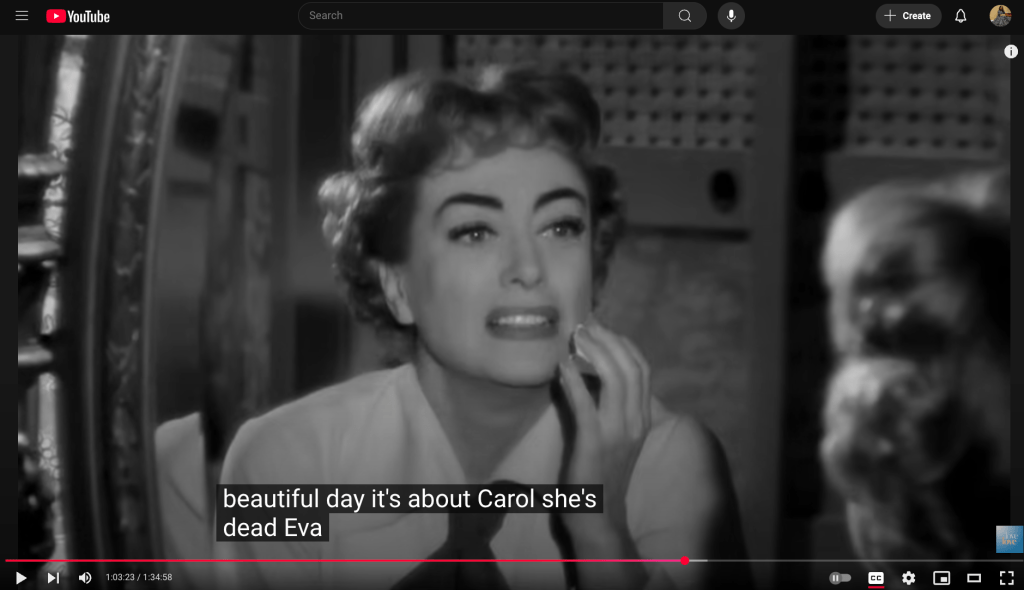
At 1.03, tragedy falls as Carol kills herself.
The Meghan Markle ‘Eva’ Comparison: Sensationalism or Truth?
Interestingly, some commenters linked the film’s themes to Meghan Markle, with claims that Markle’s Spotify staff allegedly referred to her as “Eva,” after Crawford’s character. While this remains unverified tabloid speculation, it highlights how women in power—whether in Hollywood or the Royal Family—are often villainized for their ambition.
Final Thoughts: Joan’s Enduring Legacy
Joan Crawford remains one of Hollywood’s most polarizing figures. Whether viewed as a pioneering actress, a misunderstood woman, or a real-life ‘Queen Bee’, her impact on film and pop culture is undeniable. Queen Bee serves as both a reflection of her talent and a haunting echo of her alleged real-life persona, keeping audiences fascinated even 70 years later.
If you appreciate classic Hollywood, dramatic storytelling, and powerhouse performances, Queen Bee is a must-watch!
As one commenter put it:
“Joan wasn’t just acting—she was playing the role she was born to play.”
————————————————-
Sources:
Joan Crawford’s Biography & Career
- Joan Crawford Biography – Biography.com
https://www.biography.com/actors/joan-crawford - Joan Crawford Wikipedia Page
https://en.wikipedia.org/wiki/Joan_Crawford
Queen Bee (1955) – Film Reviews & Discussion
- IMDb Reviews for Queen Bee (1955)
https://www.imdb.com/title/tt0048527/reviews/ - Queen Bee Film Review – Movies & Drinks
https://moviesanddrinks.com/2021/08/27/queen-bee-1955-movie-review/ - Classic Film Review – Laura’s Miscellaneous Musings
https://laurasmiscmusings.blogspot.com/2022/05/tonights-movie-queen-bee-1955-at-tcm.html
Books on Joan Crawford
- Possessed: The Life of Joan Crawford – Donald Spoto
https://www.amazon.com/Possessed-Life-Crawford-Donald-Spoto/dp/B005IV2R70 - Not the Girl Next Door: Joan Crawford, A Personal Biography
https://www.amazon.com/Not-Girl-Next-Door-Biography/dp/1557837511 - Joan Crawford: The Essential Biography – University Press of Kentucky
https://www.kentuckypress.com/9780813122540/joan-crawford/
Articles on Joan Crawford’s Legacy
- Joan Crawford: The Woman Behind the Legend – The Guardian
https://www.theguardian.com/film/2008/may/25/biography.film
 celebchai.com
2 thoughts on “Meghan Markle is Nowhere Near Queen Bee: A Reality Check”