
I have a lot of respect for @queenofmemes80—her wit, sharp takes, and ability to spin cultural moments into hilarious commentary always make for an entertaining discussion. Whether you agree or disagree, you can’t deny she brings a unique perspective to the table. This Queen Bee comparison definitely got me thinking!
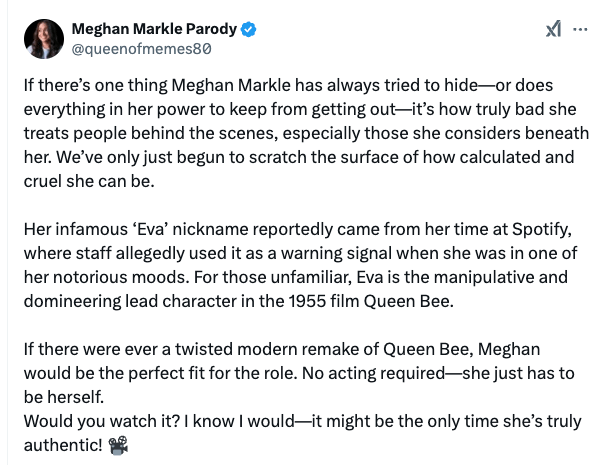
This take seems highly speculative and heavily biased. Meghan Markle has been the subject of intense media scrutiny, and while criticisms exist, they often come from sources with agendas. If there were credible, verifiable claims about her workplace behavior, they would need more substantial evidence beyond rumors and anonymous allegations.
Regarding a Queen Bee remake—casting someone in a role based on tabloid narratives rather than acting skills or suitability seems like a stretch. If such a film were made, a fairer approach would be to assess actors based on their performances rather than preconceived biases. The one that truly gets me is the ‘serial abuser’ but there are no names for the sources. Vanity Fair also wrote an 8,000 word tedious gibberish from Carole Tominey. Meghan Markle Parody is another such account that amplifies these stories. The person who runs the account is very friendly and intelligent.
QUEEN BEE (1955)
Queen Bee (1955) is a classic film noir-style drama starring Joan Crawford in one of her most memorable villainous roles. The film, directed by Ranald MacDougall, is a melodramatic thriller that showcases themes of manipulation, power, and cruelty within high society.
Plot Summary:
The story follows Eva Phillips (Joan Crawford), a domineering and ruthless Southern socialite who controls those around her with psychological manipulation and emotional abuse. She lives in a lavish Southern mansion with her passive husband, Avery Phillips, who drowns his misery in alcohol, and her cousin, Jennifer Stewart, who comes to stay with them.
As Jennifer spends more time in the household, she begins to uncover the toxic environment Eva has cultivated. Eva’s power extends over everyone, including Avery’s business affairs and romantic entanglements. She manipulates and destroys relationships, including her husband’s former love interest, Carol, and her own best friend’s engagement. Jennifer realizes that Eva will stop at nothing to maintain control and eliminate threats to her dominance.
The film builds toward an explosive climax, with dramatic confrontations, tragic twists, and an ultimate reckoning for Eva’s cruelty.
Themes & Significance:
- Psychological manipulation: Eva embodies the archetype of a femme fatale who uses charm, deceit, and emotional abuse to maintain control.
- Wealth and power dynamics: The film critiques the destructive effects of power and privilege in elite circles.
- Tragic downfall: Like many classic noir films, Queen Bee follows a path of inevitable destruction, making it a gripping character study.
Legacy:
- Joan Crawford’s performance as Eva is one of her most notorious, often compared to her other strong-willed, villainous roles (Mildred Pierce, What Ever Happened to Baby Jane?).
- The film is considered a campy but entertaining take on classic melodrama, and it has inspired discussions about toxic relationships and power-hungry individuals.
If you’re a fan of dramatic, high-stakes storytelling with a ruthless lead character, Queen Bee is a great watch!
The comparison between Meghan Markle and Queen Bee’s Eva Phillips is based on unverified rumors and negative tabloid narratives that portray Meghan as manipulative, controlling, and ruthless behind the scenes. Those making this claim are likely drawing parallels between:
- Eva’s Manipulative Nature – In Queen Bee, Eva is a domineering, emotionally abusive woman who controls and destroys those around her for personal gain. Critics of Meghan (often from British tabloid culture and anti-Sussex circles) allege that she has a similar trait—claiming she is calculating and treats staff poorly.
- Nicknamed ‘Eva’ at Spotify? – The post you referenced claims Meghan was called “Eva” at Spotify as a warning when she was in a bad mood. There is no confirmed evidence of this, and it’s likely part of the broader effort to paint her as a difficult or cruel boss. It plays into past accusations that she was demanding with royal staff, which Buckingham Palace investigated but did not publicly conclude as misconduct.
- Power & Control Over Others – Eva uses charm and influence to manipulate those in her life, much like how some critics claim Meghan “trapped” Prince Harry, orchestrated their royal exit (“Megxit”), and controls their public image. However, these are subjective opinions, not facts.
- Calculated Persona? – Eva’s character is known for being inauthentic, wearing a mask to deceive others. Meghan has been accused of crafting a “false public image”—some say she projects kindness and compassion publicly but is different in private. Again, these claims come mostly from anti-Sussex media narratives rather than credible sources.
Why Are They Saying This?
The “Meghan as Eva” comparison is likely being pushed by critics who want to frame her as a villainous figure, much like how Joan Crawford’s character was in Queen Bee. Meghan has been a polarizing public figure, and certain outlets profit from portraying her as a manipulative, self-serving individual.
- The Media Loves a Villain: Meghan, as a former actress, biracial woman, and American outsider, was never fully accepted by the British press or some royalists. Comparing her to an infamous Hollywood villain reinforces the “evil mastermind” narrative.
- Exaggeration & Clickbait: Sensationalized stories drive engagement. Calling her “Eva” implies she is scheming and emotionally abusive, which fits the existing negative portrayal pushed by some critics.
- Recycling Old Tropes: Women in powerful or outspoken positions are often painted as manipulative, much like figures in history (Anne Boleyn, Wallis Simpson, even Princess Diana at times). The Queen Bee comparison is just a modern spin on that.
Reality Check
While Meghan, like any public figure, may have flaws, there’s no solid proof that she is like Eva Phillips—who is an extreme, almost cartoonish villain. The comparison is likely exaggerated and biased, designed to stir controversy rather than reflect reality.
Yeah, Queen Bee (1955) is definitely an old-school classic, so it’s kind of odd that people are reaching back nearly 70 years to make a comparison to Meghan Markle. It suggests that whoever started this narrative either (1) really knows their old Hollywood films or (2) wanted to use a dramatic, villainous female character to fit the narrative they’re pushing.
It’s also worth noting that Joan Crawford herself was often accused of being difficult and controlling behind the scenes—whether fairly or unfairly—so the comparison might not just be about the character Eva Phillips but also Crawford’s own reputation in Hollywood. This feels like an attempt to paint Meghan as a “Hollywood diva” stereotype who mistreats people, much like Crawford was accused of doing.
That said, if people have to dig up a black-and-white movie from 1955 to insult Meghan, it kind of proves they’re stretching for narratives at this point. There are plenty of modern on-screen “queen bee” or villainous characters they could’ve picked—like Miranda Priestly from The Devil Wears Prada or Cersei Lannister from Game of Thrones—but instead, they chose a relatively obscure film. That says more about the critics’ obsession with painting her in a certain way than it does about Meghan herself.
 celebchai.com