In today’s world, more women than ever are voicing their dissatisfaction with traditional marriage dynamics. Across social media and online communities, a recurring theme appears: women feel burdened by the emotional, physical, and mental labor expected of them in relationships while men remain blissfully unaware—or worse, indifferent.
While marriage was once considered the ultimate life goal for many, an increasing number of women are questioning whether it is worth the effort. Divorce rates, particularly those initiated by women, tell a compelling story. According to various studies, approximately 70–80% of divorces are filed by women, with a primary reason being the overwhelming feeling of carrying the emotional and domestic weight of a partnership alone. But why is this dynamic so persistent, and what does it say about the institution of marriage itself?
The Two Main Complaints Women Have About Marriage
From countless discussions, two primary issues seem to emerge:
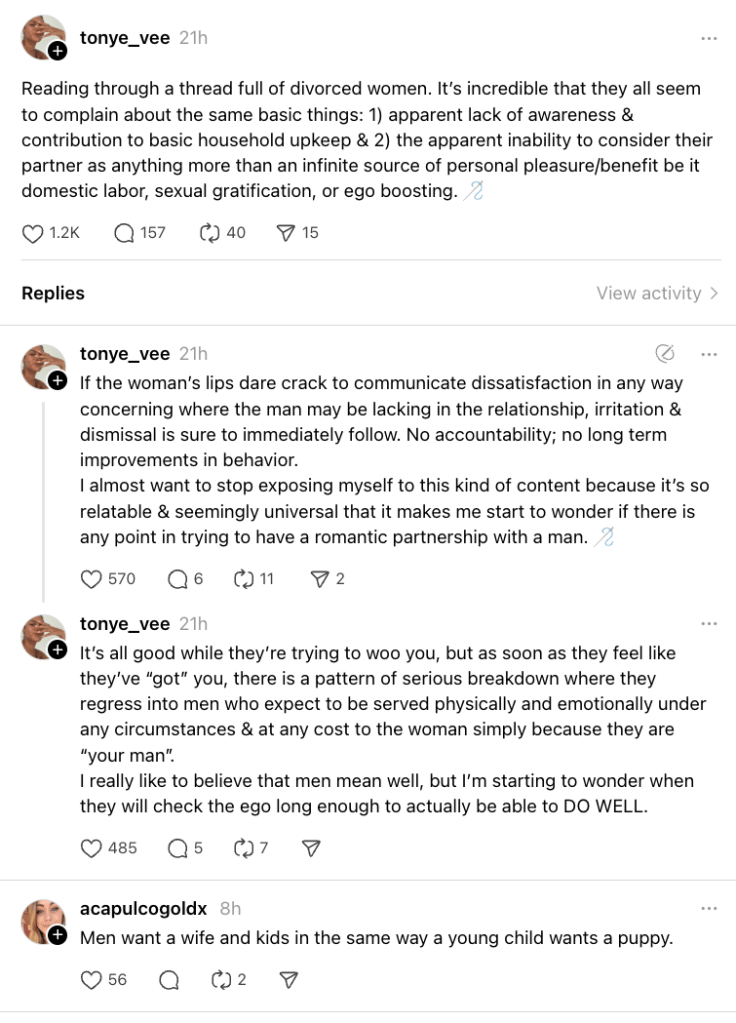
- The Lack of Awareness & Contribution to Basic Household Upkeep
Many women report that their partners either do not contribute equally to household chores or significantly underestimate the effort involved in managing a household. The traditional expectation of women handling domestic duties has lingered, even as women have entered the workforce at equal or greater rates than men. Studies repeatedly show that, despite both partners working full-time jobs, women still handle the majority of housework and childcare responsibilities. - The Tendency to View Women as a Source of Personal Gratification
Another common complaint is that men often see their partners as a resource for domestic labor, sexual gratification, and ego-boosting rather than as equal partners. This translates into relationships where women feel valued only for what they provide rather than for who they are. When women express dissatisfaction, they are frequently met with irritation, dismissal, or defensiveness rather than genuine efforts to change or improve the dynamic.
The “Marriage Mask” Phenomenon: What Changes After Commitment?
One of the more frustrating aspects of these discussions is the noticeable shift in behavior before and after marriage. Many women note that men are attentive, helpful, and engaged while dating, only to become passive and withdrawn once they feel secure in the relationship.
This phenomenon suggests that some men see courtship as a necessary effort to “win” a woman, after which they can relax into their natural state. Women, on the other hand, remain emotionally and physically engaged in maintaining the relationship. Over time, this dynamic can become exhausting, leading women to either resign themselves to an unfulfilling marriage or seek a way out.
The Role of Gender Socialization
Much of this dynamic can be traced back to gender socialization. From an early age, boys are often taught to prioritize their careers and personal achievements, while girls are taught to be caretakers and nurturers. Even in progressive households, subtle differences persist:
- Boys are often praised for achievements and independence, while girls are praised for being helpful and accommodating.
- Boys are rarely given responsibilities like laundry, cooking, or cleaning, whereas girls are expected to master these skills before adulthood.
- Boys are taught to expect support from women, but girls are conditioned to give it without question.
By the time these children grow up and enter relationships, these ingrained behaviors are difficult to unlearn. Many men truly do not realize the extent of work their partners do because they have never been expected to do it themselves.
The “Invisible Labor” Burden
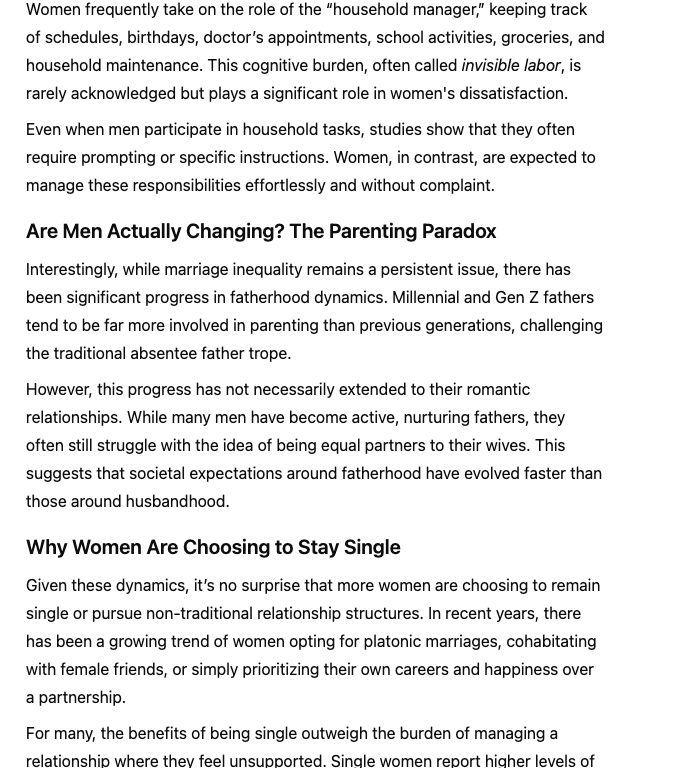
The mental load of running a household extends far beyond physical chores. Women frequently take on the role of the “household manager,” keeping track of schedules, birthdays, doctor’s appointments, school activities, groceries, and household maintenance. This cognitive burden, often called invisible labor, is rarely acknowledged but plays a significant role in women’s dissatisfaction.
Even when men participate in household tasks, studies show that they often require prompting or specific instructions. Women, in contrast, are expected to manage these responsibilities effortlessly and without complaint.
Are Men Actually Changing? The Parenting Paradox
Interestingly, while marriage inequality remains a persistent issue, there has been significant progress in fatherhood dynamics. Millennial and Gen Z fathers tend to be far more involved in parenting than previous generations, challenging the traditional absentee father trope.
However, this progress has not necessarily extended to their romantic relationships. While many men have become active, nurturing fathers, they often still struggle with the idea of being equal partners to their wives. This suggests that societal expectations around fatherhood have evolved faster than those around husbandhood.
Why Women Are Choosing to Stay Single
Given these dynamics, it’s no surprise that more women are choosing to remain single or pursue non-traditional relationship structures. In recent years, there has been a growing trend of women opting for platonic marriages, cohabitating with female friends, or simply prioritizing their own careers and happiness over a partnership.
For many, the benefits of being single outweigh the burden of managing a relationship where they feel unsupported. Single women report higher levels of happiness and personal fulfillment compared to their married counterparts, particularly those who are married to men.
Can This Dynamic Be Fixed?
For those who still believe in marriage, the question remains: how can this dynamic change? The answer lies in raising the bar for what a true partnership should look like. Here are a few key shifts that need to happen:
- Men Must Take Accountability
Rather than waiting for women to ask for help, men need to actively recognize and address inequalities in their relationships. This includes participating in domestic tasks without being asked, sharing the mental load, and making an effort to meet their partner’s emotional needs. - Women Must Set Standards Early On
Many women fall into the trap of accepting subpar treatment in the early stages of a relationship, hoping things will improve over time. Setting boundaries and expectations from the beginning can help prevent future dissatisfaction. - Society Must Redefine Masculinity
Men are often conditioned to see emotional labor and domestic work as “unmanly.” Changing this narrative is essential for creating truly equal partnerships. Men who share household responsibilities and emotional labor should be praised, not ridiculed. - Parents Must Raise Boys Differently
If we want to see long-term change, the way boys are raised must evolve. Teaching boys to cook, clean, and manage their own lives from a young age ensures they grow into men who view women as equals rather than caregivers.
The Bottom Line
Marriage, in its current state, is failing many women. While some couples have found balance and equality, far too many women feel trapped in relationships where they do the majority of the work while receiving little in return.
The rising divorce rates and shifting attitudes toward marriage are not a coincidence—they are a response to a system that has long prioritized men’s comfort over women’s happiness. Whether or not marriage as an institution can be saved remains to be seen. But one thing is clear: women are no longer willing to settle for less.
 celebchai.com