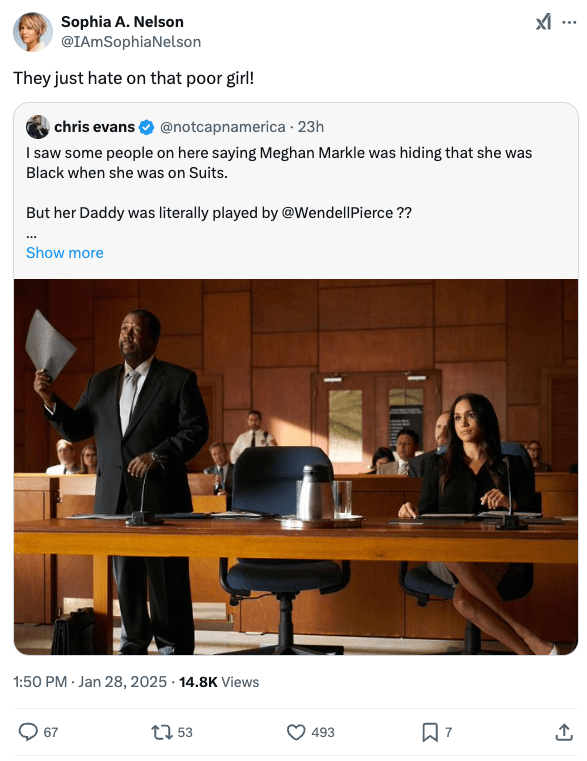
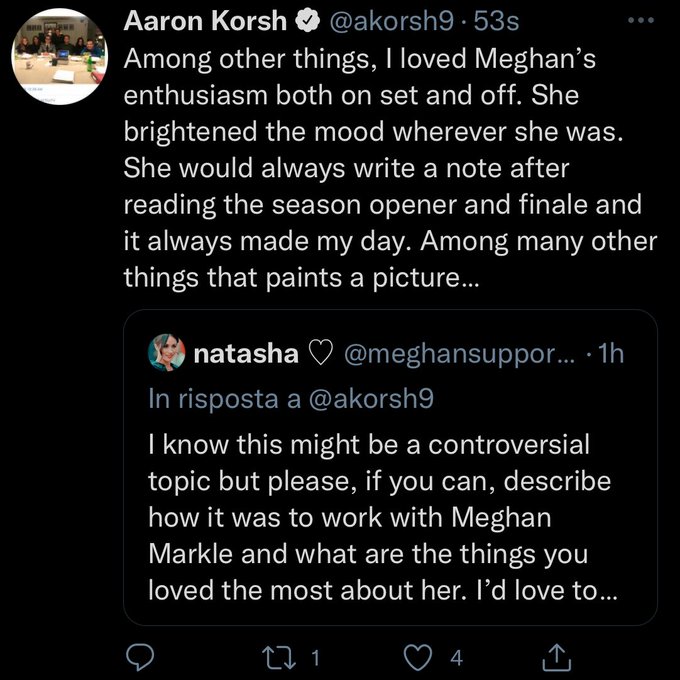
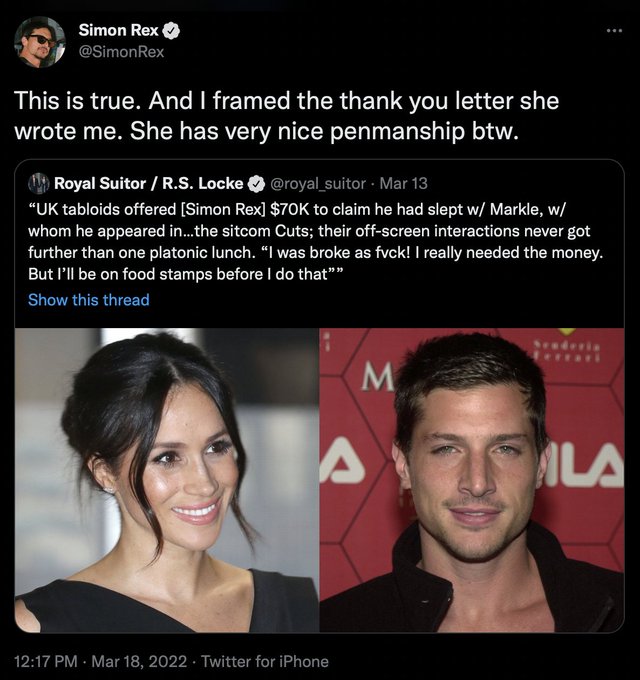
This thread on X (formerly Twitter) revolves around discussions about Meghan Markle, the Duchess of Sussex, and the public’s mixed reactions to her. Here’s a summary of the key points:
The conversation around Meghan Markle’s pre-royal career often overlooks the significance of her seven-season run on USA Network’s legal drama “Suits.” As Rachel Zane, Markle established herself as a central figure in one of cable television’s most successful series, yet this achievement is frequently minimized in discussions about her path to royal life.
Television Impact and Character Development
Rachel Zane’s character arc represented more than just a love interest storyline. As a paralegal pursuing her law degree while working at Pearson Hardman (later Pearson Specter Litt), the character embodied professional ambition and personal growth. Her relationship with Mike Ross (Patrick J. Adams) developed organically throughout the series, becoming one of its central narratives rather than a mere subplot.
The chemistry between Markle and Adams drew natural comparisons to iconic television couples, notably Ross and Rachel from “Friends.” However, this parallel oversimplifies the complexity of their characters’ professional and personal journeys throughout the series.
Representation and Identity
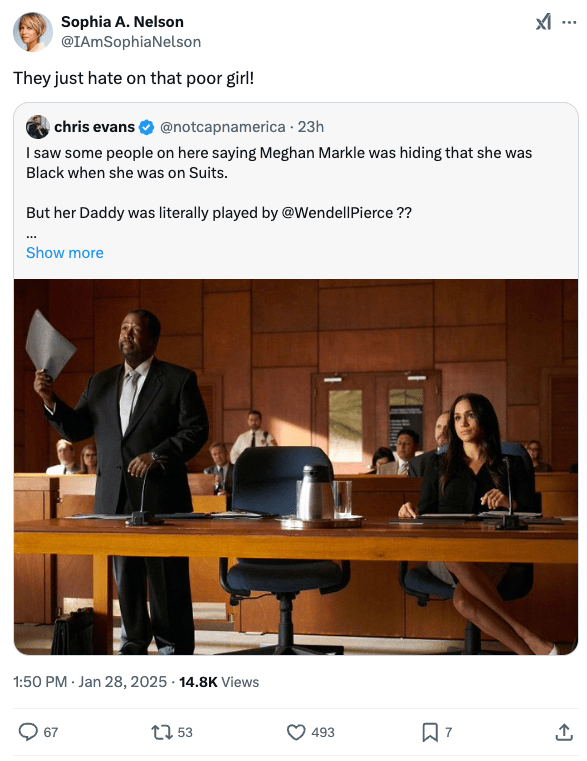
The casting of Wendell Pierce as Robert Zane, Rachel’s father, created one of television’s most notable Black father-daughter relationships. This thoughtful representation challenged claims that Markle attempted to downplay her biracial identity before her royal marriage. Instead, it demonstrated how “Suits” naturally incorporated diversity into its storytelling without making it the sole focus of its characters.
Career Achievement in Context
Markle’s position as a series regular, appearing in the opening credits throughout her run, represents a significant achievement in an industry known for its competitive nature. The attempt to diminish this accomplishment often reveals more about current social dynamics than it does about her career trajectory. Television actors who maintain principal roles in long-running series demonstrate both professional skill and audience appeal.
Legacy and Future Possibilities
The discussion of a potential return to acting, particularly in relation to the announced “Suits” spin-off, reflects both the enduring popularity of her character and public interest in her professional capabilities beyond royal life. Such speculation also highlights how her acting career has become intertwined with broader discussions about independence and identity in public life.
Cultural Impact and Public Discourse
The tendency to minimize Markle’s pre-royal achievements often aligns with broader patterns of dismissing women’s professional accomplishments, particularly those of women of color. Her role on “Suits” represents more than just an acting credit – it demonstrates sustained success in a competitive industry and the ability to connect with audiences over multiple seasons.
Conclusion
Meghan Markle’s role on “Suits” deserves recognition as a significant professional achievement rather than a footnote in her path to royal life. The attempt to reframe her career success reflects broader societal tensions about merit, representation, and the intersection of entertainment and royal life. Understanding her work on “Suits” provides crucial context for discussions about her later public role and the reactions it has generated.
This history reminds us that public figures often have complex, multifaceted careers that deserve acknowledgment on their own terms, rather than being viewed solely through the lens of their later roles or relationships.

In summary, the thread reflects a mix of support for Meghan, criticism of her detractors, and discussions about race, jealousy, and societal expectations. The conversation underscores the polarized opinions surrounding her public persona.
 celebchai.com