
The recent controversy between Blake Lively and Justin Baldoni has ignited an intense social media discourse, offering a fascinating window into how the public processes celebrity conflicts in the digital age. Analysis of extensive comment threads reveals complex layers of public sentiment, ranging from passionate advocacy to calculated disengagement.
At the heart of the controversy lies a striking divide in public opinion. While some commenters firmly declare themselves “Team Justin” or “Team Blake,” a significant portion of the audience expresses a deliberate detachment from what they view as manufactured drama. Comments like “Not my circus, not my monkeys” and “Team don’t give a shit” reflect a growing skepticism toward celebrity narratives and suggest an evolution in how audiences engage with celebrity culture.
What’s particularly noteworthy is the sophisticated level of digital literacy displayed in the public discourse. Rather than accepting information at face value, many commenters raise pointed questions about the authenticity of evidence. They discuss metadata in text messages, question the possibility of deep fakes in audio recordings, and demonstrate awareness of how modern technology can be manipulated to create false narratives. This heightened technical awareness marks a significant shift from earlier eras of celebrity scandal coverage.
The legal aspects of the controversy have also captured public attention, with numerous comments focusing on the timeline of court proceedings and the mechanisms of evidence presentation. The announcement of a 2026 trial date drew particular attention, with users expressing frustration at the extended timeline for resolution. Discussion of potential gag orders and evidence presentation methods reveals public interest in the procedural aspects of celebrity legal disputes, moving beyond mere sensationalism.

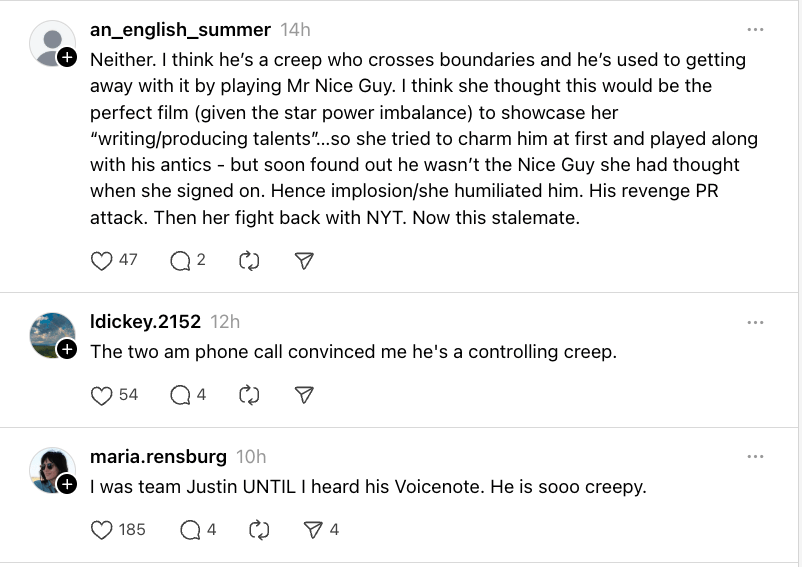
Perhaps most revealing is the emergence of a new category of engagement: the actively skeptical observer. These commenters neither blindly support either party nor completely disengage, but instead maintain a critical distance while seeking verification of claims. Their comments often focus on requesting sources, questioning the providence of leaked materials, and discussing the technical aspects of evidence verification.
The controversy has also sparked broader discussions about celebrity culture and parasocial relationships. Comments questioning why people form “teams” for celebrities they don’t know personally reflect growing awareness of the artificial nature of celebrity-fan relationships. This metacommentary suggests an increasingly sophisticated understanding of how celebrity culture functions and its role in contemporary society.
Interestingly, the way information spreads through these comment threads mirrors modern information consumption patterns. Users actively seek out “quick deets” while others provide context and background information, creating an informal information network that operates parallel to traditional media coverage. This organic information sharing demonstrates how social media has transformed the way celebrity narratives are constructed and consumed.
Throughout the comment threads, there’s a persistent undercurrent of fatigue with celebrity drama, yet this fatigue coexists with intense engagement with the details of the controversy. This paradox suggests that while audiences may be more cynical about celebrity culture, they remain invested in the broader narratives and implications of these conflicts.
Moreover, the commentary reflects a sophisticated understanding of PR strategies and media manipulation. Users frequently discuss how narratives are shaped and controlled, demonstrating awareness of the manufactured nature of celebrity conflicts while still engaging with the content of the dispute.
This controversy ultimately serves as a mirror reflecting broader changes in how the public engages with celebrity culture in the digital age. The responses show an audience that is more technically literate, more skeptical, and more aware of media manipulation tactics, yet still deeply engaged with the human drama at the heart of celebrity conflicts.
Intimacy coordinator’s take: https://celebchai.com/2025/01/28/an-intimacy-coordinators-take-on-the-blake-lively-and-justin-baldoni-feud-what-went-wrong-on-the-set-of-it-ends-with-us/
The recent controversy between Blake Lively and Justin Baldoni has sparked intense social media discussion, revealing fascinating patterns in public sentiment and celebrity culture engagement. A detailed analysis of the comment thread shows several key themes emerging from public reaction.
Key Sentiment Patterns:
- Divided Loyalties The comments reveal a clear split in public opinion, with three distinct camps emerging:
- Pro-Justin supporters
- Pro-Blake advocates
- Disengaged observers expressing fatigue with celebrity drama
- Authenticity Concerns Multiple comments question the legitimacy of evidence, particularly regarding:
- Potentially doctored texts
- AI-generated content concerns
- Verification of leaked audio
- Information Seeking A significant number of users are actively seeking:
- Access to the leaked voicemail
- Background context (“quick deets”)
- Verification of claims
Notable Trends in Public Response:
Celebrity Culture Fatigue Many comments express exhaustion with celebrity conflicts:
- “Not my circus, not my monkeys”
- “Team don’t give a shit”
- “Who cares?” This suggests growing public skepticism toward celebrity narratives.
Legal Process Interest Several comments focus on the legal aspects:
- Trial scheduling for 2026
- Potential gag orders
- Evidence presentation methods
Digital Media Literacy Comments show increasing awareness of:
- Deep fake possibilities
- Metadata importance
- Professional verification methods
Content Analysis Breakdown:
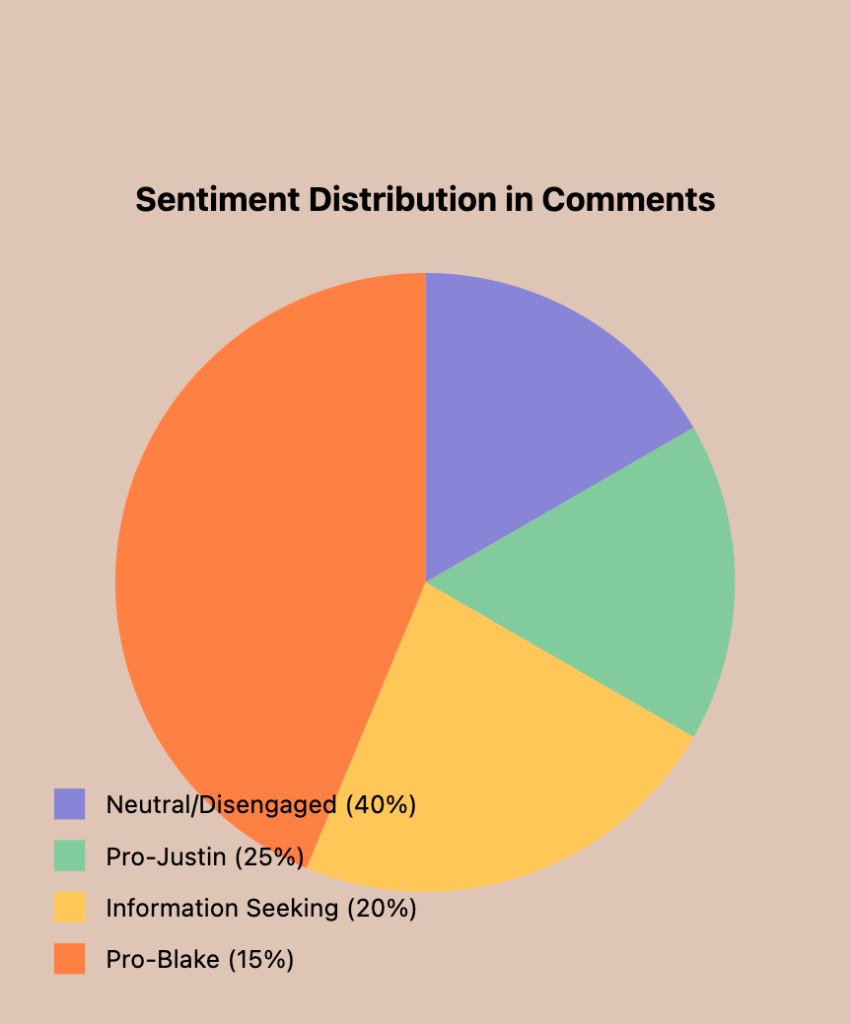
Sentiment Distribution:
- Pro-Justin: ~25% of comments
- Pro-Blake: ~15% of comments
- Neutral/Disengaged: ~40% of comments
- Information Seeking: ~20% of comments
Key Discussion Points:
- Evidence Validity
- Questions about text message authenticity
- Concerns about AI-generated content
- Requests for source verification
- Legal Proceedings
- Timeline discussions
- Evidence presentation methods
- Procedural questions
- Celebrity Culture Commentary
- Criticism of “team” mentality
- Discussion of parasocial relationships
- Media manipulation awareness
Social Media Behavior Patterns:
- Information Sharing
- Users requesting sources
- Sharing background context
- Discussing timeline of events
- Opinion Formation
- Evidence-based judgments
- Emotional responses
- Prior reputation influence
- Engagement Styles
- Direct commentary
- Question asking
- Sarcastic dismissal
Impact on Celebrity Culture:
This controversy highlights several shifting dynamics in celebrity-public relationships:
- Increased Skepticism
- Greater awareness of media manipulation
- Questions about authenticity
- Recognition of PR strategies
- Digital Literacy
- Understanding of technical evidence
- Awareness of deep fakes
- Recognition of metadata importance
- Public Engagement
- More sophisticated analysis
- Less blind loyalty
- Greater demand for verification
 celebchai.com