

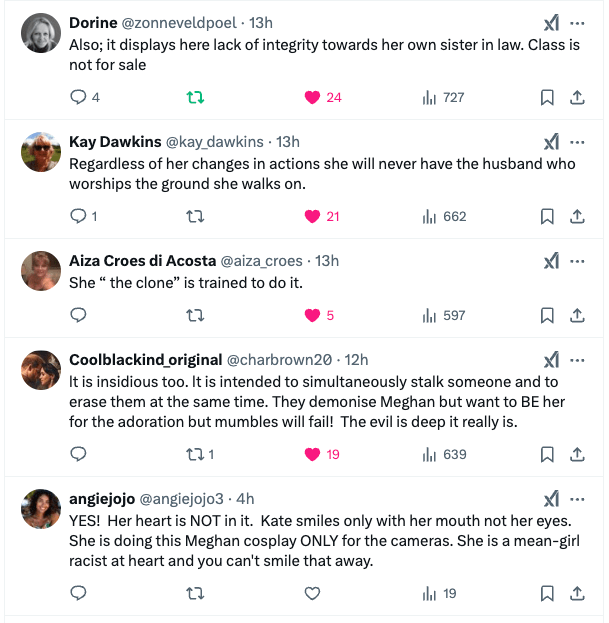
In the age of social media, every royal gesture becomes fodder for intense public scrutiny and interpretation. A recent Twitter discourse about Catherine, Princess of Wales’s public displays of affection has ignited a fascinating discussion about authenticity, public image, and the complex dynamics of royal behavior in the modern era.
The Context of the Controversy
The conversation centers around observations of Catherine’s increasing comfort with public hugging, which some social media users have interpreted as an adoption of Meghan, Duchess of Sussex’s more informal style of public engagement. This has sparked a broader debate about authenticity, protocol, and the evolution of royal behavior in the public eye.
Understanding Royal Protocol and Its Evolution
Royal protocol has never been as rigid as popular imagination suggests. Throughout history, members of the British Royal Family have adapted their public behavior to match changing social norms. Princess Diana was particularly known for breaking with tradition, famously hugging AIDS patients when others wouldn’t and showing physical affection to members of the public.
The Social Media Effect
Social media’s impact on public discourse about the royal family cannot be understimated. Platforms like Twitter allow for immediate, unfiltered commentary that can quickly shape public narratives. However, these discussions often oversimplify complex dynamics into binary narratives of competition or imitation.
The Complexity of Public Performance
What’s often overlooked in these discussions is the inherent complexity of public roles. All public figures, royal or otherwise, must balance authenticity with the demands of their position. Changes in behavior might reflect:
Copying Meghan
- Natural evolution in confidence and comfort in public roles
- Responses to changing social expectations
- Personal growth and adaptation
- Strategic decisions about public engagement
Beyond Simple Narratives
The tendency to reduce complex human behavior to simple narratives of imitation or competition does a disservice to our understanding of public figures. Every public figure, including both Catherine and Meghan, brings their own authentic approach to their roles while operating within certain institutional constraints.
Looking Forward
Rather than focusing on perceived competition or imitation, a more productive conversation might center on how the monarchy continues to evolve in response to contemporary expectations while maintaining its historical significance. The way different royal family members navigate this balance offers insights into the challenges of public life in the modern era.
Conclusion
The social media discourse around royal behavior reveals more about our own preconceptions and biases than it does about the individuals involved. As the monarchy continues to evolve, perhaps we need to evolve our own understanding of authenticity, protocol, and public performance in the age of social media.
Rather than seeking to assign blame or spot imitation, we might better serve public discourse by examining how all public figures navigate the complex demands of their roles while maintaining their individual authenticity in an era of unprecedented public scrutiny.
 celebchai.com