

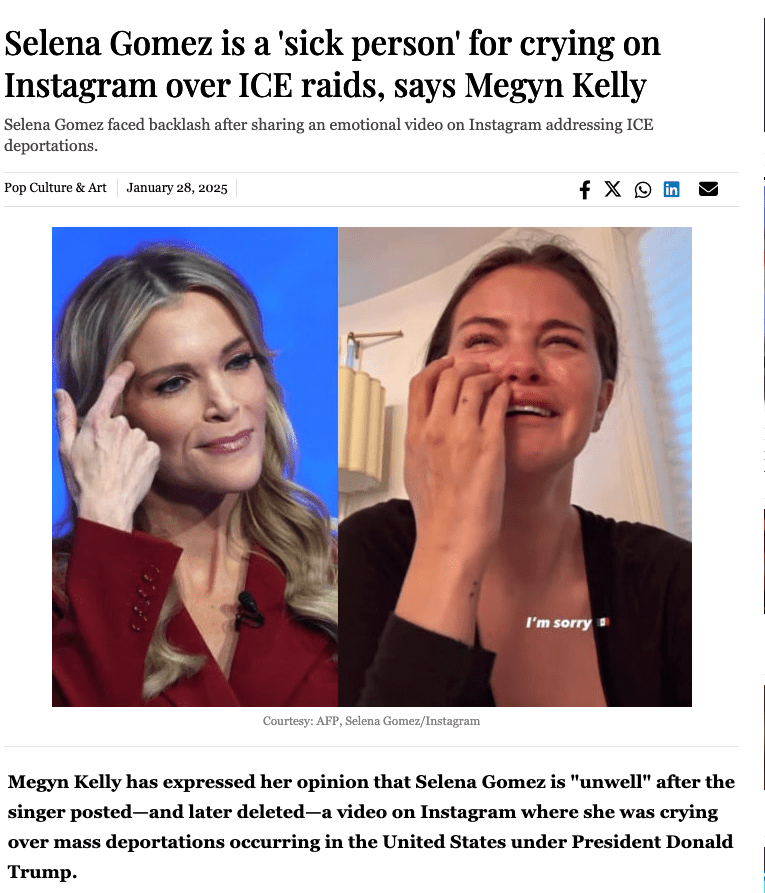
Selena Gomez has sparked controversy yet again—this time over a tearful Instagram video addressing recent ICE raids. In the now-deleted post, Gomez broke down in tears, saying, “All my people are getting attacked… I wish I could do something.” While some praised her for showing empathy, others, including conservative commentator Megyn Kelly, criticized her reaction as performative and uninformed.
What Happened?
In response to reports of 954 ICE raids occurring nationwide, Gomez posted an emotional video with a Mexican flag emoji, expressing distress over the deportations. The video was later removed after backlash, but not before it ignited a political firestorm.
On The Megyn Kelly Show, Kelly harshly criticized Gomez, stating:
“She’s unwell. Obviously, this is an unwell person. And by the way, anybody who takes their phone, works up in tears, and posts a video of themselves crying into their phone is sick.”
Kelly further argued that Gomez was unaware that most Americans support these deportation policies, which primarily target criminals.
Gomez’s Response
Despite deleting the video, Gomez responded to the criticism with a follow-up Instagram story, writing:
“Apparently it’s not OK to show empathy for people.”
Her response suggests that she believes the backlash was unwarranted and that expressing human emotion should not be controversial.
The Divide Over Celebrity Activism
This incident highlights an ongoing debate: Should celebrities involve themselves in political issues? And if they do, should they be held to a higher standard of knowledge before speaking out?
Arguments in Support of Gomez:
- Celebrities have massive platforms and can raise awareness about important issues.
- Her tears were a genuine expression of compassion, not a calculated political statement.
- The immigration system does have flaws that disproportionately impact certain communities.
Arguments Against Gomez’s Reaction:
- Crying on Instagram does not contribute to meaningful policy change.
- Her framing of the issue was misleading, as ICE is primarily targeting criminals.
- As a billionaire, she has the resources to take tangible action rather than just posting a video.
The Role of Emotion in Politics
The Gomez-Kelly controversy also highlights a broader question: Should emotions play a role in shaping public policy? On one hand, compassion and empathy are essential to creating humane immigration policies. On the other, policy decisions require facts, logic, and pragmatism—not just feelings.
The immigration debate is deeply personal, affecting real families and communities. But how that debate is conducted—through emotional appeals, factual arguments, or performative activism—remains an open question.
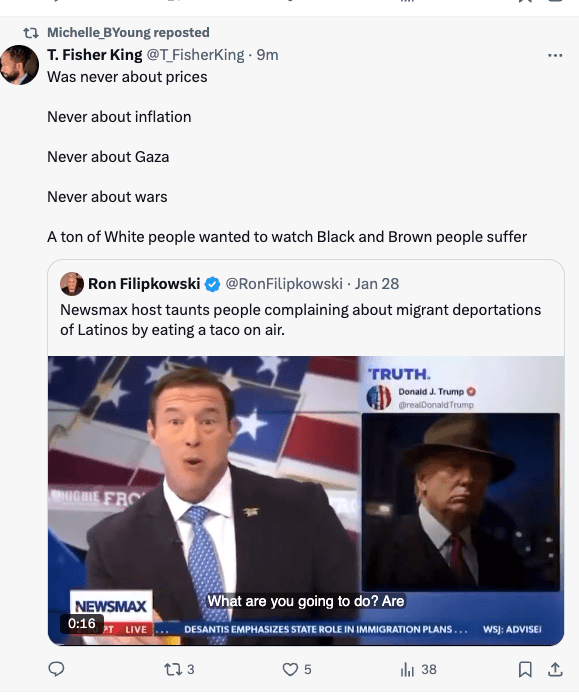
Selena Gomez’s emotional Instagram video about ICE deportations and Megyn Kelly’s sharp criticism of it highlight the deep divide in America. But beyond their public clash, another reality exists—one where some commentators use immigration as a tool for humiliation rather than debate.
On Newsmax, a commentator mocked Gomez’s reaction, not to discuss policy, but seemingly to make brown people feel bad. Instead of engaging with the real concerns surrounding deportation—the separation of families, the trauma faced by children, or the economic realities of immigration—this segment turned into a cruel spectacle. This kind of mockery isn’t about enforcing laws; it’s about reinforcing power dynamics, using fear and ridicule to make certain communities feel unwelcome.
The Two Americas on Immigration
- One America sees immigration through a lens of empathy. For people like Gomez, deportations are not just statistics—they are about real human lives, families being torn apart, and children left in uncertainty. This America believes that compassion should play a role in how immigration laws are enforced and reformed.
- The Other America sees strict border enforcement as necessary for national security. This view argues that laws must be upheld to maintain order and prevent criminal activity. For this America, emotional displays like Gomez’s are seen as naive or performative, ignoring the legal realities of undocumented immigration.
But there’s a third, darker force at play—where some take joy in the suffering of others. When Newsmax turned this debate into an opportunity to shame brown people, it revealed an ugly truth: for some, immigration policy is less about security and more about maintaining racial hierarchies.
Mockery as a Political Weapon
There’s a long history of using shame and humiliation to suppress marginalized communities. When public figures or news outlets turn suffering into a joke, it sends a message: You don’t belong here. This is where the immigration debate moves beyond policy and into something more insidious—where enforcing the law is not just about safety but about keeping certain people in their place.
The Question Moving Forward
This moment exposes the divide in America: Is the goal of immigration policy to secure the country while respecting human dignity? Or is it to use power to dehumanize certain groups? Selena Gomez may have been emotional, and Megyn Kelly may have dismissed her, but the real problem isn’t their debate—it’s the people who are willing to turn human suffering into entertainment.
If America truly wants to fix immigration, it needs to decide: Are we a country of laws and compassion? Or a country where cruelty is the point?
Final Thoughts: The Power and Limits of Celebrity Influence
Selena Gomez’s video has reignited discussions about immigration, political activism, and the role of celebrities in public discourse. While she undoubtedly meant well, the backlash shows that emotional responses alone are not enough to drive meaningful change.
At the end of the day, should celebrities be more informed before speaking out? Or does their influence alone justify their involvement in political discussions? The debate rages on.
 celebchai.com
2 thoughts on “A Tale of Two Americas: When Immigration Policy Becomes a Weapon”