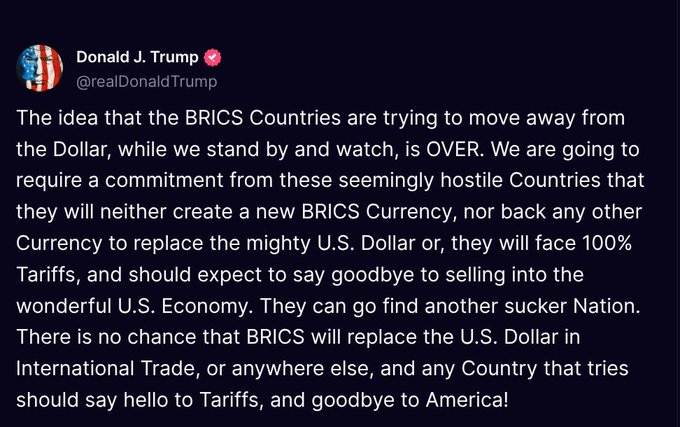
The battle over global currency dominance is playing out in real-time on social media, where everyday users are offering surprisingly nuanced takes on what could be the biggest shift in international trade since the end of the gold standard. Let’s dive into how the public is processing these seismic economic rumblings.
“Bring back the gold standard of trade, the US dollar. End the nonsense,” declares @noahmerid45, capturing the traditionalist view that America’s currency supremacy shouldn’t be questioned. This sentiment reflects a deeper nostalgia for perceived American economic dominance, but it’s quickly challenged by other voices in the thread.
@siramitji1 drops what amounts to an economic bombshell: “The BRICS nations have been exploring ways to reduce their dependence on the U.S. dollar, including discussions about establishing a new currency to facilitate trade among themselves.” This isn’t just Twitter talk – it represents a real challenge to decades of dollar dominance in global trade.

The responses reveal a fascinating mix of anxiety, anticipation, and analytical thinking about what this means for the world economy. “Bold move, this could escalate tensions in global trade,” observes @OVERWHELMING, showing how users are thinking beyond simple nationalistic reactions to consider the broader implications of economic warfare.
What’s particularly striking is how the conversation quickly moves beyond simple economics to touch on power dynamics and human nature. @SundeepMehra7 offers this philosophical observation: “Even little power makes people do things and makes them forget that nothing lasts forever. Bullying, hate, division, and monopolies take their purpose and ability to understand anything beyond self-ambitions in fear of losing their places in the world.” It’s the kind of deep insight you might not expect in a Twitter thread about currency policy.
The specter of economic retaliation looms large in the discussion. “If other countries too retaliate then?” asks @WithOnlyOption, leaving the ominous question hanging. It’s a valid concern – economic history shows how currency wars can quickly spiral into trade wars, and from there into something worse.
Some users cut through the tension with humor. “This man thinks he’s found the answer to everything with tariffs haha,” quips @fercho5, highlighting how complex economic issues often get reduced to simplistic solutions in public discourse.
But beneath the jokes runs a current of genuine concern about regional impacts. “What’s the fate of Nigerians,” asks @Venom, while others wonder about implications for other developing economies. These comments highlight how currency warfare between major powers can have devastating effects on smaller economies caught in the crossfire.
The discussion reveals how public understanding of global economics has evolved. Gone are the days when currency talks were confined to central bank boardrooms and economic summits. Social media users are showing sophisticated awareness of how currency dominance relates to global power dynamics.
“Let’s see what brics countries have to say about this threat,” notes @Its_nira12, understanding that we’re witnessing a potential power shift from West to East. It’s not just about money – it’s about the changing balance of global influence.
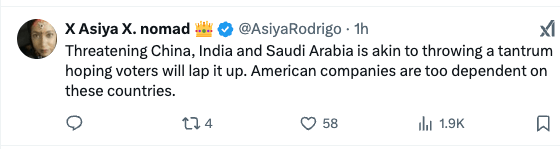
The thread also exposes how economic policies can’t be separated from broader social and political dynamics. Comments touch on themes of bullying, monopoly power, and the fear of losing status – showing how currency battles reflect deeper human concerns about power and control.
What emerges is a picture of public discourse that’s more nuanced than many might expect. People aren’t just cheering for their home team currency – they’re grappling with complex questions about global power dynamics, economic justice, and the future of international trade.
This Twitter exchange captures a moment when the public is becoming increasingly aware that the global economic order isn’t set in stone. Whether it’s through humor, anxiety, or analytical observation, people are processing the possibility of major changes in how the world conducts its business.
The responses suggest that whatever happens with BRICS currency plans or dollar dominance, the public is watching and understanding more than they’re often given credit for. As @varoraxp notes, “This could have significant global economic implications Shift in currency dominance?” Indeed it could, and the world is watching it unfold in real-time, one tweet at a time.
 celebchai.com