**1. **Musk’s Role and DOGE’s Mandate:**
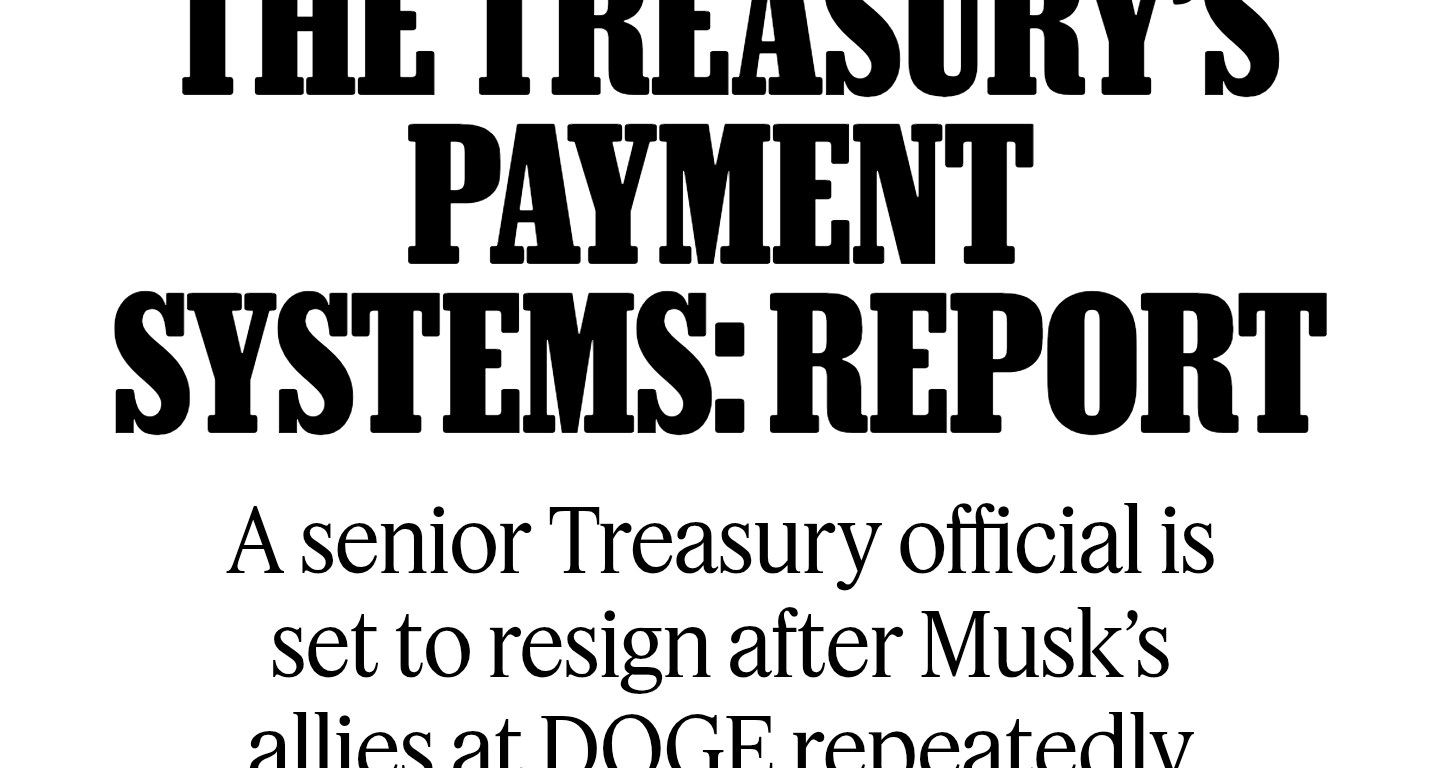
Elon Musk leads the Department of Government Efficiency (DOGE), a rebranded U.S. Digital Service, under Trump’s administration. Despite lacking congressional approval, DOGE aims to reduce government spending and bureaucracy. – DOGE sought access to the Treasury’s payment systems, which manage $6 trillion annually, including Social Security, Medicare, and federal salaries. The rationale for this access remains unclear, raising concerns about potential misuse.
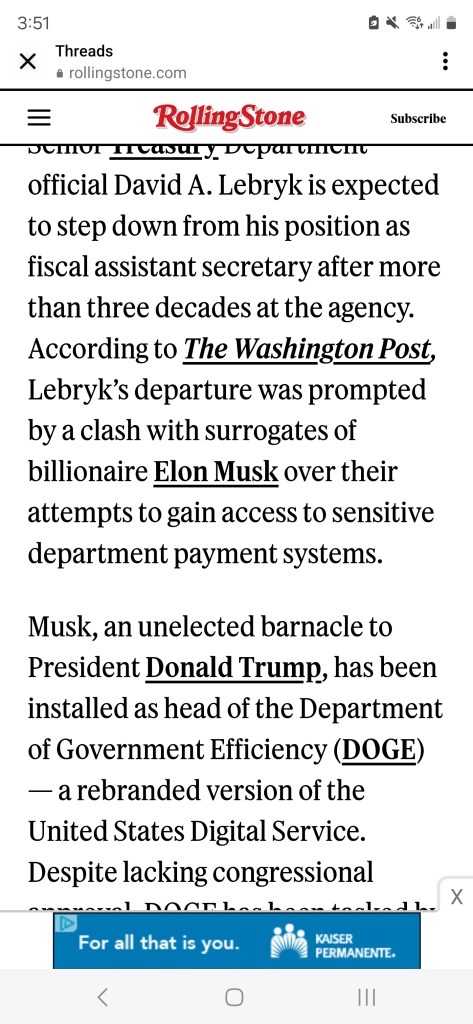
2. **Resignation of David A. Lebryk:** – Lebryk, a nonpartisan fiscal assistant secretary, resigned after clashes with Musk’s allies. His departure signals potential instability and ethical concerns within the Treasury, emphasizing fears of partisan agendas influencing critical financial systems.
3. **Musk’s Broader Influence:**
Musk has placed allies in key positions, such as the Office of Personnel Management, which encouraged federal employees to resign with offers akin to Twitter’s post-acquisition strategy. This mirrors Musk’s corporate tactics, suggesting a shift toward privatization or efficiency-driven layoffs in government. – Musk publicly criticized a $500 billion AI investment, highlighting his unchecked influence and creating friction within Trump’s circle, though Trump dismissed it as a personal dispute.
4. **Conflict of Interest Concerns:**
Musk’s dual role as a government advisor and CEO of private companies (Tesla, SpaceX) poses significant conflicts of interest. Critics argue his position could lead to policies favoring his businesses, yet Republican opposition remains absent.
5. **Media Perspective and Bias:** –
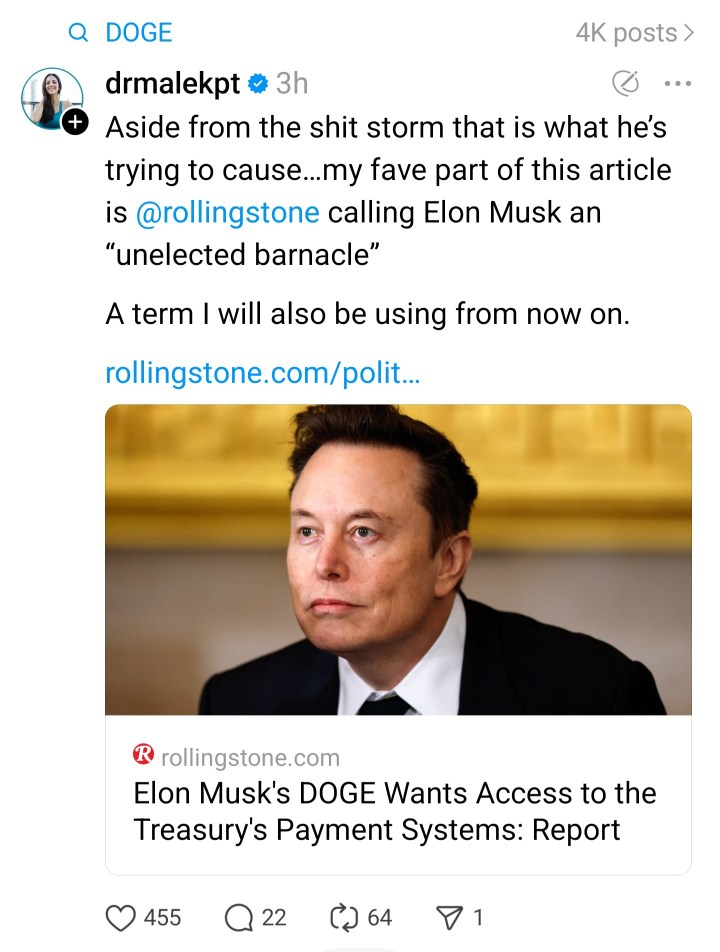
Rolling Stone’s critical tone reflects a left-leaning bias, using terms like “unelected barnacle” to underscore Musk’s controversial role. The article leverages reputable sources (WaPo, Wired, Politico) but frames events to emphasize risks of corporate power infiltrating governance.
**Underlying Themes and Implications:**- **Power Consolidation:**
Musk’s influence exemplifies the rise of unelected tech elites in government, challenging democratic norms and accountability.-
**Ethical Risks:**
Access to payment systems without clear justification sparks fears of financial manipulation or privatization of public funds.-
**Political Dynamics:**
The lack of GOP pushback suggests partisan tolerance for Musk’s actions, prioritizing deregulation and anti-bureaucracy agendas over ethical governance.
**Critical Questions Unaddressed:**-
What specific changes does DOGE propose for the Treasury’s systems?- How might Musk’s businesses directly or indirectly benefit from Treasury access?- What safeguards exist to prevent abuse of financial infrastructure?
**Conclusion:**
The article paints Musk as a disruptive force in the Trump administration, leveraging his wealth and influence to reshape government operations. While highlighting legitimate concerns about conflicts of interest and transparency, it also reflects broader anxieties about the merging of corporate and state power. The situation underscores the need for robust oversight mechanisms to prevent personal or partisan exploitation of public institutions.
 celebchai.com