Celebchai exists to further research in entertainment with a focus on women's portrayals, dialogs, and roles. Through the paparazzi lens, CC brings the reader/viewer the latest news, intricate stories, and the complex world of cinema. Custom research projects on topics such as nepotism, dialog improvement, and film allocation are available ($10-20M min.). Celebchai is run by Dr. Aparna Vashisht Rota at www.linkedin.com/in/avrota.
In her GB News segment, Nana Akua referenced Piers Morgan’s criticisms of Meghan Markle, portraying him as a victim of cancel culture and suggesting that his dismissal from Good Morning Britain was an example of Meghan wielding undue influence. However, a closer examination reveals a pattern of personal obsession, misinformation, and professional misconduct on Morgan’s part, which ultimately led to his downfall—not Meghan’s influence.
1. Piers Morgan’s Obsession with Meghan Markle
Piers Morgan’s fixation on Meghan Markle has been widely documented. His hostility toward her intensified after she stopped engaging with him, following an initial acquaintance before her relationship with Prince Harry. Morgan himself admitted that he and Meghan exchanged messages when she was an actress, but she eventually cut off contact, which he has publicly resented ever since. His relentless criticism appears more personal than professional, with his rants often resembling a grudge rather than objective journalism.
2. The Good Morning Britain Controversy
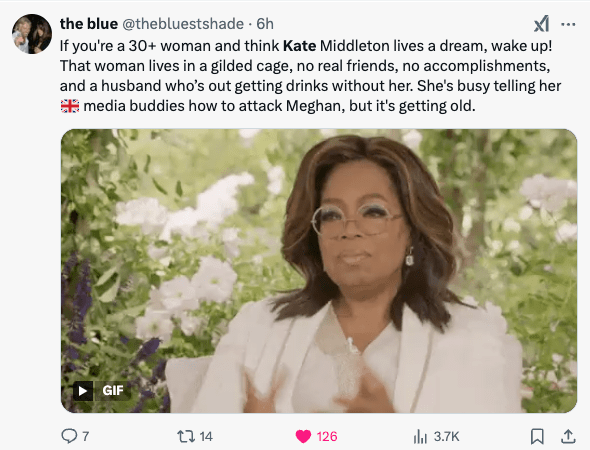
One of the most notable incidents involving Morgan was his reaction to Meghan’s Oprah Winfrey interview in 2021, where she revealed her struggles with mental health and suicidal thoughts. Morgan flat-out dismissed her claims, stating on live television:
“I don’t believe a word she says. I wouldn’t believe her if she read me a weather report.”
I think he is talking about himself. He and Nana Akua are selfish hacks ruining a family.
This comment sparked a record 58,000 complaints to Ofcom, the UK’s media regulator, including one from Meghan Markle herself. However, it is important to note that Meghan’s complaint did not call for his firing—she expressed concern over the harmful impact of dismissing mental health struggles on national television.
Ultimately, Piers Morgan walked out of his own show live on air after being challenged by a colleague, and he later resigned voluntarily. His departure was not forced by Meghan or ITV, but rather a result of his own refusal to apologize or engage in responsible journalism.
3. Ofcom’s Ruling and Press Freedom
Ofcom later ruled that while Morgan’s comments were “potentially harmful,” they did not violate broadcasting regulations on free speech. However, his remarks sparked an important conversation about media responsibility.
The issue was not about censorship, but about the ethical responsibility of journalists to avoid undermining mental health advocacy.
Piers Morgan’s refusal to engage in a good-faith discussion on the topic showcased a lack of professional integrity, especially given his long-standing history of attacking Meghan with little to no factual basis.
4. The Double Standard of Free Speech
Nana Akua and Piers Morgan often argue that their “free speech” is under attack when criticized. However, both figures frequently dismiss and attack Meghan and Harry for speaking their truth, revealing a glaring double standard.
Free speech does not mean freedom from consequences. Morgan was not “canceled”—he walked out on his own, and his continued platform on TalkTV and GB News proves he still has a voice.
Meghan, however, has been vilified simply for speaking about mental health and racism, showing that some voices are more protected than others in British media.
Conclusion
Piers Morgan’s downfall was not Meghan Markle’s doing—it was a self-inflicted result of unprofessionalism, personal obsession, and reckless disregard for mental health issues. Nana Akua’s attempt to frame him as a martyr for free speech is misleading, ignoring the reality that Morgan left his job of his own volition, continues to enjoy a major media career, and remains one of the most vocal critics of Meghan—proving that his so-called silencing never actually happened.
Piers Morgan’s downfall was not Meghan Markle’s doing—it was a self-inflicted result of unprofessionalism, personal obsession, and reckless disregard for mental health issues. Nana Akua’s attempt to frame him as a martyr for free speech is misleading, ignoring the reality that Morgan left his job of his own volition, continues to enjoy a major media career, and remains one of the most vocal critics of Meghan—proving that his so-called silencing never actually happened.
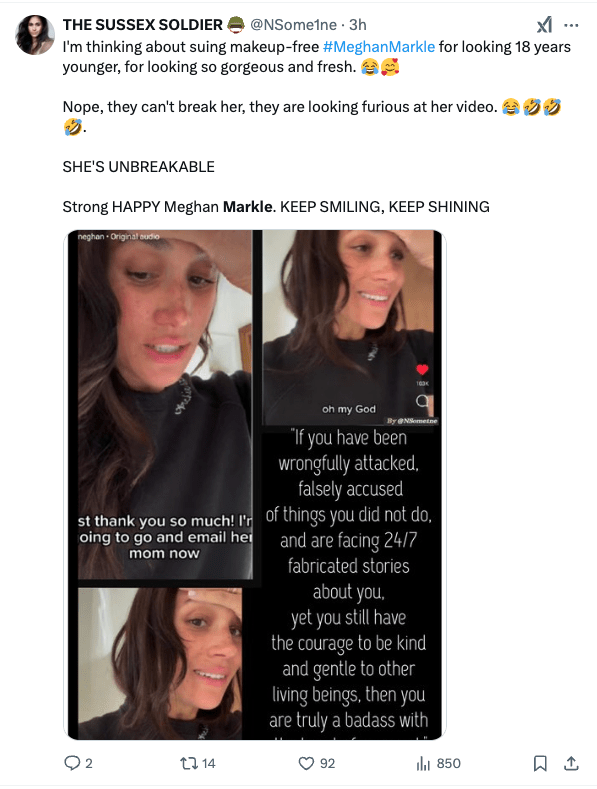
Meghan has strong boundaries, self respect, and compassion. She is not a bully.
Boundaries are the invisible lines that define what is acceptable and unacceptable in relationships, work, and personal interactions. They are essential for maintaining self-respect, fostering healthy relationships, and ensuring that individuals do not compromise their values, integrity, or well-being for the sake of pleasing others.
A boundary is simply knowing and communicating what’s okay and what’s not okay for you. Many people struggle with setting boundaries because they fear disappointing others, appearing unkind, or losing relationships. However, the reality is that healthy boundaries enhance relationships, as they create clear expectations and reduce misunderstandings, resentment, and emotional exhaustion.
In personal relationships, boundaries help define emotional and physical space. They ensure that interactions are mutually respectful and that individuals do not feel drained or taken advantage of. When boundaries are not in place, people may tolerate behaviors that make them uncomfortable, leading to frustration and resentment. Setting firm yet compassionate boundaries allows for open communication and deeper connection rather than allowing issues to fester in silence.
In professional environments, boundaries are crucial for establishing a respectful and productive workplace. Without them, people may take on more responsibilities than they can handle, struggle with work-life balance, or deal with toxic behaviors from colleagues or leadership. A lack of boundaries in the workplace often leads to burnout, dissatisfaction, and high turnover rates. Leaders who respect boundaries create a healthier, more efficient work culture where employees feel safe, valued, and empowered.
One of the strongest connections between compassion and boundaries is that truly compassionate people often have the firmest boundaries. This may seem counterintuitive, but the reason is simple: when you set boundaries, you prevent resentment and exhaustion, which allows you to be genuinely kind, patient, and present for others. If a person lacks boundaries, they may overextend themselves, leading to emotional depletion and frustration, which can ultimately make them bitter or disengaged.
Another key principle of boundaries is that they are not barriers—they do not separate people but instead create respect and clarity in relationships. They do not mean shutting people out or avoiding challenges; rather, they ensure that interactions are built on mutual respect and emotional safety. When individuals communicate their boundaries clearly and assertively, they invite others to do the same, fostering healthier connections.
In summary, boundaries are a key component of self-love and respect, allowing people to show up for others in a genuine, healthy, and sustainable way. They create clarity, prevent burnout, and foster healthier relationships at home, work, and beyond. Setting boundaries is not selfish; it is one of the most loving things a person can do for themselves and those around them.





 celebchai.com