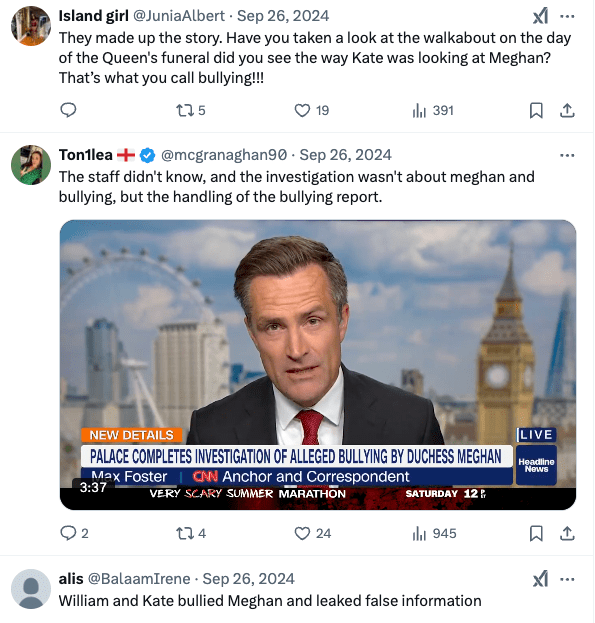
Tom Quinn’s latest book, Yes Ma’am – The Secret Life of Royal Servants, presents claims from former palace staff about Meghan Markle’s time in the Royal Family. One of the central themes in the book is the assertion that Meghan had a “messiah complex” and clashed with palace aides because of her ambitions to modernize the monarchy. According to Quinn’s sources, Meghan saw herself as someone who could finish what Princess Diana started, positioning herself as a global champion for social justice. These claims are largely framed through the lens of anonymous staff members who reportedly found her approach difficult to work with.
Messiah Complex, also known as the Savior Complex, refers to a psychological state in which an individual believes they are destined to save others or bring about significant change. People with this mindset often see themselves as uniquely capable of fixing problems, sometimes disregarding the perspectives or input of others.
While the term is not a formal clinical diagnosis, it is often used to describe individuals who exhibit overwhelming self-confidence in their ability to “rescue” others, a cause, or even society—sometimes to the point of being overbearing, dismissive of authority, or blind to their own limitations.
Key Characteristics of Messiah Complex:
- Belief in a Unique Mission – The person sees themselves as having a special purpose to fix or improve a situation, often seeing their efforts as morally superior.
- Dismissal of Opposition – They may reject criticism or alternative viewpoints, believing that their way is the only correct approach.
- Overextension – They may take on too much responsibility, feeling obligated to help even when it negatively impacts their own well-being.
- Resentment Toward Authority – Individuals with this mindset may resist guidance, rules, or hierarchy, feeling that existing systems are flawed or unjust.
- Emotional Intensity – Their passion for a cause can sometimes lead to burnout, frustration, or strained relationships with others who do not share their vision.
Is It a Negative Trait?
Not necessarily. Many activists, reformers, and leaders throughout history could be described as having a Messiah Complex, as they genuinely worked toward making the world better. However, when unchecked, it can lead to conflicts, arrogance, and unrealistic expectations—especially if the person assumes they alone can bring about change.
Why Is This Term Used Against Meghan Markle?
In the context of Tom Quinn’s book, Meghan Markle is described as having a Messiah Complex because of her ambitious efforts to bring social change to the Royal Family and her desire to reshape the monarchy’s approach to charity and public service. Critics argue that her actions clashed with the institution, while supporters see her as a modernizing force who was unfairly resisted by the rigid royal structure.
The use of the term in Quinn’s book is meant to imply that Meghan overestimated her ability to change royal traditions and saw herself as a transformational figure, much like Princess Diana. However, this characterization is subjective, and whether she genuinely has a “Messiah Complex” or was simply a progressive force within a conservative institution is a matter of interpretation.
While Quinn’s book may appear to offer an inside look at royal life, it is crucial to analyze his claims with a critical eye. The primary issue with Quinn’s work is its heavy reliance on unnamed sources and former staff members, many of whom may have personal biases or agendas. Without direct evidence or testimony from key figures like Meghan or Harry themselves, these claims remain unverified anecdotes.
Additionally, the idea that Meghan was the sole instigator of tensions within the Royal Family ignores broader institutional factors. Meghan and Harry have publicly spoken about their experiences, including racial bias, media harassment, and resistance to change within the monarchy. The narrative that she had a “messiah complex” may be an attempt to diminish her legitimate concerns and paint her as overly ambitious rather than a woman navigating a rigid institution with systemic challenges.
Another questionable claim in the book is that Prince Harry was “waiting for a woman to mold him” and that Meghan manipulated him into seeing himself as undervalued within the Royal Family. This portrayal aligns with common tabloid tropes that frame women as controlling figures in their relationships, ignoring Harry’s agency in his decisions. By his own admission, Harry had long struggled with his role in the monarchy, particularly following his mother’s death. His memoir Spare and the couple’s Netflix documentary offer a different perspective, in which he describes feeling like an outsider within the royal system well before he met Meghan.
Moreover, Quinn’s book continues a pattern of media framing in which Meghan is depicted as an “outsider” who disrupted the monarchy, while Harry is portrayed as a misguided prince led astray. This narrative conveniently absolves the Royal Family of responsibility for their treatment of Meghan and the couple’s ultimate departure. The book also repeats gossip-driven claims, such as Meghan’s warm, hug-friendly demeanor making Prince William “uncomfortable”, a claim that lacks any substantive evidence beyond speculation.
Ultimately, Yes Ma’am serves as an extension of a long-standing media campaign against Meghan Markle, repackaging old narratives without providing new verifiable insights. The book offers one-sided accounts that align with the traditionalist views of palace aides who may have resented Meghan’s modern approach to royal duties. Given the history of misleading royal reporting, readers should approach Quinn’s claims with skepticism and consider alternative sources that provide a more balanced perspective on Meghan and Harry’s experiences.
Related Sources
William, Andrew, Kate and Meghan: What the Palace Staff Saw
‘Difficult’ Meghan Markle Given Brutal Nickname by Palace Employees
Meghan ‘Had Messiah Complex’ & Accused Senior Royals of Acting Like Babies
 celebchai.com