The power of visual storytelling has never been more potent than in the digital age, where an image can be manipulated to suit multiple narratives. Recently, a photograph of Prince Harry and Meghan Markle has been making the rounds on social media, presented with starkly different interpretations. This phenomenon highlights the growing issue of media manipulation and how public perception can be easily swayed by selective framing.
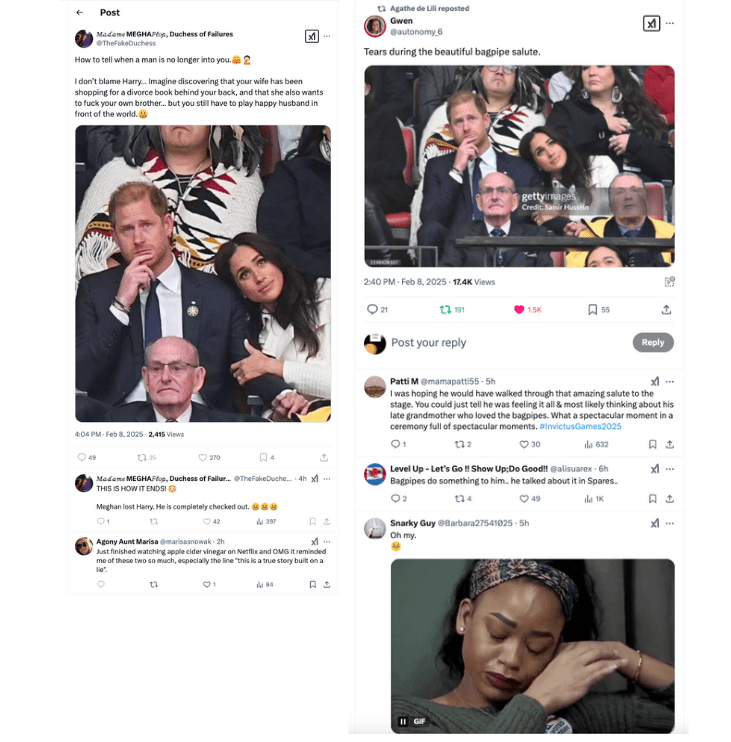
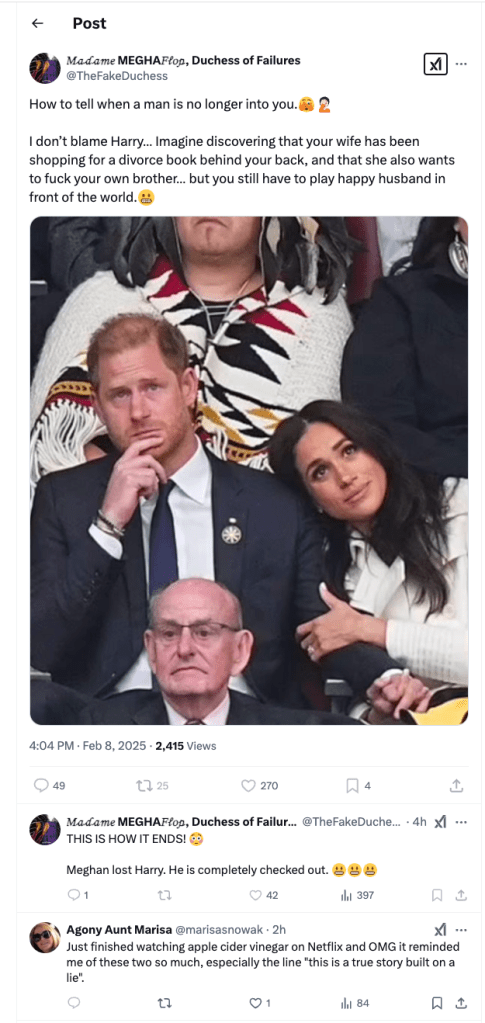
One social media post used the image to push a negative narrative about Meghan Markle, suggesting that Prince Harry appeared “checked out” of their marriage. The caption claimed that Meghan was secretly planning a divorce and even harbored romantic feelings for Prince William. This post received engagement from users who already hold negative opinions about Meghan, reinforcing biases and sparking further discussion around supposed marital troubles.
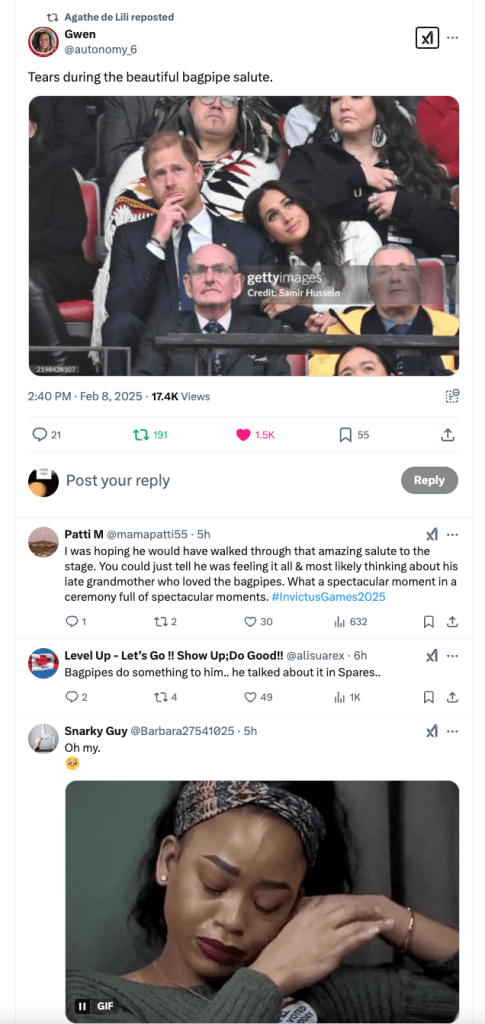
On the other hand, the same image was used in a separate post to tell a completely different story. This post described the moment as deeply emotional, suggesting that Prince Harry was overwhelmed with feelings during a bagpipe salute, likely remembering his late grandmother, Queen Elizabeth II. Here, the framing shifted from scandalous speculation to one of grief and honor, painting Harry as a man struggling with loss rather than a disinterested husband.
These contrasting narratives highlight the power of selective framing, where context and caption dictate how an image is perceived. In the first case, the image was weaponized to further anti-Meghan rhetoric, fueling existing sentiments that paint her as manipulative or insincere. The second post, however, invoked empathy by positioning Harry’s demeanor as a reflection of personal sorrow. Neither interpretation was directly tied to verifiable information, yet both managed to shape audience perception.
Social media thrives on engagement, and posts that evoke strong emotional responses tend to be amplified by algorithms. Outrage, sympathy, or even humor can drive significant interactions, often overriding factual accuracy. This is particularly evident in the way public figures are discussed online, as their every expression can be dissected and reinterpreted to fit an agenda.
A significant part of this manipulation comes from the absence of verification. Many viewers do not question the authenticity of a claim when they see an image paired with a compelling narrative. Even though the photograph bore a Getty Images watermark, indicating it was taken in a professional setting, its intended context was largely ignored in favor of speculative interpretations. Without checking the actual source, most viewers engaged with the post based on their pre-existing biases.
This issue is not confined to celebrity gossip but extends to political discourse, historical events, and news reporting. In a world where visuals are often deemed more credible than words, manipulating an image’s context can be a powerful tool for influencing public perception. The same principle applies to deepfake technology and AI-generated visuals, which are increasingly difficult to distinguish from authentic photographs.
To counteract such manipulation, critical thinking and media literacy must be prioritized. Viewers should be encouraged to cross-check sources, seek the original context of an image, and question the motivations behind a particular framing. Social media platforms also bear responsibility in ensuring that misleading narratives do not spread unchecked. While it is impossible to eliminate bias from digital storytelling, fostering an environment where accuracy is valued over sensationalism is crucial.
As digital consumption grows, the line between fact and fiction continues to blur. Recognizing how narratives are crafted and disseminated is essential in navigating an era where misinformation can shape reality. Whether it is a celebrity couple, a political figure, or a global crisis, every image carries multiple potential stories. It is up to the audience to discern which ones are worth believing.
 celebchai.com