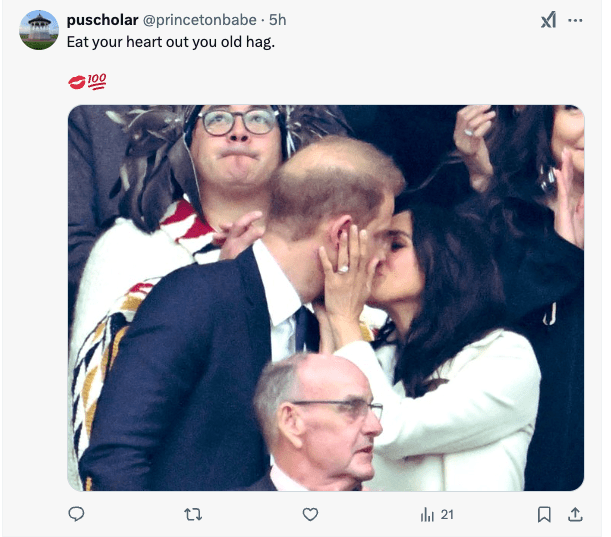
This Twitter (X) thread exemplifies the extreme polarization in discussions surrounding Meghan Markle and Prince Harry. The responses showcase a mix of staunch criticism, aggressive personal attacks, conspiracy theories, and counterarguments in defense of the couple.
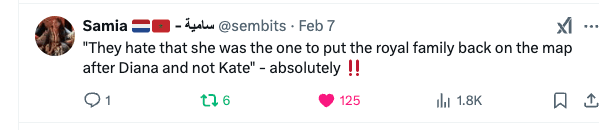


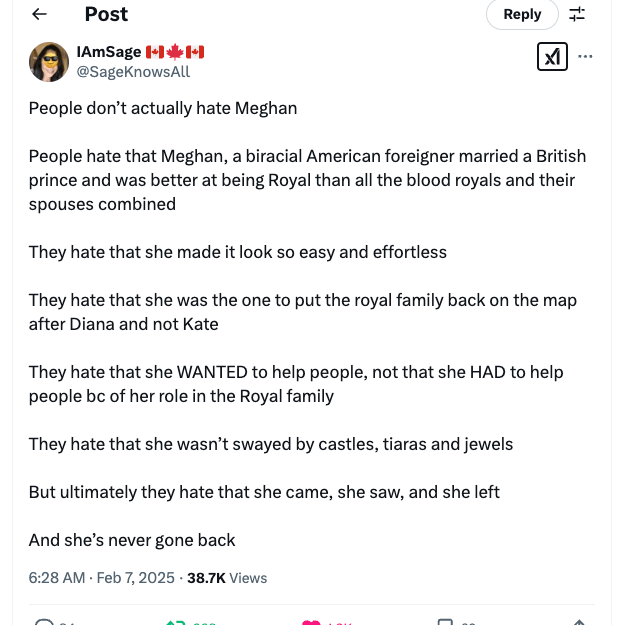
One of the most notable aspects of this discourse is its division into two dominant factions. Many users are highly critical of Meghan and Harry, often resorting to mockery, accusations of deceit, and character assassinations. Others push back against this, calling out what they perceive as online bullying and double standards. The sharp contrast between these perspectives highlights the deep tribalism that has developed around public figures, particularly those in the British royal family.
The language used in the thread is notably harsh, with derogatory terms such as “grifters,” “man-child,” “dumb prince,” “malignant narcissist,” and “old hag” being frequently used. The tone goes beyond criticism and enters the realm of dehumanization, where both Meghan and Harry, as well as their supporters, are vilified. Additionally, gendered and appearance-based insults, particularly directed at Meghan, reflect long-standing societal patterns of policing and scrutinizing women’s looks and behavior.

Another trend within the discussion is the presence of misinformation and conspiracy theories. Some users claim that Meghan and Harry faked the 2023 New York “paparazzi car chase” for political gain, specifically to obtain Internationally Protected Person (IPP) status. Others suggest that Meghan had a relationship with Prince Andrew before Harry, an unverified and sensational claim meant to provoke controversy. There are also posts asserting that Prince Harry “hates the USA” and should be deported, framing him as a traitor. Furthermore, accusations of plagiarism against Meghan reinforce a long-standing narrative that she lacks originality. These kinds of claims, whether exaggerated or false, demonstrate the role of misinformation in shaping public perceptions.

Media personalities such as Lady Colin Campbell (Lady C) and Dan Wootton are frequently referenced, indicating that specific influencers and media figures play a role in amplifying negative narratives. Users share past articles, podcasts, and YouTube videos that reinforce their perspectives, creating an echo chamber effect where like-minded individuals continuously reinforce their beliefs without engaging with alternative viewpoints.

Selective outrage is another pattern that emerges in the thread. Some users point out that critics of Meghan ignore controversies surrounding Prince Andrew while focusing intensely on Meghan’s past. Others highlight that Meghan’s introduction of Harry as “the father of her children” was mocked, even though similar introductions by other royals have not received the same backlash. Even the Invictus Games, an event widely recognized for supporting veterans, is ridiculed by some users, illustrating that even non-controversial aspects of the couple’s work are met with hostility.

Several posts carry political overtones and nationalistic undertones. One user proclaims that “We the People support the British Monarchy 100%,” suggesting that defending the monarchy is seen as a patriotic duty by some. Meanwhile, accusations that Meghan and Harry work against national interests frame them as political actors rather than simply public figures.
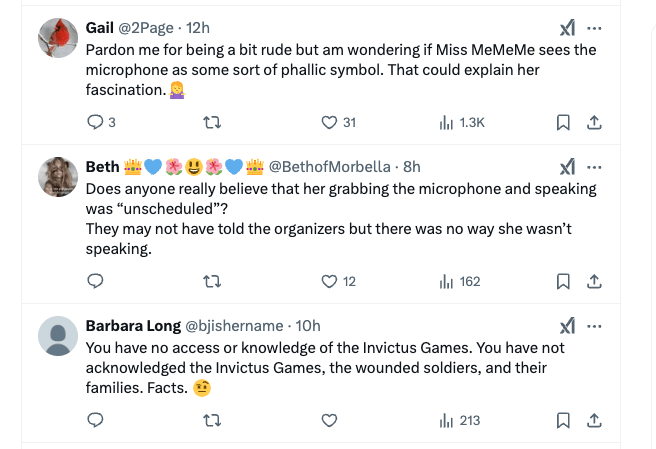
Ultimately, this thread serves as a case study in digital mob mentality, where social media users amplify negative narratives, spread misinformation, and reinforce each other’s biases. The discussion is not just about Meghan and Harry—it reflects broader cultural anxieties, media influence, and the power of online communities to shape public opinion. The extent of the vitriol directed at Meghan, particularly in comparison to other royal figures, also raises important questions about gendered and racialized bias in online discourse.
 celebchai.com