
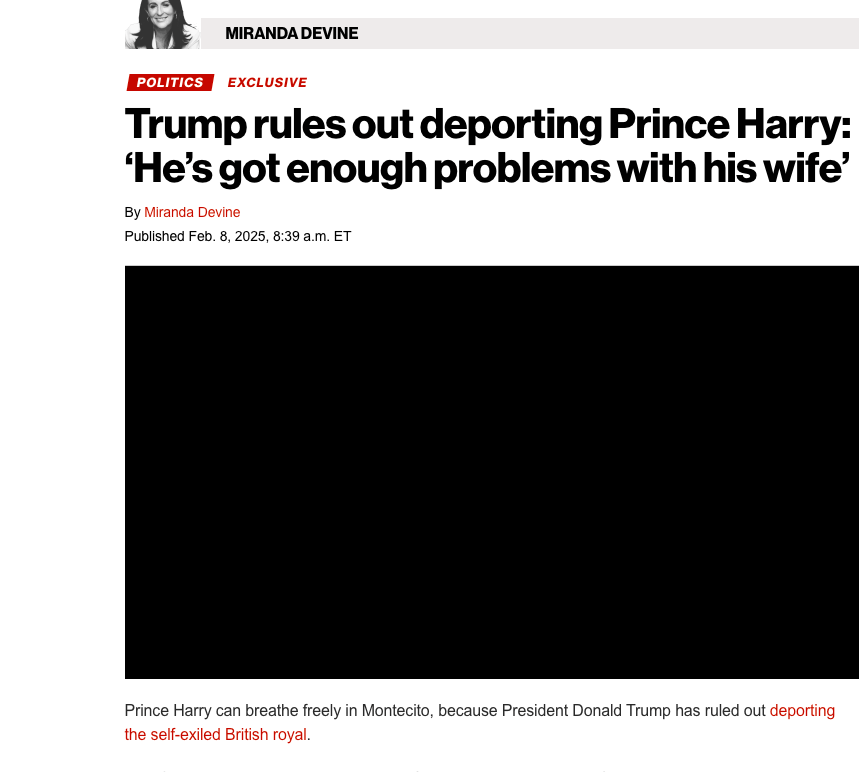
The continued media obsession with Prince Harry and Meghan Markle has reached a point where every gesture, every glance, and every public display of affection is scrutinized. The latest criticism from Eamonn Holmes, calling Meghan’s actions at the Invictus Games “acted out,” is yet another example of this relentless narrative. But what if this is more than just the usual media hostility?
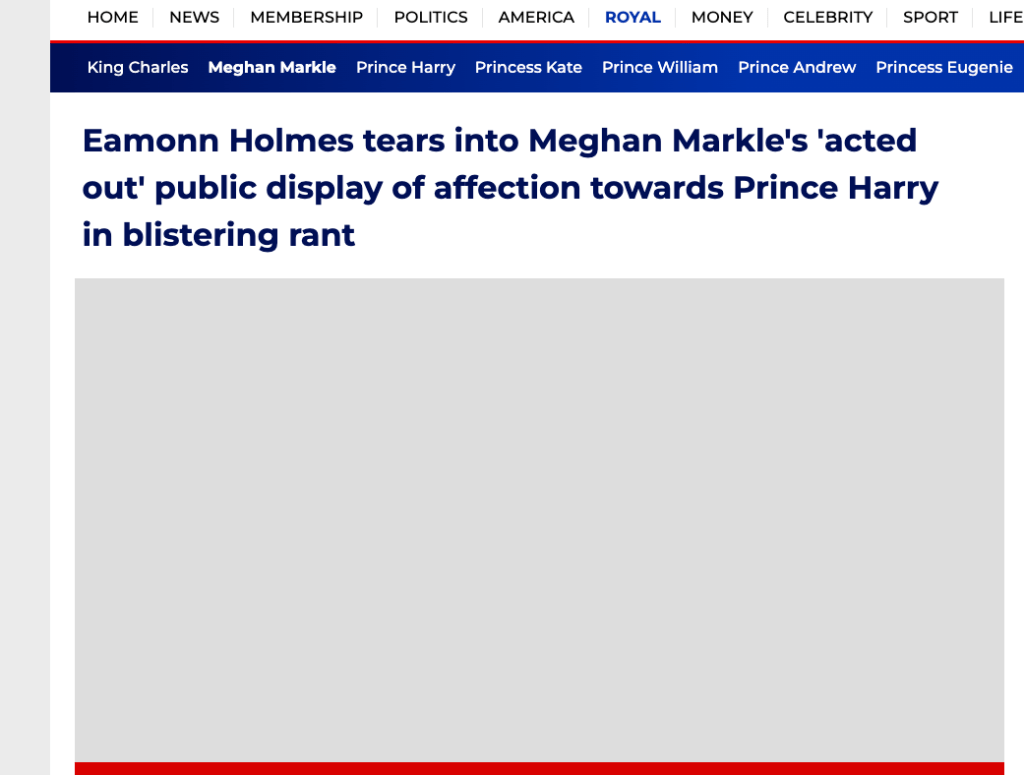
When Trump commented on Harry’s immigration status in the U.S., suggesting it could be revoked, it was a strikingly specific remark. Trump’s history with the Sussexes is well-documented. He has openly expressed his disdain for Meghan and has insinuated that Harry is weak for following her lead. His latest comments, however, may have an unintended consequence. If the former president is going after Harry’s immigration status, he is also inviting scrutiny into his own family’s immigration past—most notably, Melania Trump’s visa history, which has already been a controversial topic.
Melania’s path to citizenship has been a subject of discussion, with reports suggesting she may have worked in the U.S. before obtaining the proper work visa. If Trump is willing to use immigration as a weapon against Prince Harry, he risks reopening questions about his wife’s past. Given that he has built much of his political platform on immigration control, any revelation about inconsistencies in Melania’s visa process could be damaging.
This is why Trump’s comment could be seen as a Pandora’s box. If the media starts investigating Harry’s visa under his direction, the logical next step is to look at Melania’s. It is a dangerous game, and one that Trump himself might not want to play. But for now, the comment is doing what it was intended to do—fueling yet another controversy surrounding Meghan and Harry.
Meanwhile, the British media continues its long-standing campaign against Meghan. Eamonn Holmes’ outburst about Meghan’s supposed “fake” affection is just the latest example of a pattern that has persisted since she entered the royal family. The question is, why does this narrative continue?
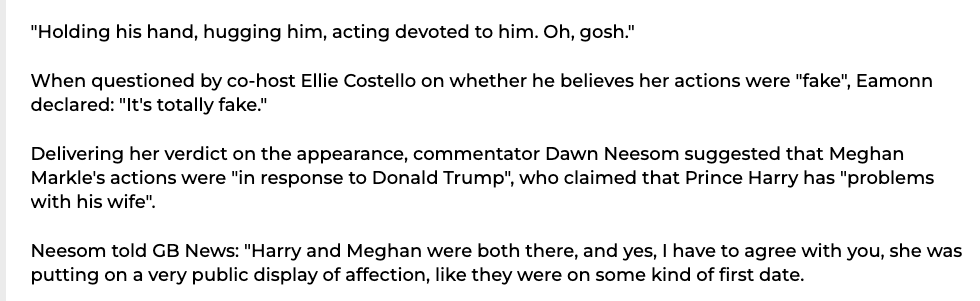
The answer is layered. Meghan has become a convenient scapegoat, an easy target for those who resist change within the monarchy. Her presence, independence, and refusal to conform have challenged traditional royal norms. By constantly questioning her sincerity, the media reinforces the idea that she is an outsider, someone who doesn’t belong in the royal fold. This fuels the ongoing divide between Harry and his family, making a reconciliation with the monarchy less likely.
Another aspect of this continued scrutiny is the persistent desire to isolate Harry. Holmes’ comments suggest that the British public might “recondition themselves” to accept Harry again, but not Meghan. This notion reflects the broader campaign to separate the two in the public’s perception, painting Harry as a misguided but redeemable figure, while Meghan remains the villain. This is a tactic that has been used before—particularly against women who are perceived as disrupting powerful institutions.
Despite the criticism, Harry and Meghan’s relationship remains solid. They have consistently presented a united front, supporting each other through media attacks and personal challenges. The Invictus Games is one of the most important projects of Harry’s life, and Meghan’s presence was a show of support for her husband. Her affection was neither a performance nor a reaction to Donald Trump. It was an expression of love—something that shouldn’t be so controversial.
This ongoing hostility raises a larger question about the role of media in shaping public perception. The selective outrage over Meghan’s affection compared to other public figures shows the inherent bias at play. Other royals have engaged in public displays of affection without such backlash. The continued targeting of Meghan speaks to a deeper issue—one that combines sexism, racial bias, and a resistance to change.
In the end, this entire saga reveals more about the media than it does about Harry and Meghan. The obsession with their every move, the need to question their sincerity, and the attempt to pit them against each other are all part of a larger strategy. But their love and commitment to each other remain unchanged. No amount of media speculation can change that.
 celebchai.com