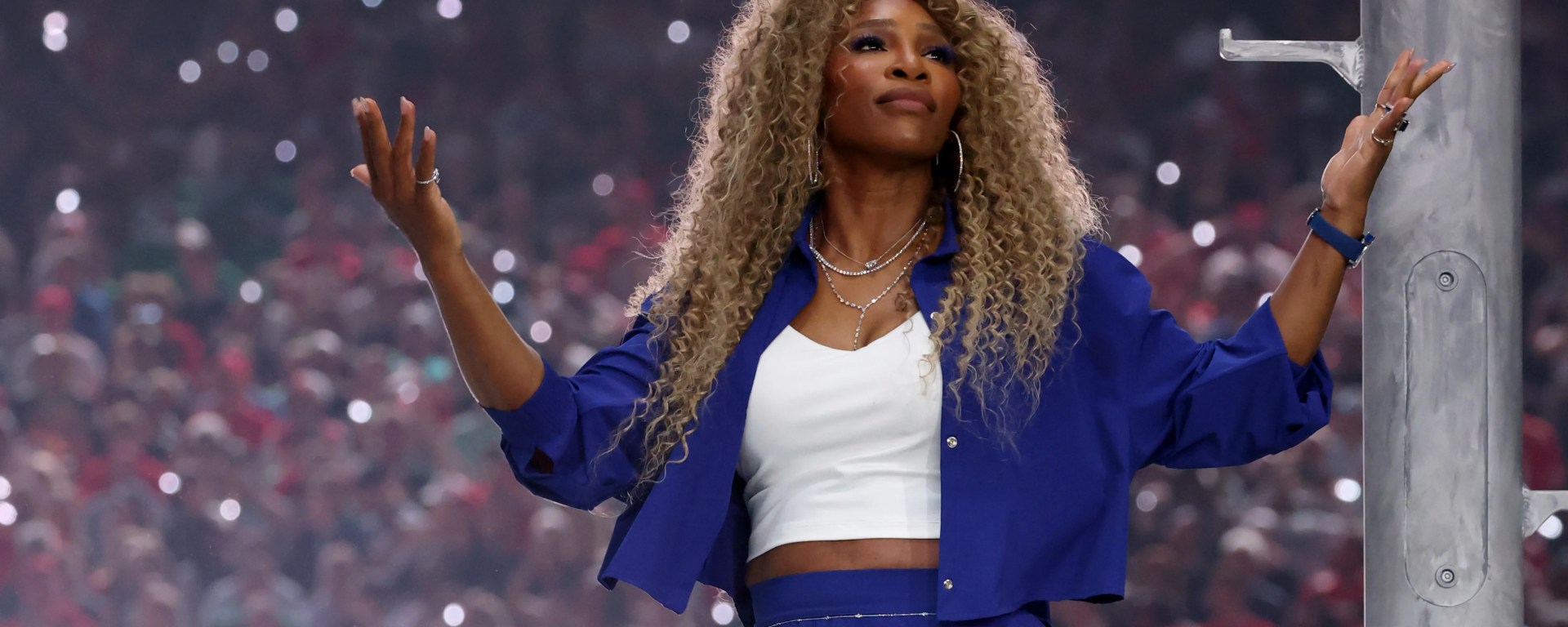
At the Super Bowl LIX halftime show on February 9, 2025, tennis legend Serena Williams made a surprise appearance during Kendrick Lamar’s performance. Dressed in a blue ensemble, Williams showcased the “Crip Walk” dance during Lamar’s rendition of “Not Like Us,” a track known for its critical references to rapper Drake, with whom Williams was rumored to have had a past relationship. This performance quickly became a focal point of discussion, eliciting both praise and criticism.
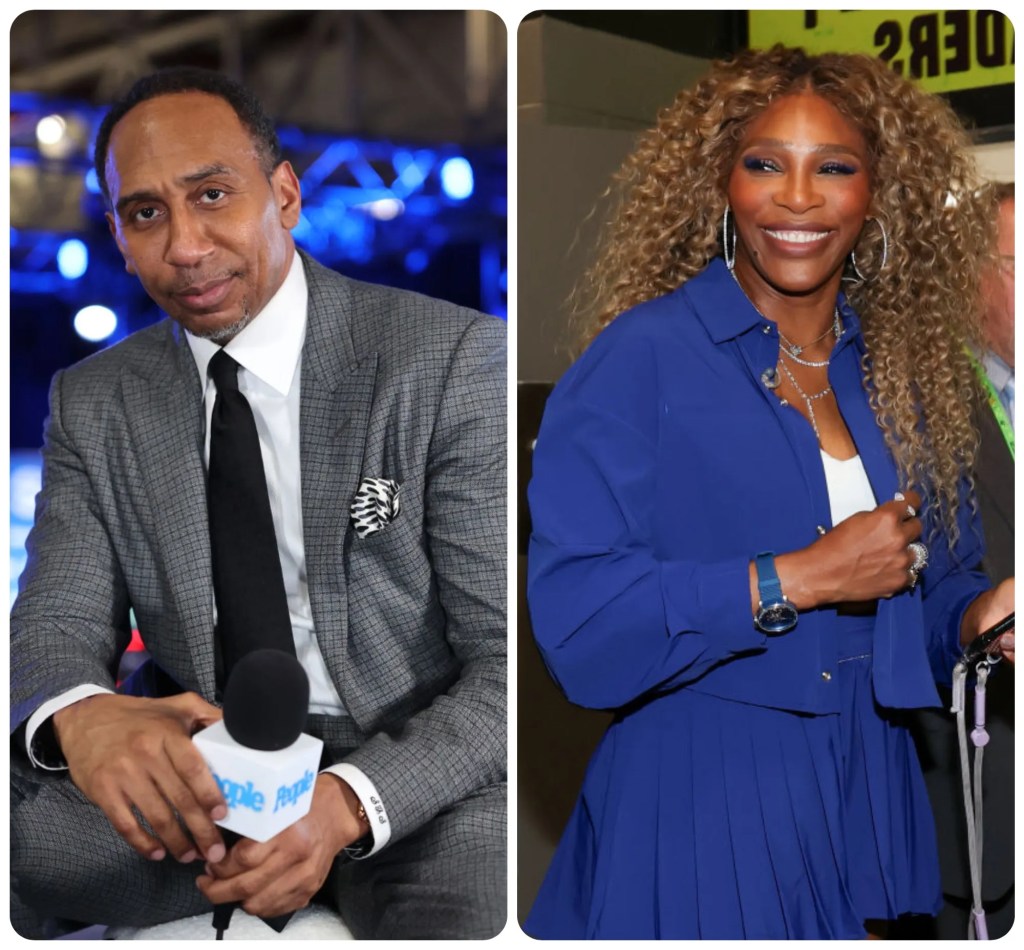
Historical Context of the Crip Walk
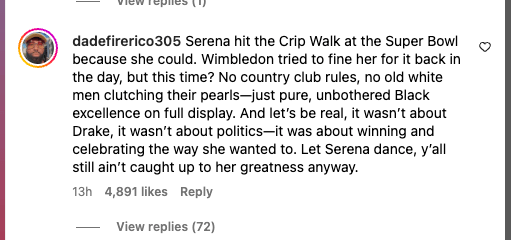
The “Crip Walk,” originating in the 1970s in Compton, California, is a dance associated with the Crips gang. Over time, it has been adopted into mainstream culture, especially within hip-hop, often symbolizing resilience and cultural identity. Williams previously performed this dance after her victory at the 2012 London Olympics, which led to criticism due to its gang-related origins. Reflecting on that moment, Williams remarked, “Man, I did not Crip-walk like that at Wimbledon. Oh, I would’ve been fined.”
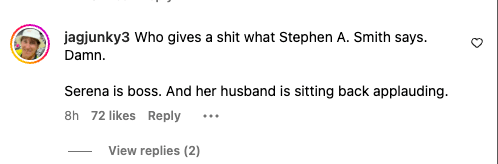
Stephen A. Smith’s Critique
ESPN commentator Stephen A. Smith voiced his disapproval of Williams’ Super Bowl performance. On “First Take,” he stated, “If I’m married and my wife is going to join trolling her ex, go back to his ass, ’cause clearly you don’t belong with me.” Smith’s comments implied that Williams’ participation was inappropriate given her marriage to Reddit co-founder Alexis Ohanian.
Support from Alexis Ohanian
In response to the criticism, Ohanian defended his wife on social media. He highlighted the historical context of the dance and the previous backlash Williams faced, stating, “Some of y’all have no idea how criticized Serena was for this same dance at Wimbledon 13 years ago and it shows…. This is bigger than the music.” He further emphasized the broader cultural significance, drawing parallels to other dance forms with complex histories.
Public Reactions and Broader Implications
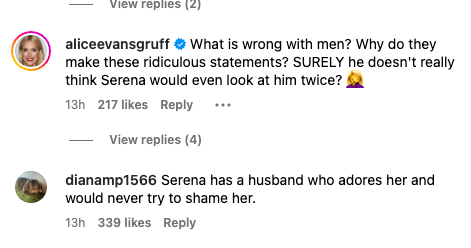
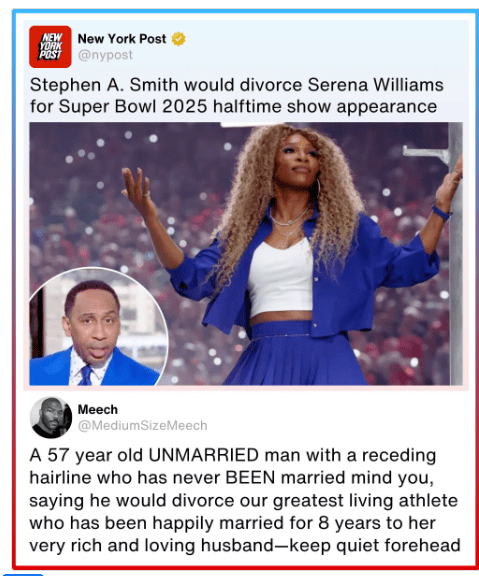
The public’s response to Williams’ performance was mixed. While some criticized her for revisiting a controversial dance linked to gang culture, others praised her for embracing her roots and expressing herself authentically. Whoopi Goldberg defended Williams, questioning why her performance was linked to past relationships instead of being celebrated for its cultural expression.
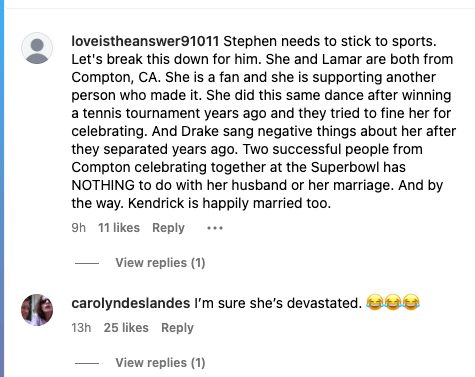
Williams’ performance also reignited discussions about the appropriation and evolution of cultural symbols. The “Crip Walk,” once a symbol of gang affiliation, has been transformed by artists and athletes into a broader representation of cultural identity and pride. Williams’ choice to perform the dance on such a prominent stage can be seen as a reclamation of her heritage and a statement of resilience.
https://twitter.com/alexisohanian/status/1889128913156120807
Conclusion
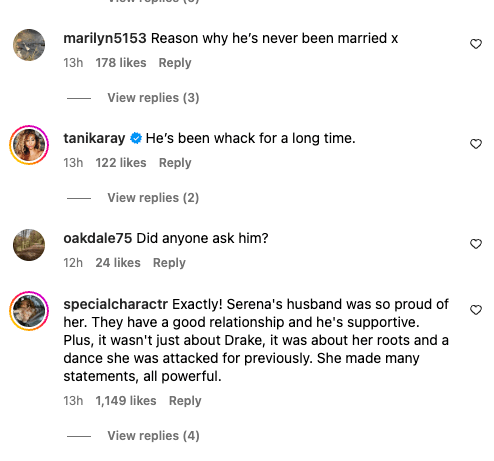
Serena Williams’ appearance during the Super Bowl halftime show transcended a mere dance performance. It served as a powerful statement about cultural identity, personal history, and the complexities of public perception. While interpretations of her actions vary, the conversation underscores the ongoing dialogue about cultural expression, personal agency, and the evolving meanings of symbols within society.
 celebchai.com