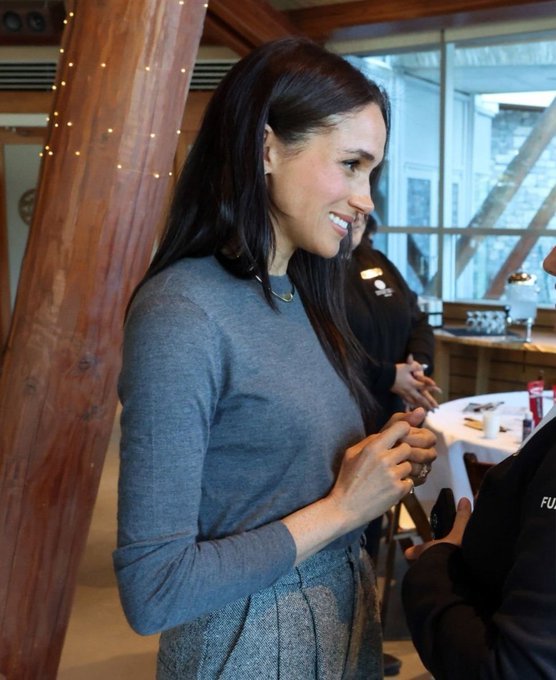
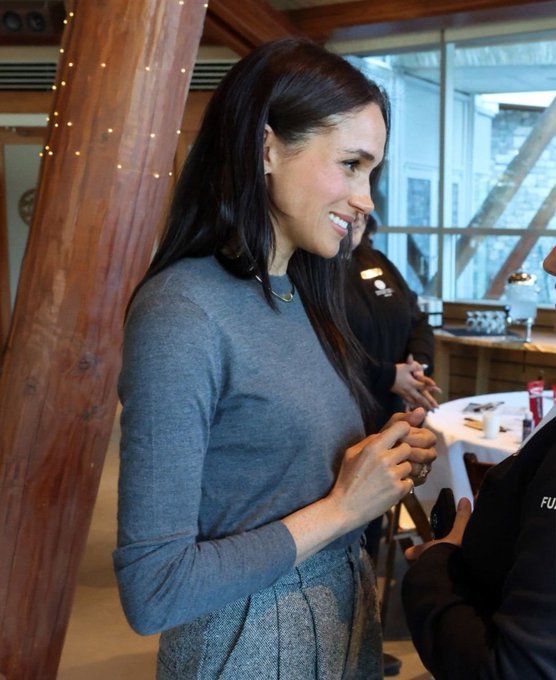
Meghan Markle and Prince Harry attending a public event in 2018, engaging with the crowd.

The Unnamed Source Machine: How Speculation Fuels the Meghan and Harry Narrative

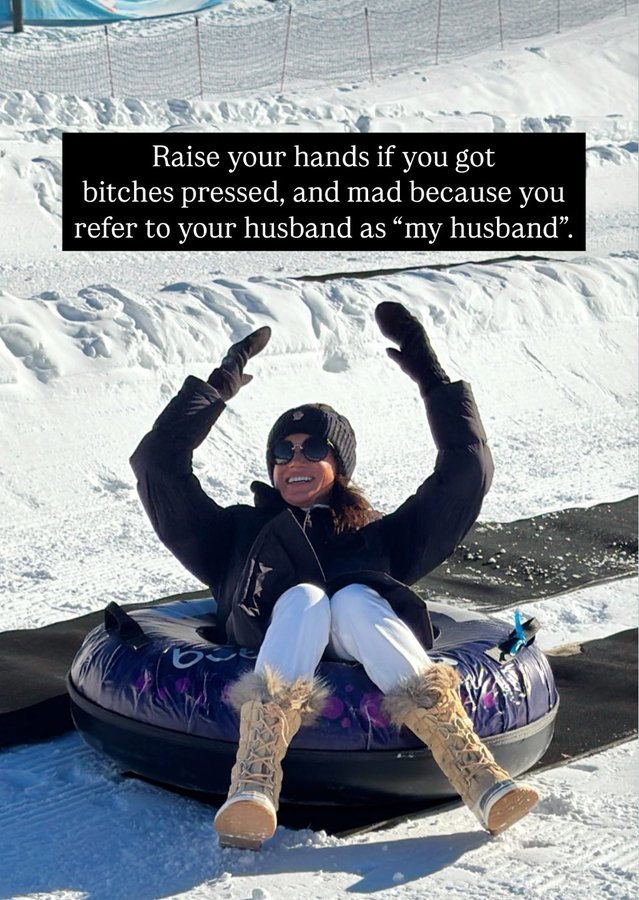
Over the years, Prince Harry and Meghan Markle have become prime subjects of tabloid speculation, fueled by a never-ending stream of anonymous sources claiming inside knowledge of their lives. Whether it’s an alleged rift within the royal family, relationship troubles, or career moves, stories frequently emerge that rely on vague whispers rather than concrete facts. See reality below and then the toxic media. I am convinced they are reporting on William and Kate’s marriage. Meghan uplifted another woman-owned business. The bracelet is 8 weeks out!

Prince Harry and Meghan Markle’s Sweet PDA Moment at Invictus Games & Meghan’s Planned Early Exit
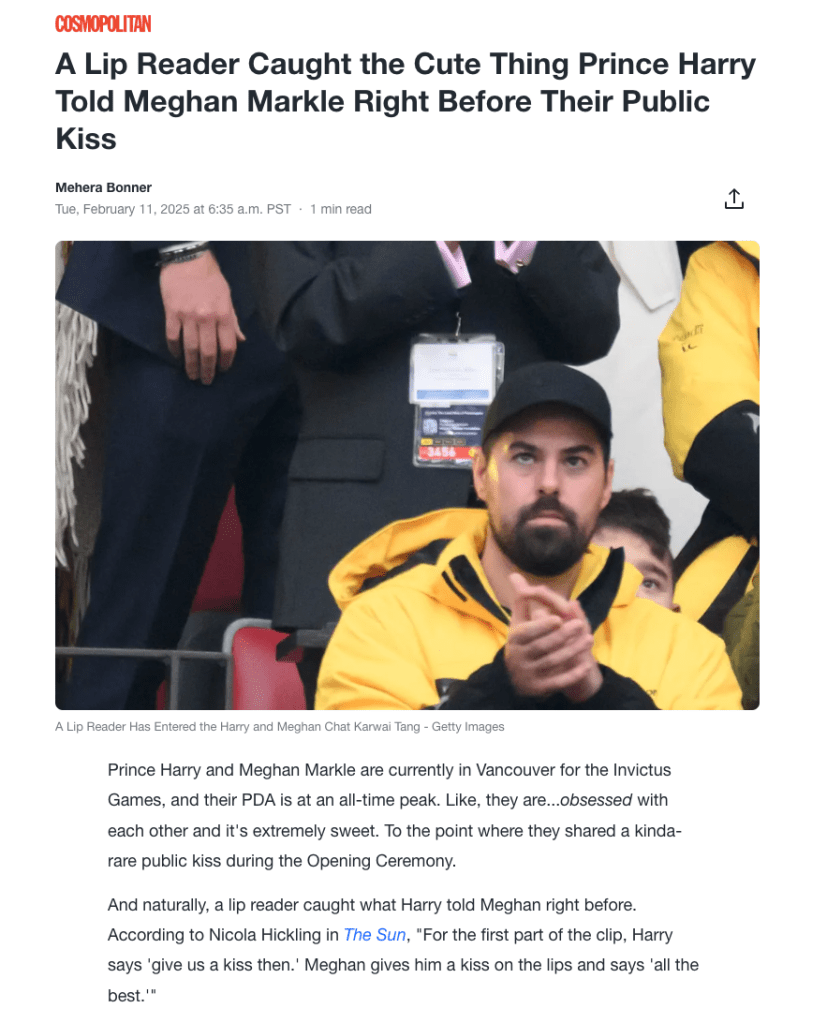
During the 2025 Invictus Games in Vancouver, Prince Harry and Meghan Markle’s affectionate moment caught attention when a lip reader claimed Harry told Meghan, “Give us a kiss then,” before their rare public kiss at the Opening Ceremony. Meghan responded with, “All the best.” A body language expert noted that Meghan’s gestures showed affection and a sense of “ownership” over Harry.

SEE BELOW: REALITY ABOVE AND TOXIC MEDIA BELOW OR IS THIS ABOUT WILLIAM AND KATE
# The Unnamed Source Problem: Media Coverage of Harry and Meghan

In recent years, Prince Harry and Meghan Markle have become the epicenter of a media phenomenon that raises serious questions about journalistic integrity and the public's consumption of celebrity news. At the heart of this issue lies a troubling pattern: the proliferation of stories built entirely on anonymous sources and unverifiable claims.

## The Anonymous Source Ecosystem

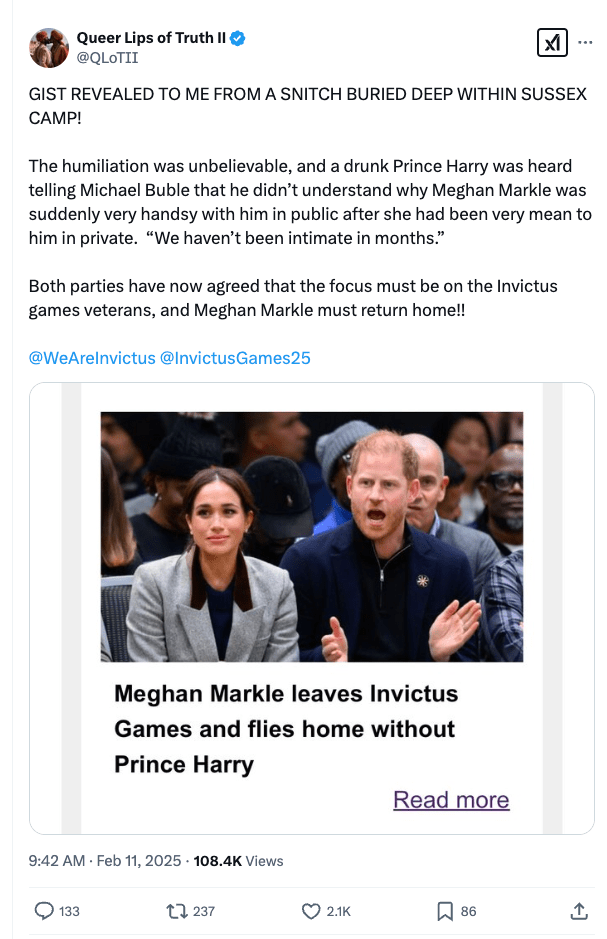
While anonymous sourcing serves a vital role in protecting whistleblowers and facilitating investigative journalism, its application in celebrity coverage often veers into murky territory. Recent headlines exemplify this problem: a "source deep within Sussex camp" allegedly revealed intimate details about the couple's private life to tabloids. These claims, despite lacking any concrete evidence, rapidly transformed from mere speculation into widely circulated "facts."

Consider the mechanics of how these stories spread:

"A palace insider reveals..." 
"Sources close to the couple say..."
"A former staff member claims..."

These vague attributions serve as a smokescreen, offering just enough authority to make claims seem credible while providing zero accountability. The pattern becomes particularly problematic when examining how these "sources" consistently emerge at moments of peak public interest, offering narratives that perfectly align with existing controversies.

## The Amplification Machine

Social media platforms have become powerful amplifiers of unverified claims. What begins as a single anonymous quote can rapidly evolve into thousands of posts, tweets, and reactions, each adding layers of speculation to the original claim. This digital echo chamber creates a self-sustaining cycle where the sheer volume of discussion is mistaken for credibility.

The recent speculation about Harry's alleged conversation with Michael Bublé demonstrates this pattern perfectly. Within hours, social media platforms were flooded with reactions, analyses, and supposed "confirmations" from other unnamed sources. Yet amid this digital storm, a crucial question remained unaddressed: Where was the evidence?

## The Economics of Speculation

Understanding why these stories persist requires examining the economic incentives at play. Media outlets know that Harry and Meghan-related content, particularly controversial claims, generates significant engagement. This creates a perverse incentive structure where:

1. Verification becomes secondary to speed of publication
2. Dramatic claims are prioritized over balanced reporting
3. The need for constant content outweighs journalistic rigor

Adding to this complexity is the couple's own relationship with media. Their simultaneous pursuit of privacy and public platform creates natural tensions that outlets exploit. Each documentary, interview, or public appearance becomes fodder for new waves of anonymous source-driven speculation.

## Moving Toward Better Coverage

The solution to this problem requires action from multiple stakeholders:

Media outlets must raise their standards for anonymous sourcing, requiring stronger verification and clearer justification for source protection. Readers need to develop stronger critical thinking skills when encountering these stories, asking basic questions about evidence and motivation. Social media platforms could implement better systems for flagging and contextualizing unverified claims about public figures.

Most importantly, we need to recognize that our collective appetite for celebrity gossip doesn't justify the erosion of journalistic standards. The human cost of constant speculation, whether directed at public figures or private individuals, demands a more thoughtful approach to how we consume and share information.

## Beyond the Headlines

The next time a dramatic claim surfaces about Harry, Meghan, or any public figure, consider:

The specific language used to describe sources
The timing of the story's release
The existence of verifiable evidence
The broader context and potential motivations

By approaching these stories with greater skepticism and demanding higher standards from our media sources, we can begin to shift the conversation toward more responsible journalism.

The challenge isn't just about improving coverage of Harry and Meghan – it's about understanding how unverified claims and anonymous sources shape our broader media landscape, and what that means for public discourse in an age of instant information.

The latest round of rumors involves an unnamed “snitch buried deep within Sussex camp” claiming that Harry, in a drunken moment, confessed his marital woes to Michael Bublé. The supposed revelation—that he and Meghan haven’t been intimate in months—immediately sent social media into a frenzy, with many taking the claim as gospel. But is there any real evidence to back this up, or is it simply another example of the media’s ongoing reliance on hearsay?

The Problem With Unnamed Sources

Anonymous sourcing is not inherently problematic. In investigative journalism, it is sometimes necessary to protect whistleblowers or individuals who could face repercussions for speaking out. However, when it comes to celebrity gossip, the frequent use of unnamed sources often serves as a convenient shield for speculation, embellishment, or outright fabrication.

Stories about Harry and Meghan regularly feature “insiders,” “close friends,” “former staffers,” or “royal sources” who provide damning insights, but with no way to verify their claims. If a source is truly “deep within Sussex camp,” why would they risk exposing private details to a gossip outlet? And why do these leaks always conveniently align with whatever narrative is most marketable at the moment?

The Social Media Echo Chamber

Once a claim like this appears online, it spreads rapidly. Social media thrives on virality, and dramatic, unverified claims get far more engagement than mundane truths. In the case of this latest rumor, Twitter (X) erupted with reactions ranging from schadenfreude to outright disbelief. Some users pointed out how Meghan’s public displays of affection at the Invictus Games seemed at odds with claims of marital discord, while others insisted this was a PR stunt to dispel divorce rumors.

Yet amid the chaos, few are asking: Where’s the proof? There’s no audio recording, no verifiable witness, and no credible journalist backing up the claim. Just an alleged conversation, attributed to an anonymous source, now being treated as fact.

A Pattern of Convenient Leaks

This is hardly the first time such rumors have circulated. Meghan has been accused of everything from secretly recording the royal family to planning a presidential run—none of which have ever materialized. Similarly, Harry has supposedly been on the verge of “ditching” Meghan multiple times, only for the couple to continue making public appearances together.

These narratives follow a predictable cycle:

  1. A claim surfaces from an unnamed source.
  2. The internet amplifies it, dissecting every detail.
  3. Critics and supporters go to battle, further fueling engagement.
  4. The story fades—until the next supposed leak emerges.

Why Do These Stories Persist?

The simple answer is that they sell. Harry and Meghan’s names generate clicks, and a salacious scandal will always attract more attention than a neutral or positive headline. The press also knows that their public image is polarizing—meaning there’s a built-in audience eager to believe the worst about them.

At the same time, Harry and Meghan’s often contradictory public messaging doesn’t help. They claim to value privacy yet produce documentaries about their personal struggles. They criticize the media but frequently engage in media opportunities. These inconsistencies create just enough ambiguity for speculation to thrive.

The Danger of Unchecked Gossip

While it’s easy to dismiss these stories as harmless entertainment, the constant cycle of gossip can have real-world consequences. False rumors can impact careers, damage reputations, and even strain personal relationships. The more we accept anonymous claims without question, the easier it becomes to blur the lines between reality and fiction.
### **Prince Harry and Meghan Markle’s Invictus Games PDA and Meghan’s Early Departure**  

Prince Harry and Meghan Markle’s **affectionate moment at the 2025 Invictus Games in Vancouver** has caught attention after a **lip reader** claimed to have deciphered their conversation before a rare public kiss. According to Nicola Hickling via *The Sun*, Harry told Meghan, **“Give us a kiss then,”** before she obliged, responding with, **“All the best.”** Their public display of affection was analyzed by body language expert Judi James, who noted that Meghan’s gestures suggested **deep affection and a sense of “ownership” over Harry.**  

Despite their sweet moments, Meghan is set to **leave the games early**, even though the event continues until **February 16**. A **source close to Invictus** told *Hello!* that Meghan’s departure was **always planned** and not a sign of tension. She is returning to **Montecito, California, to be with their children**, Archie and Lilibet, as she did during the 2023 Invictus Games in Düsseldorf.  

The couple has been **increasingly focusing on separate career paths**, with Meghan prioritizing **entrepreneurial ventures** and Harry continuing his **philanthropic work**. At the **Invictus Games welcome reception**, Meghan introduced Harry with a heartfelt speech, sharing how the event has influenced their family life. She described **morning routines** with their children and how Archie often asks Harry, **“Papa, why are you on your phone?”**—to which Harry replies, **“That’s Invictus. I’m getting ready for Invictus.”**  

While **social media is abuzz with speculation**, official sources emphasize that Meghan’s **early departure was pre-planned** and that the couple remains committed to **balancing professional and personal responsibilities**.

Conclusion: Question the Source

The next time an explosive claim about Harry and Meghan (or any celebrity) surfaces, it’s worth asking:

  • Who is the source?
  • Is there any verifiable evidence?
  • Does this story fit too neatly into a pre-existing narrative?

If the answers point to vague, untraceable origins, then it’s probably just another case of speculation masquerading as fact. And in a media landscape that profits from drama, it’s always wise to be skeptical.


One thought on “The Unnamed Source Machine: How Speculation Fuels the Meghan and Harry Narrative

Leave a comment