Beyond Black and White: A More Nuanced Take on the Baldoni-Lively Controversy

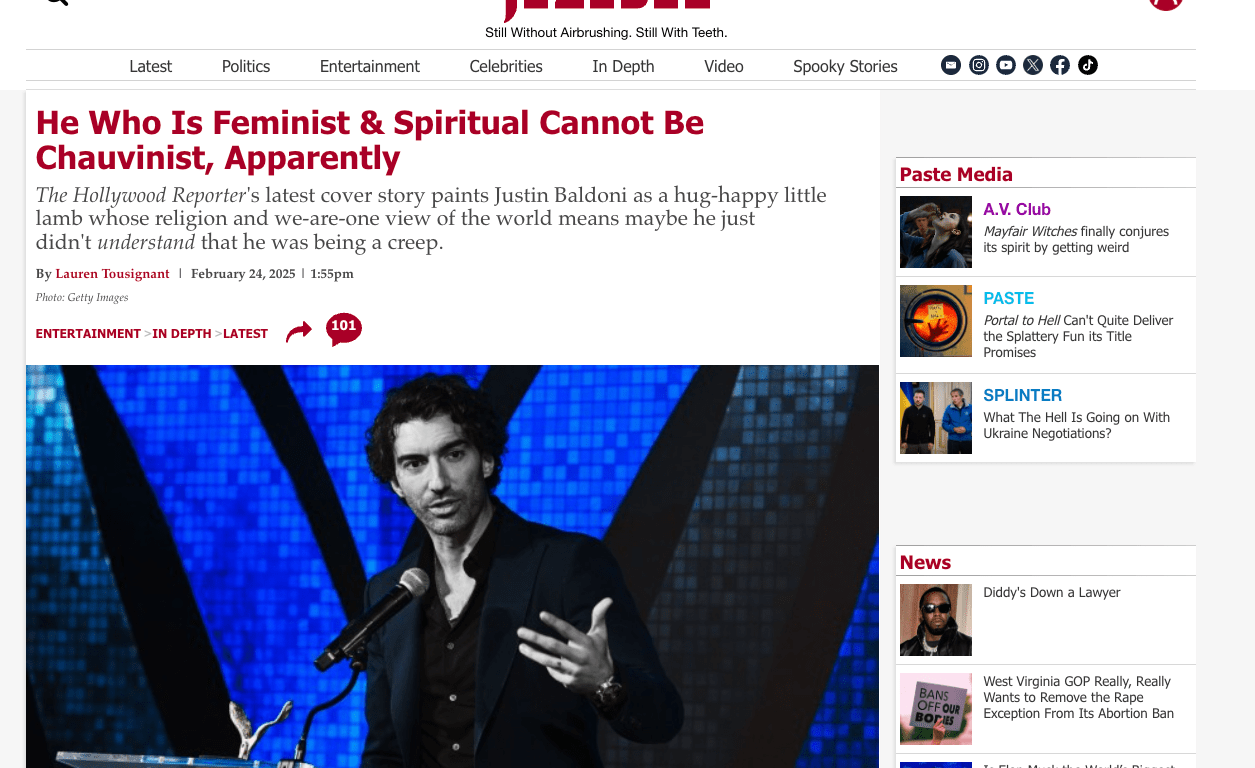
Lauren Tousignant’s incisive Jezebel article expertly dissects The Hollywood Reporter’s problematic coverage of Justin Baldoni’s alleged harassment of Blake Lively, exposing how religious beliefs and feminist claims are being weaponized to excuse inappropriate workplace behavior.
As Tousignant rightly points out, The Hollywood Reporter’s framing of the situation is deeply troubling. The magazine’s cover illustration depicting Lively attacking a helpless Baldoni immediately establishes a biased narrative that portrays the woman making allegations as the aggressor. This visual framing is just the beginning of THR’s mischaracterization of a serious harassment case.
The article’s most egregious argument suggests that Baldoni’s Baha’i faith somehow explains or excuses the disturbing behaviors Lively alleges: describing his genitals to her, making sexual comments, discussing porn addiction, showing explicit content of women, claiming to speak with her dead father, and pressuring her about religious beliefs. This religious “context” offered by THR attempts to recast clear boundary violations as mere cultural misunderstandings.
Tousignant brilliantly identifies the false logic at play: if Baldoni’s faith upholds gender equality, as claimed, then surely it would align with—not conflict with—basic workplace standards that protect women from harassment. The notion that today’s workplace has become “far more rigid, uniform, and policed” after #MeToo reveals a troubling perspective that views minimal protections against harassment as excessive impositions.
Especially telling is THR’s dismissal of Lively’s concerns as merely getting “grossed out,” reducing serious allegations to a matter of personal discomfort rather than professional misconduct. Meanwhile, Lively has amended her complaint to include that two additional women are willing to testify about their own experiences with Baldoni, strengthening her case.
As Tousignant concludes, the endless quest to find excuses for men’s inappropriate behavior—whether through claims of feminism, spirituality, or religious practice—needs to end. When women come forward with documented accusations of workplace harassment, they deserve to be taken seriously rather than having their experiences explained away through creative frameworks that protect the accused at all costs. THR article below is off base.
Baldoni himself has spoken candidly about the complexities of being human. In a revealing social media post, he acknowledged:

Conclusion
No faith tradition—whether Baha’i, Christianity, Judaism, or any other—should be used to excuse inappropriate workplace behavior. Professionals in all fields are expected to maintain appropriate boundaries regardless of their spiritual beliefs. By suggesting otherwise, THR does a disservice to both religious communities and workplace safety advocates. As Tousignant rightfully concludes, we should aspire to a world where formal, documented accusations of sexual harassment are taken seriously without extensive efforts to excuse the accused’s behavior. Faith can inform one’s values, but it doesn’t exempt anyone from treating colleagues with basic respect and professionalism.
 celebchai.com