We have covered other problematic media people here.
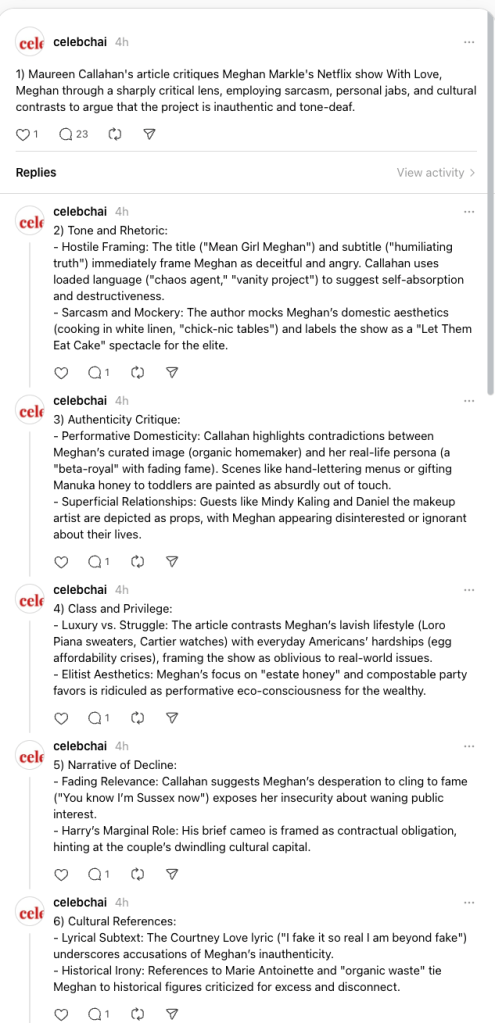


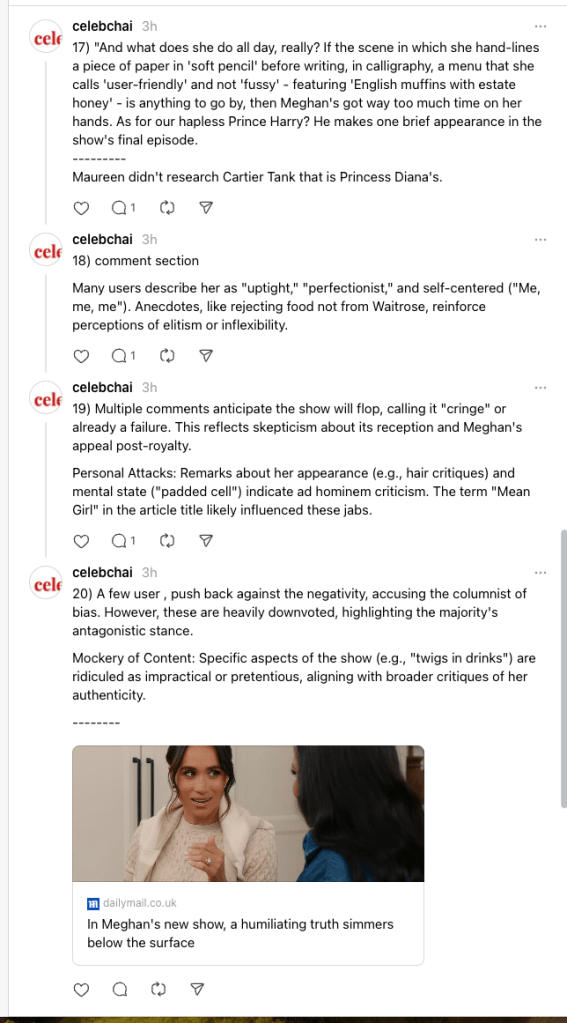
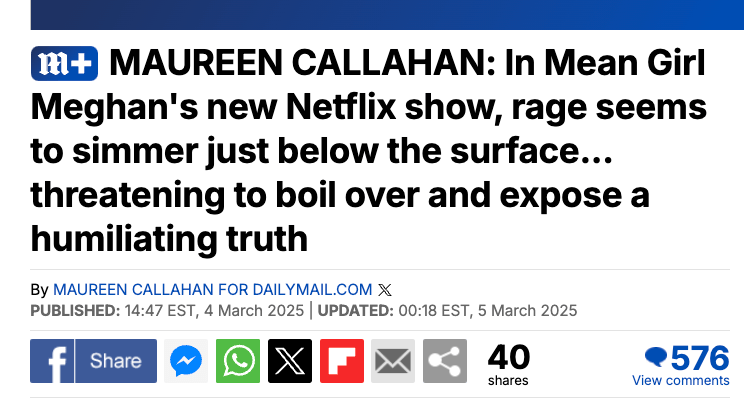
The recent criticism of Meghan Markle’s Netflix show “With Love, Meghan” raises an interesting contradiction. While columnist Maureen Callahan labels Meghan a “Mean Girl” with “rage simmering below the surface,” the show itself centers around Meghan’s relationships with various friends who appear as guests.
This disconnect between accusation and evidence is striking. Throughout the series, Meghan welcomes friends like Mindy Kaling and her longtime makeup artist Daniel into her home, sharing meals, crafts, and conversations. These aren’t anonymous sources speaking about her—they’re actual people who’ve chosen to maintain relationships with her and appear on her show.
If Meghan were truly the “chaos agent” Callahan describes, would this roster of friends willingly associate with her on camera? Would established professionals risk their own reputations to support someone known for mistreating others?
The criticism seems to focus more on aesthetic choices (expensive sweaters, “chick-nic tables” for chickens) than substantive evidence of meanness. Callahan’s piece interprets moments like Meghan’s “I’m Sussex now” comment as snappish, when it could just as easily be read as playful between friends.
Perhaps what’s most revealing is how Callahan frames Meghan’s ordinary activities—cooking, baking, hosting friends—as somehow sinister or fraudulent. The presence of actual friendship in Meghan’s life contradicts the core “mean girl” narrative, suggesting the criticism may say more about our cultural attitudes toward women in the public eye than about Meghan herself.
What do you think? Does having visible friendships contradict the “mean girl” label, or is the criticism focused on something deeper?
 celebchai.com
One thought on “Meghan Markle’s Netflix Show: Friendship vs “Mean Girl” Narrative”