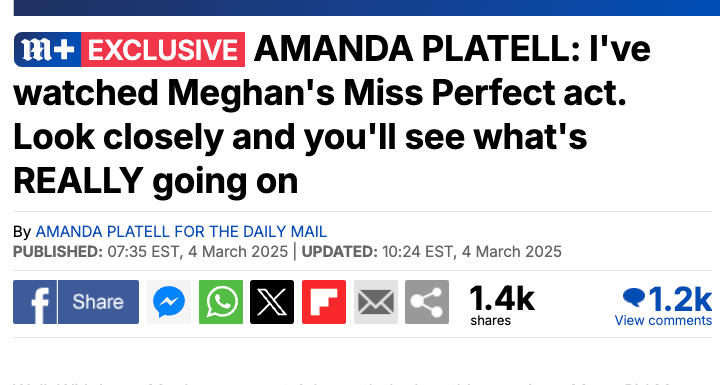
If you’ve read Amanda Platell’s scorching review of Meghan Markle’s With Love, Meghan, you might think the duchess spent eight episodes tormenting viewers with honey-drizzled nonsense and a “breathless schoolgirl voice.” Platell’s piece overflows with biting sarcasm and personal jabs. Yet, amid all the snark, does she actually address why the show has resonated with millions of viewers worldwide? Here’s a closer look.
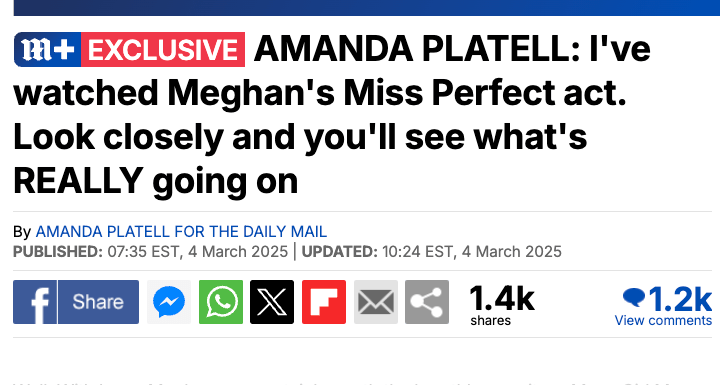
1. Sarcasm Over Substance
From the get-go, Platell peppers her critique with name-calling (“Mean Girl Megs,” “Little Miss Perfect”) and a hyper-focus on perceived vanity—like Meghan supposedly “oozing gorgeousness” from every pore. Sure, a little wit can be fun, but after a while, the jabs start to feel like personal vendettas. By dwelling on how “vacuous” Meghan’s hosting might seem, Platell glosses over the fact that With Love, Meghan is designed as a feel-good lifestyle show, not an investigative documentary. It’s akin to slamming a cooking show for not delving into politics.
2. Ignoring the Show’s Global Popularity
Platell confidently predicts the show will tank after a few weeks, yet she never acknowledges the international metrics that say otherwise. In multiple countries, With Love, Meghan quickly landed in Top 10 rankings. Clearly, viewers are tuning in, whether out of genuine interest or even “hate-watching” curiosity. Either way, the show is sparking conversation—and streaming platforms care about engagement, not whether a critic finds the star too “cutesy.”
3. Overblown Critiques of Meghan’s “Voice” and “Demeanor”
Yes, Meghan’s tone in the show is upbeat and occasionally saccharine—this is the hallmark of countless lifestyle hosts. Platell’s deep annoyance at the “breathless” voice and “fluttering eyelashes” distracts from more substantive points about the series. For instance, Meghan’s emphasis on small, thoughtful details—like labeled jars and welcome trays—reflects a broader hospitality trend. Many lifestyle fans appreciate these personal touches. Could the duchess dial it back a bit? Possibly. But that’s hardly a reason to dismiss the entire show as worthless.
4. Missing the Show’s Simple Purpose
Platell’s review spends paragraphs mocking Meghan’s cooking (like the “one-pot pasta” and the honey-sweetened lemon cake). But in a world saturated with lifestyle programming, the format of “quick recipes plus personal anecdotes” is a tried-and-true staple. Fans of the genre often want that comforting, step-by-step approach, especially from a familiar face. If you’re expecting a groundbreaking exposé on the royal family, you’re bound to be disappointed. But that’s not what With Love, Meghan ever claimed to be.
5. Undermining the “Hate-Watch” Argument
Platell briefly admits that even if the show is “awful,” it might become a “win-win” through hate-watching. This raises an interesting point: some critics love to say they can’t stand Meghan, yet they devour her content and generate more buzz in the process. If the show is truly as “unwatchable” as Platell claims, why devote so much energy to describing every last detail? In the end, more clicks, more views, and more engagement only boost the show’s visibility.
6. Overlooking Context and Nuance
Finally, Platell frames Meghan as an opportunist desperate to salvage her reputation and fortune. Even if that’s partially true—With Love, Meghan is a business venture, after all—why not address the broader context of how streaming platforms work, or how lifestyle branding can be lucrative for any celebrity? Instead of exploring these topics, Platell doubles down on personal barbs, leaving readers without a balanced perspective.
In Conclusion
Amanda Platell’s review is entertaining if you enjoy snarky one-liners, but it veers into personal grievance territory rather than offering a fair assessment of With Love, Meghan. Yes, the duchess’s hosting style may be cloying for some, but plenty of viewers are tuning in—enough to propel the series onto Top 10 lists in various countries. So maybe the real question isn’t whether the show is “vacuous,” but why, despite all the naysayers, it’s resonating with so many people worldwide. If Platell’s piece had dug a little deeper into why audiences watch (or hate-watch) this style of content, it would have offered a more nuanced critique—instead of just another headline about “Mean Girl Megs.”
 celebchai.com