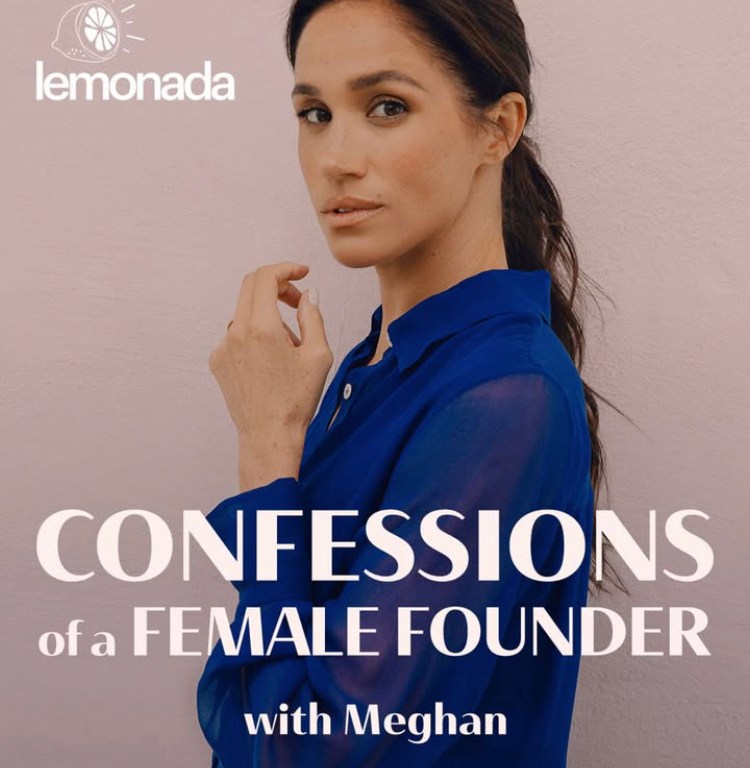

In the ever-evolving landscape of social media discourse, few public figures generate as sharply divided reactions as Meghan Sussex. A recent announcement about her upcoming podcast launch with Lemonada, set for April 8th, 2025, perfectly illustrates this phenomenon, creating a fascinating case study in online polarization.
The Announcement: Two Sides of the Same Story
On March 13th, 2025, news broke of Markle’s podcast venture. This single announcement spawned two entirely different conversation threads on Twitter/X, showcasing how the same information can fuel completely opposite narratives depending on the community discussing it.
Thread One: The Critics’ Corner
In the first thread, initiated by a user called “The Royal Grift,” Sussex faces a barrage of criticism. The original post questions her credentials as a “female founder,” suggesting she’s merely famous for marrying Prince Harry. With over 14,000 views, this sentiment clearly resonates with a substantial audience.
The replies form a chorus of similar criticisms:
“She should do herself a big favor and stay out of public view for awhile, give herself the privacy she originally said she wanted and shut the hell up!” – Elizabeth
“Her desperation is palpable.” – Midnight Rider
“But now, she needs no last name at all. She’s simply ‘MEGHAN.’ A one-name. Like Oprah. Madonna. Ellen.” – Melanie
This thread portrays Sussex as attention-seeking, inauthentic, and failing at her various ventures despite continuous attempts to remain in the spotlight.
Thread Two: The Supporters’ Circle
In stark contrast, the second thread, originating from a user named “TudorChick1501,” celebrates the exact same announcement with enthusiasm and defiance. With 77,000 views and 3,500 likes, this perspective also commands significant attention.
The supportive comments paint an entirely different picture:
“Giving even more to her fans. Love you Meghan!” – Vercingetorix
“If they’re going to hate on her all day, might as well roll out some more content. Lol.” – Tracey Ryniec
“They can’t put her in a box and it infuriates them. Multifaceted and multitalented.” – Egbert & Alvina
This thread portrays Sussex as resilient, successful, and purposefully disrupting expectations in the face of criticism.
The Meta-Conversation
What’s particularly interesting is how each community is aware of the other. The supportive thread directly addresses “haters” and “trolls,” while the critical thread references a perceived broader public rejection. Both sides seem to believe they represent the majority opinion, creating parallel realities within the same platform.
Some supporters explicitly mention her previous podcast’s success:
“For trolls:- at Spotify, Archetypes topped the charts as Number 1 podcast in 47 countries. Then got The People’s Choice Award in the podcast category, as well as The Gracie Award for Best Podcast.” – Beth James
Meanwhile, critics frame each new venture as another inevitable failure:
“As ever another pastiche, destined to fail, by the unoriginal and extremely untalented shameless flop star that refuses to go away is looking more pathetic by the day.” – Agony Aunt Marisa
What This Reveals About Social Media
This dual reaction to Meghan Sussex illustrates several key aspects of contemporary social media dynamics:
- Echo Chambers: Users increasingly exist in separate information ecosystems that reinforce their existing views.
- Parasocial Relationships: Both supporters and critics display intense emotional investment in someone they’ve never met.
- Identity Signaling: Expressing a position on Sussex has become a way to signal group membership and values.
- The Attention Economy: Controversy and polarization drive engagement, which explains why polarizing figures receive disproportionate attention.
- Platform Design: Social media algorithms tend to amplify content that generates strong emotional reactions, further separating these communities.
Beyond Meghan
While Meghan Sussex serves as a compelling example, this pattern of polarization extends to many public figures, particularly women in the public eye. The intensity of reaction – both positive and negative – often says more about our fractured media landscape than about the individual at the center of the storm.
As social media continues to evolve, these parallel conversations will likely become even more pronounced, creating distinct realities for different user communities. For public figures navigating this landscape, perhaps the only certainty is that neutrality is no longer an option – you either inspire devotion or disdain, with increasingly little middle ground.
Whether Meghan Sussex’s new podcast succeeds or fails, one thing is certain: both outcomes are already written in the minds of different audiences, long before the first episode airs.
 celebchai.com
One thought on “The Meghan Sussex Effect: A Study in Social Media Polarization”