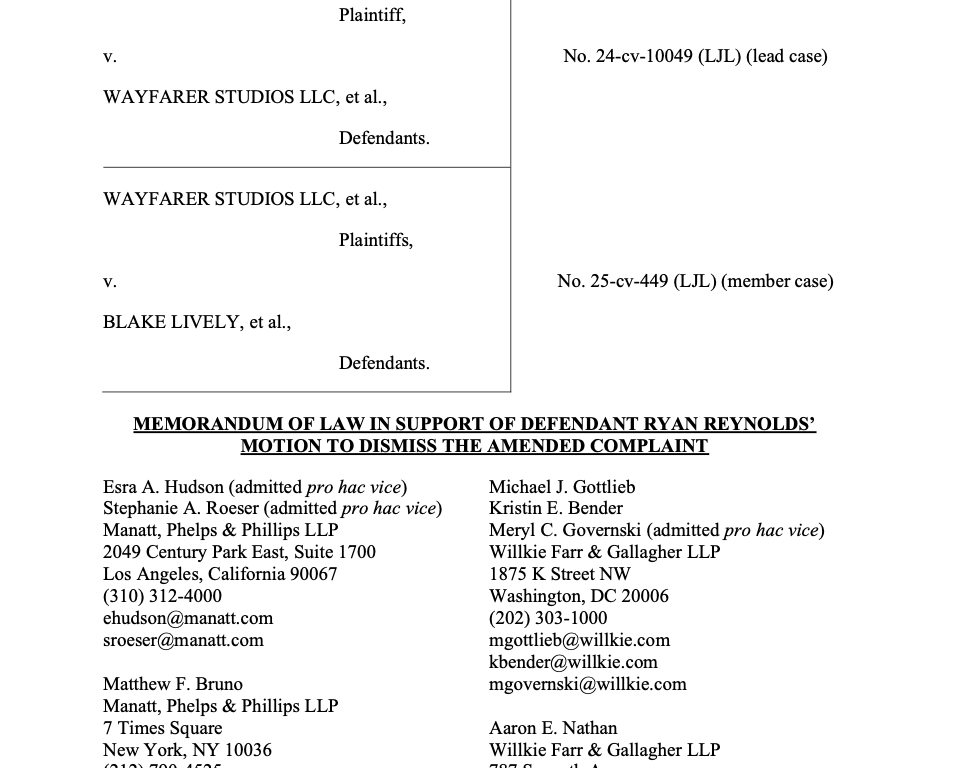







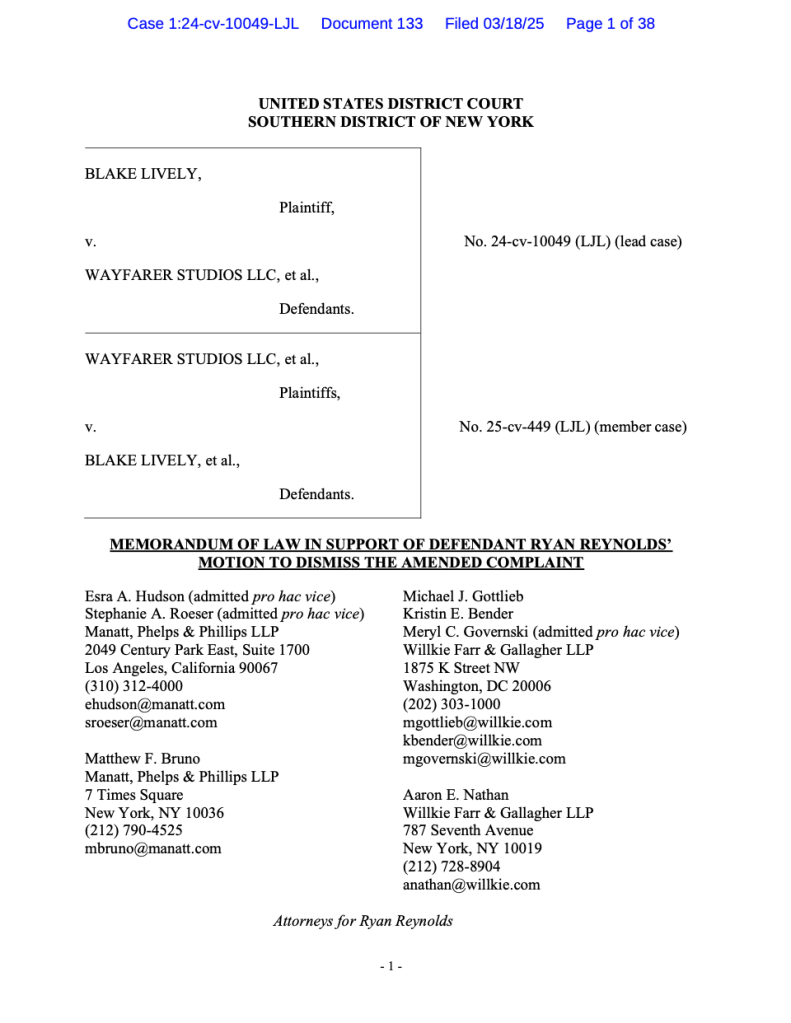
This is the latest in the Baldoni/Lively clash. The NYT and Sloane have filed a Motion to Dismiss. Now Ryan has.
Key Legal Arguments for Dismissal:
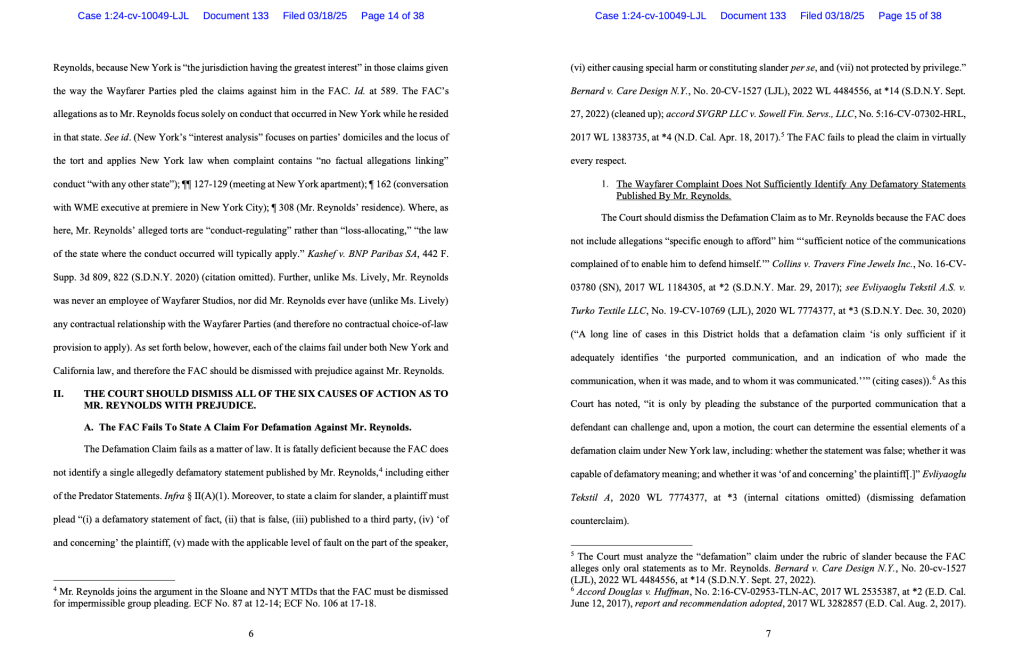
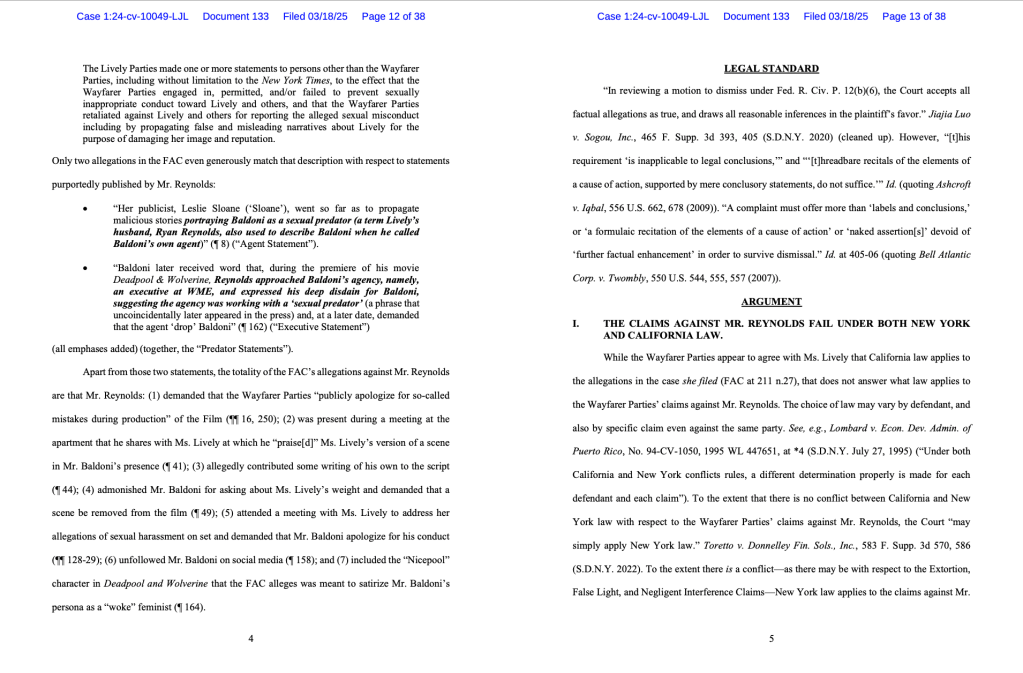
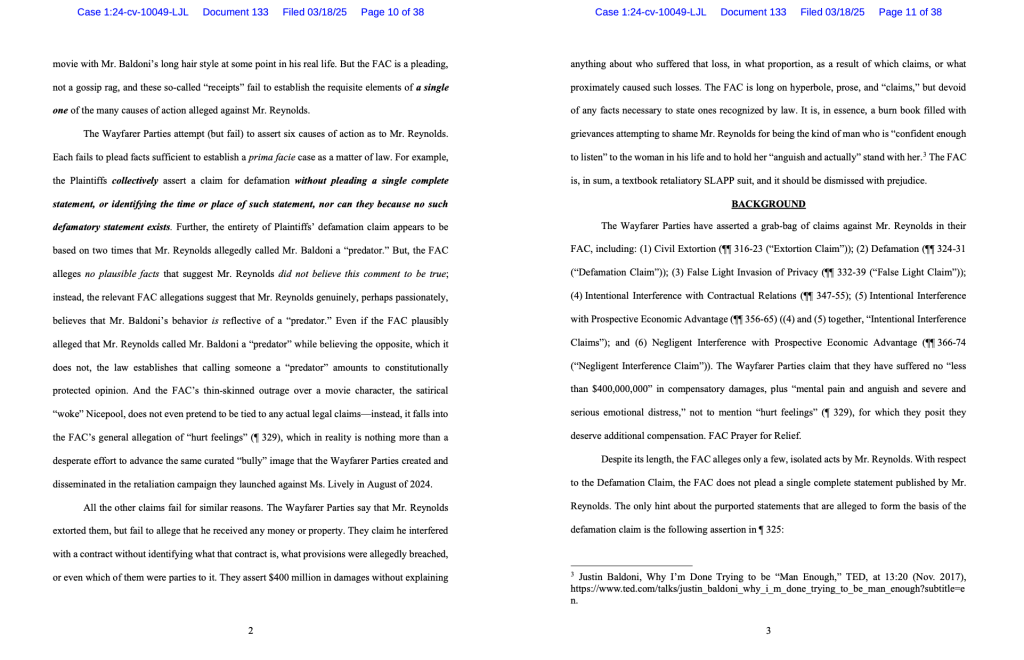
- Failure to Identify Defamatory Statements
- The complaint does not provide specific defamatory statements made by Reynolds with the necessary details, such as when and where they were made.
- Courts typically dismiss defamation claims that lack specificity.
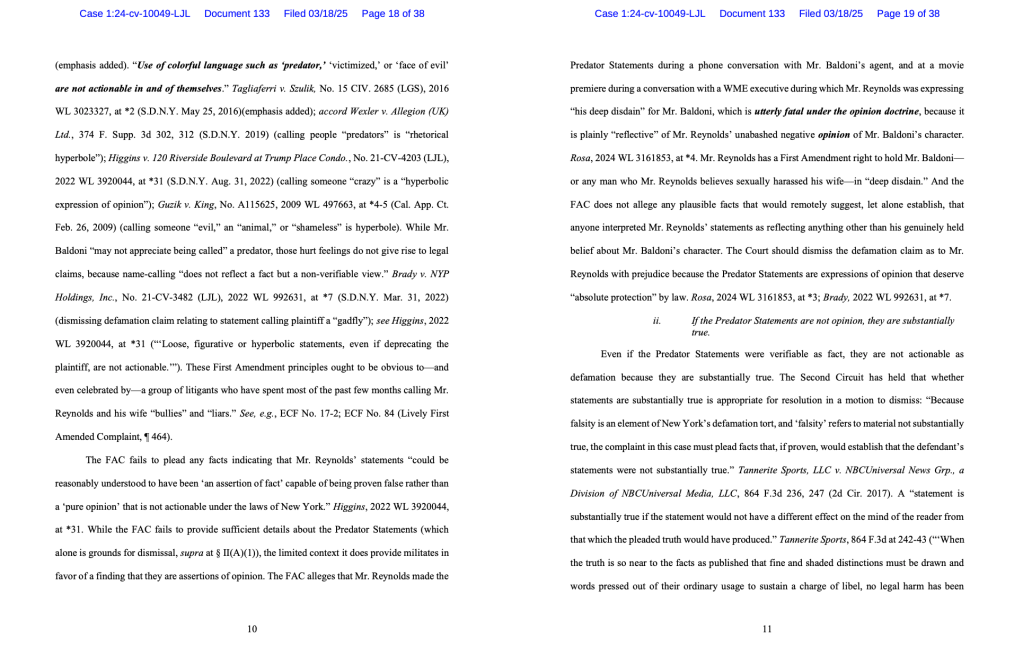
- Protected Opinion & Substantial Truth Defense
- The alleged defamatory statements, particularly referring to someone as a “predator,” are argued to be constitutionally protected opinions rather than factual assertions.
- Courts have consistently ruled that statements of opinion are not actionable under defamation laws.
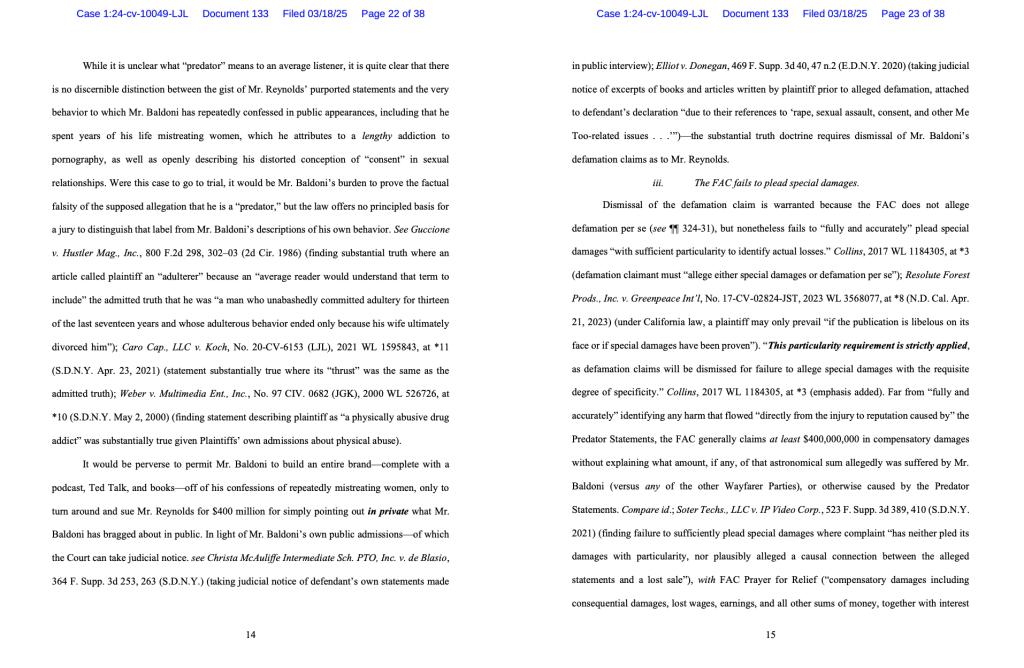
- Lack of Special Damages
- The plaintiffs claim damages of at least $400 million but fail to provide specifics on how these damages were incurred due to Reynolds’ actions.
- New York and California law require detailed allegations of actual financial harm in defamation claims, which the complaint lacks.
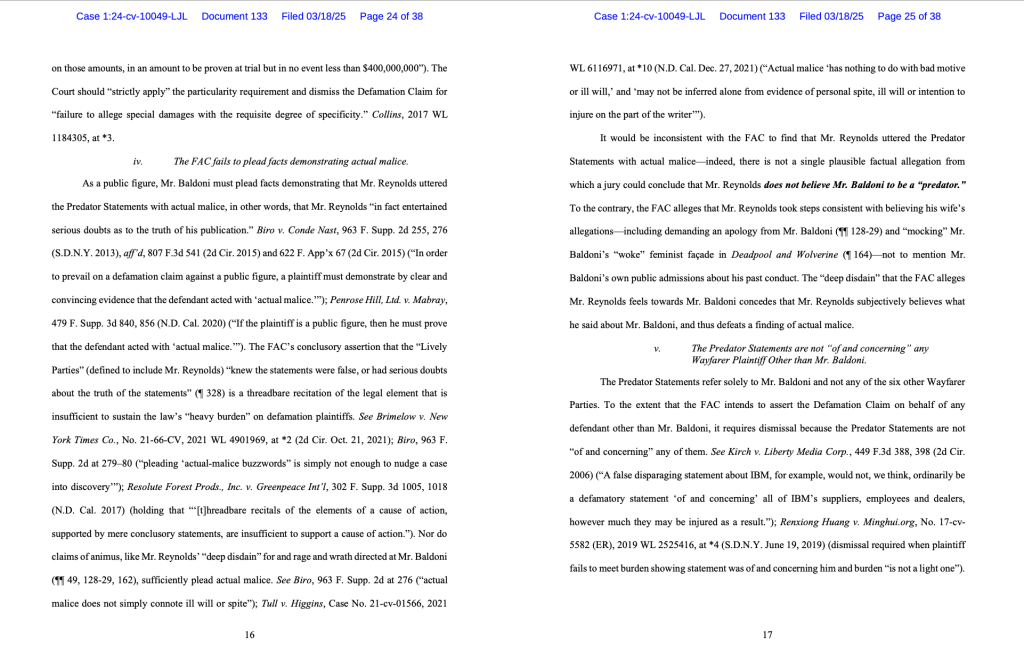
- Failure to Establish Actual Malice
- Since the plaintiffs, especially Justin Baldoni, are public figures, they must prove that Reynolds acted with actual malice (i.e., knowing the statements were false or acting with reckless disregard for the truth).
- The motion argues that there is no evidence Reynolds did not believe what he said, which weakens the case against him.
- No Viable Civil Extortion Claim
- New York does not recognize civil extortion as a cause of action.
- Even under California law, the plaintiffs have not alleged that Reynolds obtained money or property through coercion, which is necessary for an extortion claim.
- False Light & Interference Claims are Legally Deficient
- New York does not recognize the false light claim, and California law requires proof similar to defamation, which the plaintiffs fail to establish.
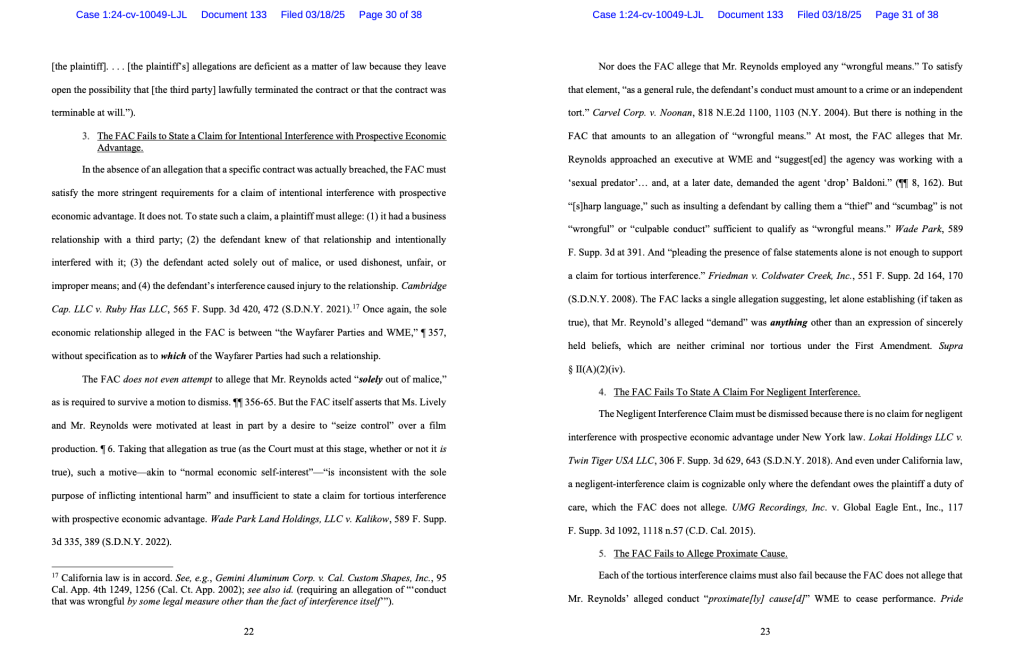
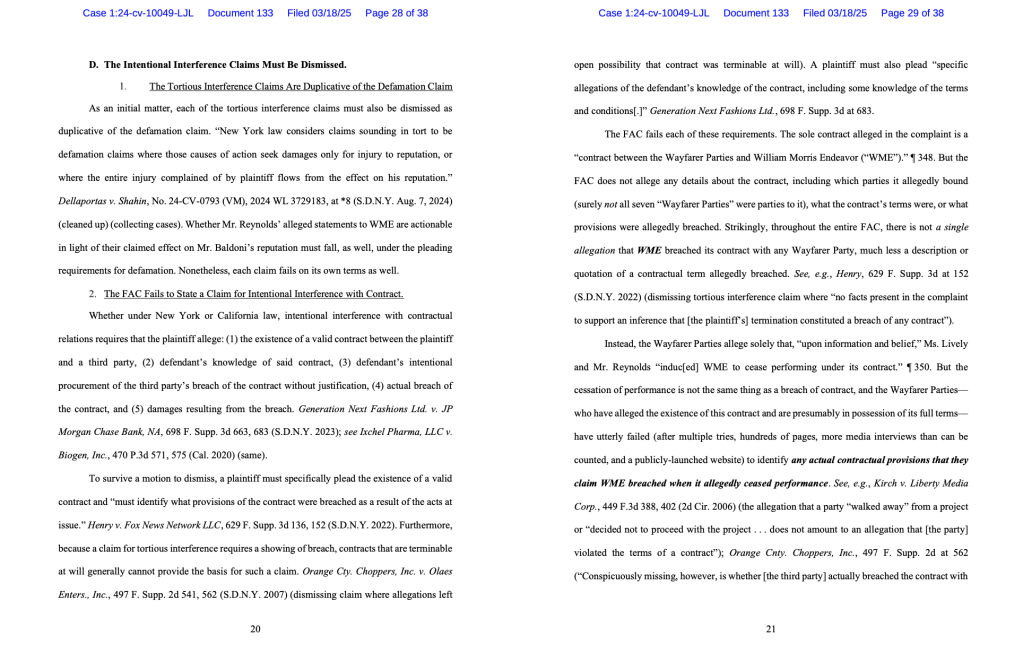
- The intentional interference claims lack key elements, such as a clear contract and direct causation.
- SLAPP Protections & Attorney’s Fees Request
- Reynolds seeks dismissal under New York’s anti-SLAPP law, which is designed to prevent frivolous lawsuits that target free speech.
- If successful, he could recover attorney’s fees from the plaintiffs.
Chances of Success:
- High Probability of Dismissal: The motion makes strong legal arguments that the claims against Reynolds are legally insufficient. Courts often dismiss defamation claims that fail to specify defamatory statements or establish actual malice.
- Anti-SLAPP Protection: If the court finds that the lawsuit is an attempt to silence free speech, the plaintiffs could be ordered to pay Reynolds’ legal fees.
- Possible Partial Dismissal: While the defamation and civil extortion claims are weak, the court could allow the plaintiffs to amend their complaint to try to provide more specifics. However, the plaintiffs face a high burden.
Next Steps:
- If the motion is granted, the case against Reynolds would be dismissed, potentially with prejudice.
- If the court finds any claim plausible, it may allow plaintiffs to amend their complaint.
- Reynolds could seek sanctions or attorney’s fees under New York’s anti-SLAPP law.
Conclusion:
Based on the arguments in the motion, the case against Reynolds appears weak, and there is a strong likelihood that the court will grant his motion to dismiss, at least in part.
 celebchai.com
One thought on “Ryan Reynolds’ MTD Justin Baldoni”