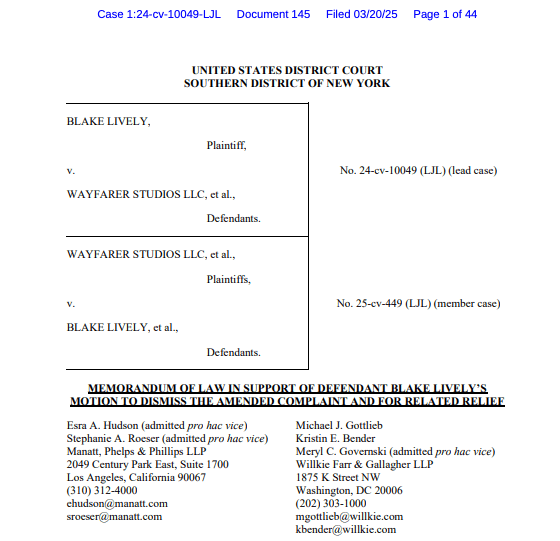
The legal battle between Blake Lively and Wayfarer Studios has taken a sharp turn with Lively’s motion to dismiss what her legal team describes as a retaliatory and meritless lawsuit. Filed in the Southern District of New York, the motion argues that Wayfarer’s complaint is a calculated attempt to punish Lively for reporting sexual harassment and related retaliation during the production of the film It Ends With Us.
Sloane: https://celebchai.com/2025/03/13/outcome-of-sloanes-motion-to-dismiss/
Ryan Filed his: https://celebchai.com/2025/03/18/ryan-reynolds-mtd-justin-baldoni/
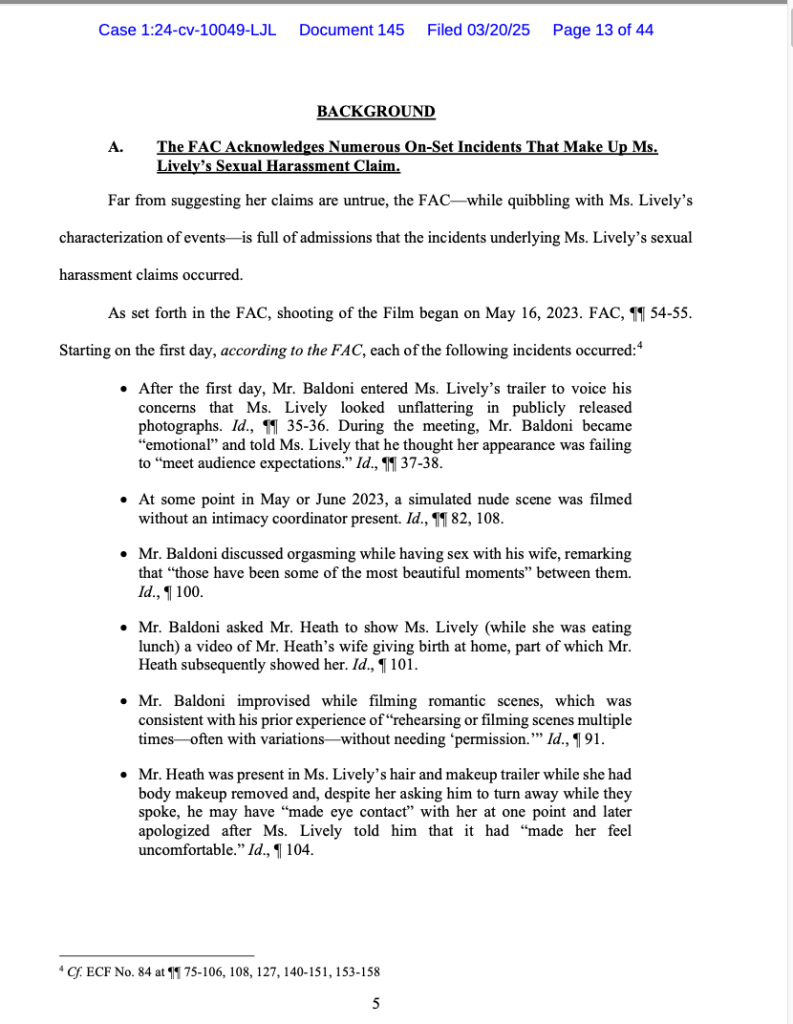
Wayfarer Studios, represented by Justin Baldoni, Jamey Heath, Steve Sarowitz, and others, alleges that Lively engaged in defamation, civil extortion, and contractual interference. The lawsuit claims that Lively made false allegations of sexual harassment and leaked this information to The New York Times to harm their reputation. It also seeks $400 million in damages.
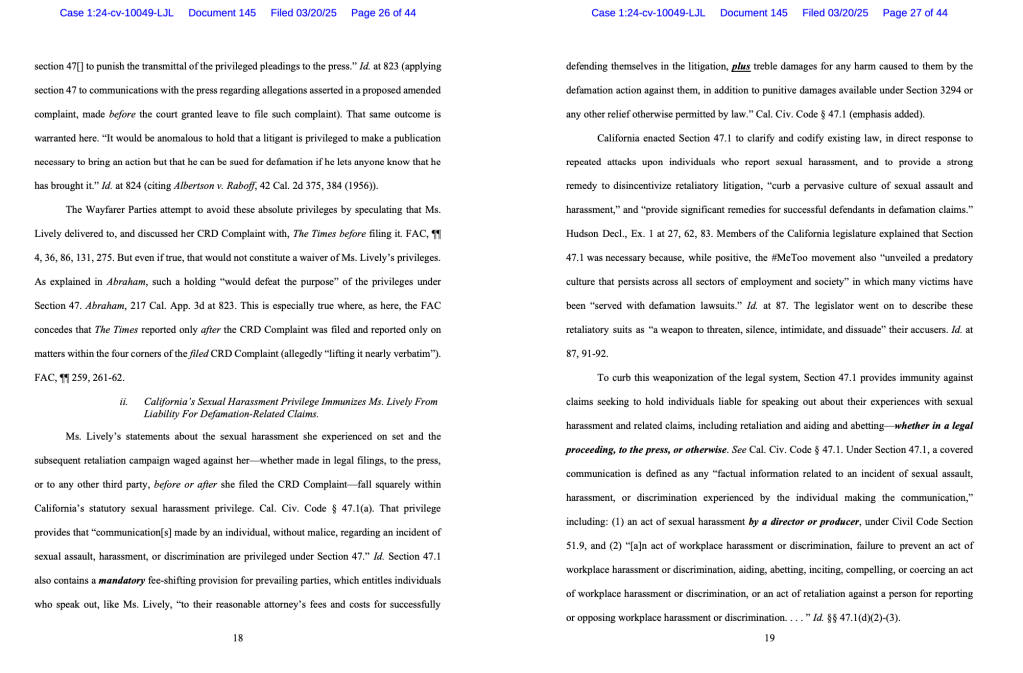
Lively’s legal team, however, argues that the claims are fatally flawed and driven by malicious intent. Central to their defense is the newly enacted California Civil Code Section 47.1, which aims to protect individuals who speak out about sexual harassment from retaliatory lawsuits. Section 47.1 provides a qualified privilege that applies even if the statements were made to the press or other third parties, as long as the communication was made without malice. The law further allows prevailing defendants to recover attorneys’ fees, treble damages, and punitive damages.

Lively’s legal filing underscores that the complaints made about the alleged harassment occurred long before the lawsuit was initiated. The motion details several incidents on the set of It Ends With Us, including improvised scenes involving intimate touching, discussions about sexual topics by male colleagues, and invasive on-set behavior that made Lively uncomfortable.

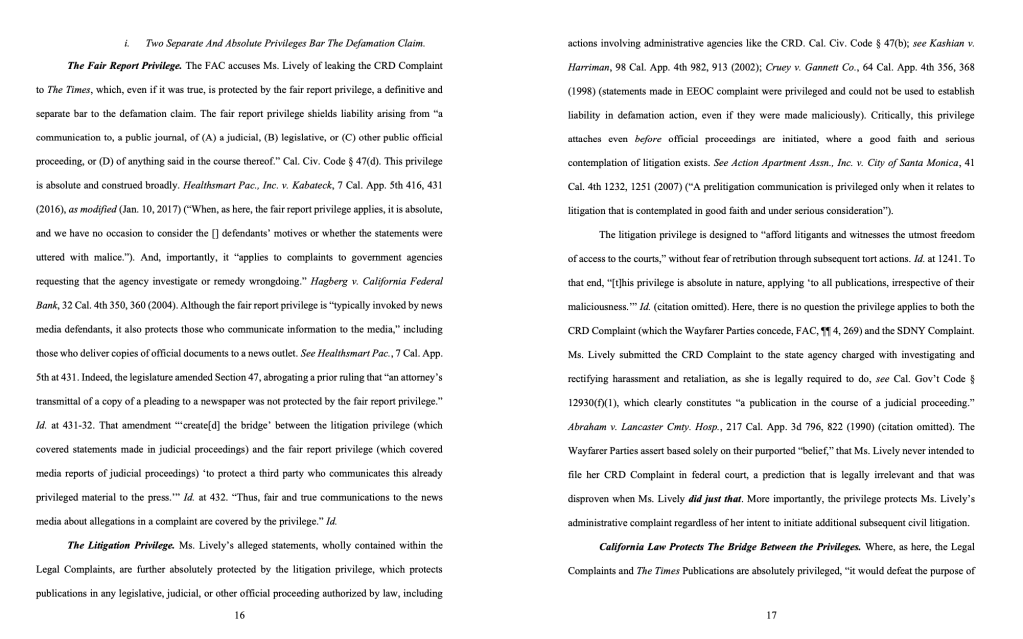
The filing highlights that Lively’s complaints were first raised privately with Wayfarer Studios and Sony, and were later formalized in complaints filed with the California Civil Rights Department (CRD) and the Southern District of New York (SDNY). Both the CRD Complaint and the SDNY Complaint are protected by the litigation and fair report privileges, which allow individuals to report misconduct to governmental agencies or courts without fear of defamation liability.

Additionally, Lively’s legal team points out that the defamation claims fail to specify which statements were defamatory, who made them, and when. The plaintiffs’ reliance on vague allegations without clear identification of defamatory statements makes the claim legally insufficient. Moreover, the motion argues that the statute of limitations bars claims concerning statements made before January 17, 2024.
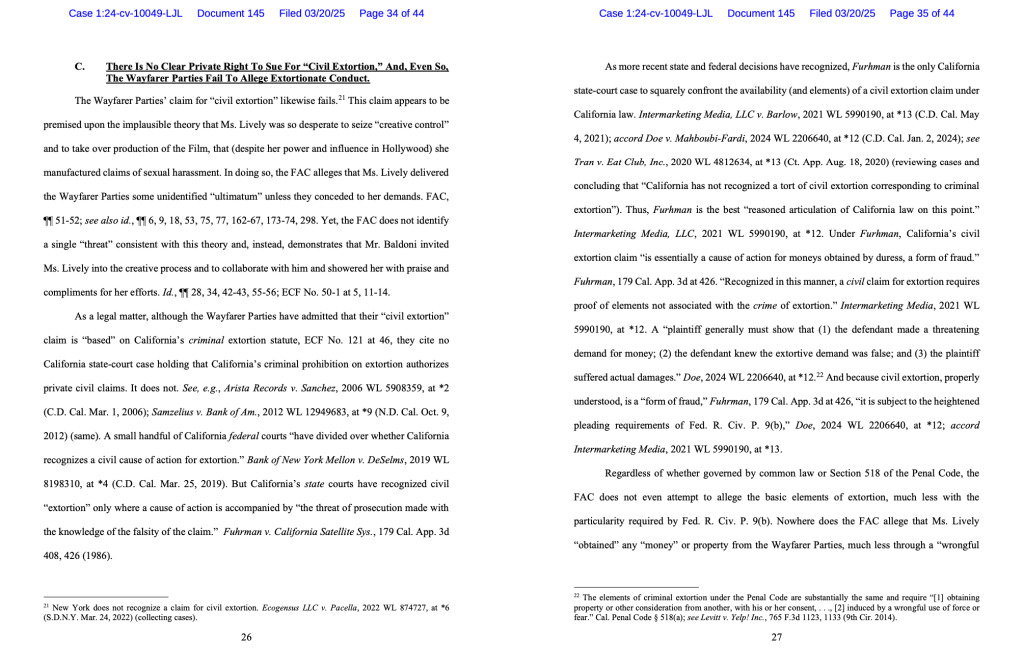
The argument also challenges the validity of the civil extortion claims, stating that there is no evidence of Lively receiving money or property from Wayfarer Studios. Instead, the lawsuit appears to be a thinly veiled attempt to punish Lively for making legal complaints against the studio. Claims related to breach of contract and interference with economic relations are similarly described as vague and baseless.
The lawsuit, Lively’s attorneys argue, is nothing more than a public relations instrument designed to damage her reputation and career. They assert that Wayfarer Studios’ attempt to frame Lively’s harassment claims as a fabrication to gain creative control over the film is illogical and unsupported by facts.
If the court grants Lively’s motion to dismiss, Wayfarer Studios could be held liable for her legal fees and potentially treble and punitive damages as permitted under Section 47.1. This case could set a significant precedent for how California’s newly implemented legal protections shield individuals from retaliatory lawsuits intended to suppress legitimate claims of harassment and retaliation.


 celebchai.com