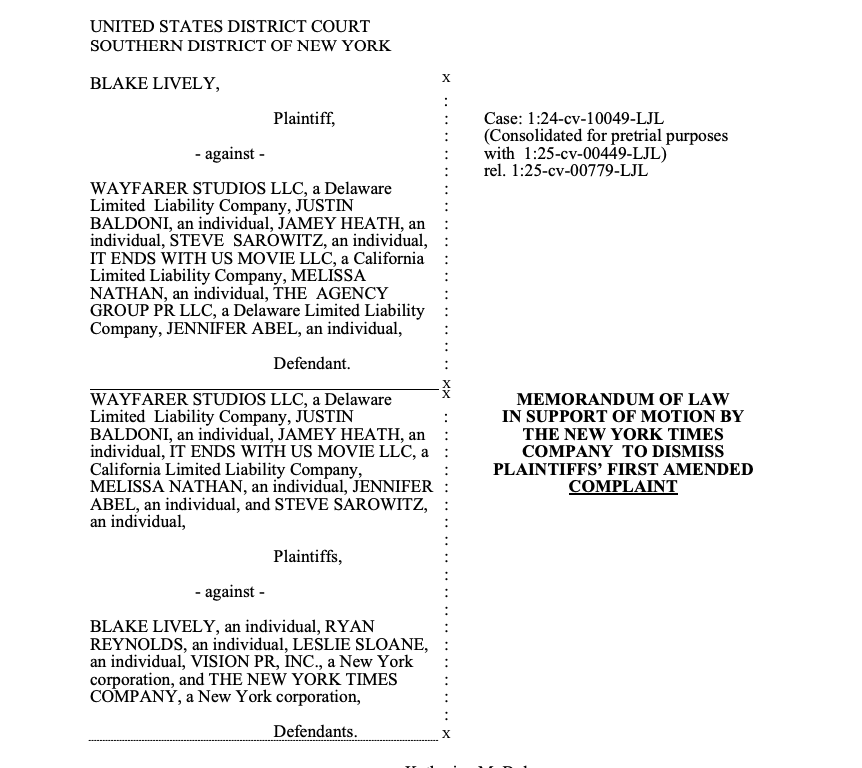
The documents shared are legal filings from a complex lawsuit involving Blake Lively, Justin Baldoni, Wayfarer Studios, The New York Times, and various other parties. This dispute stems from the production and promotion of the 2024 film “It Ends With Us.” WF etc filed a First Amended Complaint at Dkt. 50 noted below.


Overview of the Legal Proceedings
The documents include:
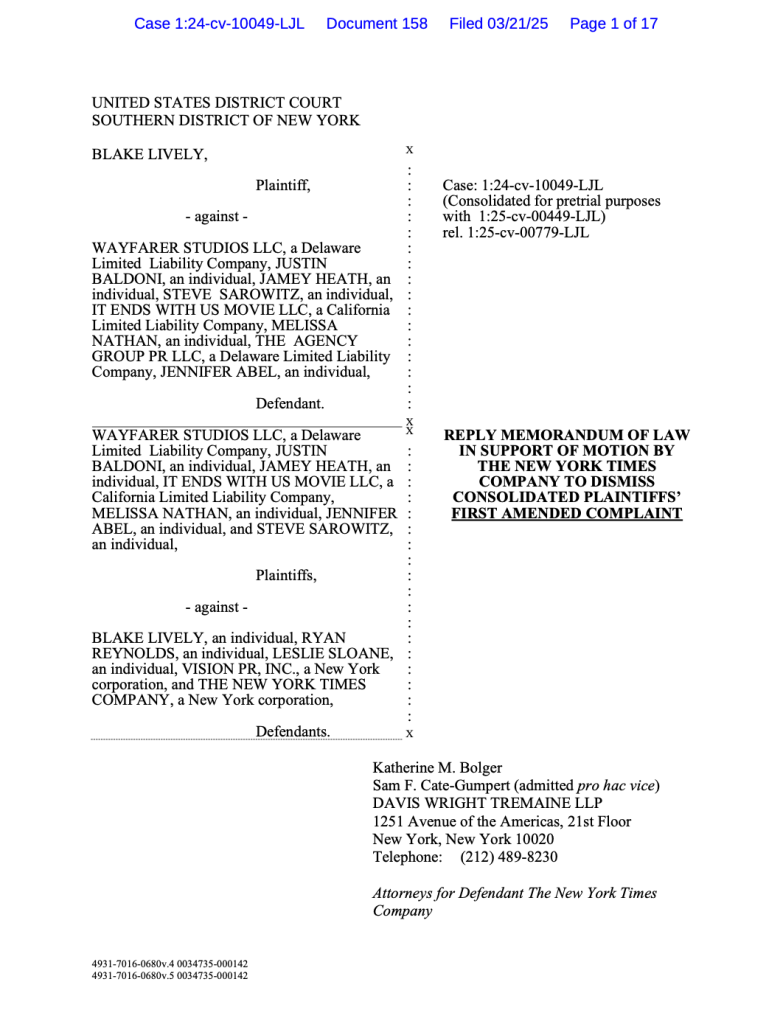
- The New York Times’ Reply Memorandum supporting their motion to dismiss
- The New York Times’ original Memorandum in support of motion to dismiss
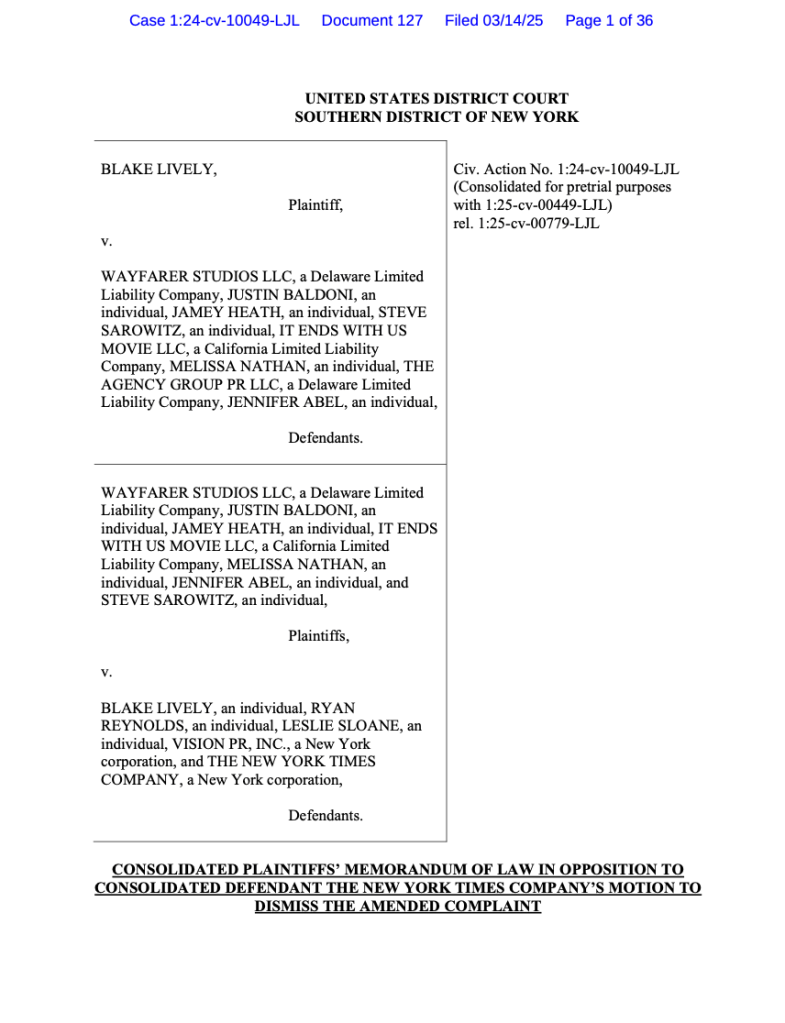
- Wayfarer Parties’ Memorandum opposing The New York Times’ motion to dismiss
- Portions of Wayfarer’s First Amended Complaint against Blake Lively and others
Key Issues and Allegations
The Core Dispute
The central conflict revolves around a movie production where:
- Blake Lively starred as the lead character “Lily” in “It Ends With Us”
- Justin Baldoni directed the film and played the male lead “Ryle”
- Wayfarer Studios co-financed the film
According to Wayfarer’s complaint, what began as a collaborative relationship deteriorated as Lively allegedly:
- Attempted to seize creative control over various aspects of production
- Made demands that insinuated misconduct during filming
- Orchestrated a “hostile takeover” of the film
- Filed a complaint with the California Civil Rights Department alleging misconduct
- Worked with The New York Times to publish an article titled “‘We Can Bury Anyone’: Inside a Hollywood Smear Machine”
The New York Times’ Role
The NYT published an article and video on December 21, 2024, reporting on Lively’s allegations. Wayfarer claims the NYT:
- Collaborated with Lively to publish a false and defamatory narrative
- Presented opinion as fact when stating Wayfarer ran a “smear campaign”
- Failed to provide adequate opportunity to respond
- Published before their stated deadline for comment
- Acted with “actual malice” in publishing false statements
Legal Arguments
The NYT seeks dismissal on several grounds:
- Fair Report Privilege – The article was a fair and accurate report of Lively’s official CRD complaint
- Protected Opinion – The “smear campaign” characterization is non-actionable opinion
- No Actual Malice – The complaint fails to plausibly allege the NYT knew statements were false
- Choice of Law – New York law should apply, not California law
- Improper Group Pleading – The complaint improperly “lumps all defendants together”
Wayfarer counters that:
- The NYT went beyond fair reporting by vouching for Lively’s allegations
- “Smear campaign” was presented as factual, not opinion
- The complaint adequately alleges actual malice
- California law should apply as most plaintiffs are California residents
- Their pleading sufficiently notifies defendants of claims against them
Analysis of Key Legal Issues
Choice of Law Issue
This is critical because:
- New York doesn’t recognize “false light” claims while California does
- The standards for opinion protection differ between states
- The actual malice standard applies differently
The NYT argues New York law applies because:
- The NYT is headquartered in New York
- The article “emanated” from New York
- New York has strong policy interests in regulating its media
Wayfarer argues California law applies because:
- Most plaintiffs are California residents
- The alleged harm occurred primarily in California
- The dispute centers on Hollywood’s entertainment industry
- California has a stronger interest in protecting its citizens
Fair Report Privilege
The NYT argues their article is protected by the fair report privilege, which shields accurate reporting on official proceedings. Wayfarer contends the NYT went beyond simply reporting on Lively’s CRD complaint by:
- Presenting allegations as verified facts
- Adding information and commentary beyond the complaint
- Specifically stating they had obtained documents that “reveal what really happened”
Actual Malice Standard
For public figures (which Baldoni is considered to be), defamation requires showing “actual malice” – that is, that the NYT published with knowledge of falsity or reckless disregard for the truth. The NYT argues Wayfarer failed to plead specific facts showing actual malice, while Wayfarer contends the NYT had access to the full communications and deliberately ignored evidence contradicting their published narrative.
Conclusion
Based on the legal precedents cited and the strength of the NYT’s arguments, the NYT is likely to prevail in its motion to dismiss. The fair report privilege provides strong protection for news organizations reporting on official proceedings, and courts have consistently been reluctant to impose liability for such reporting. Additionally, Wayfarer faces significant hurdles in satisfying the “actual malice” standard at this preliminary stage, as courts typically require substantial factual allegations beyond conclusory statements to allow such claims to proceed to discovery. While aspects of the case present close questions, the judicial tendency to resolve defamation cases at the pleading stage when possible, especially against media defendants, suggests the NYT has the stronger position.
 celebchai.com