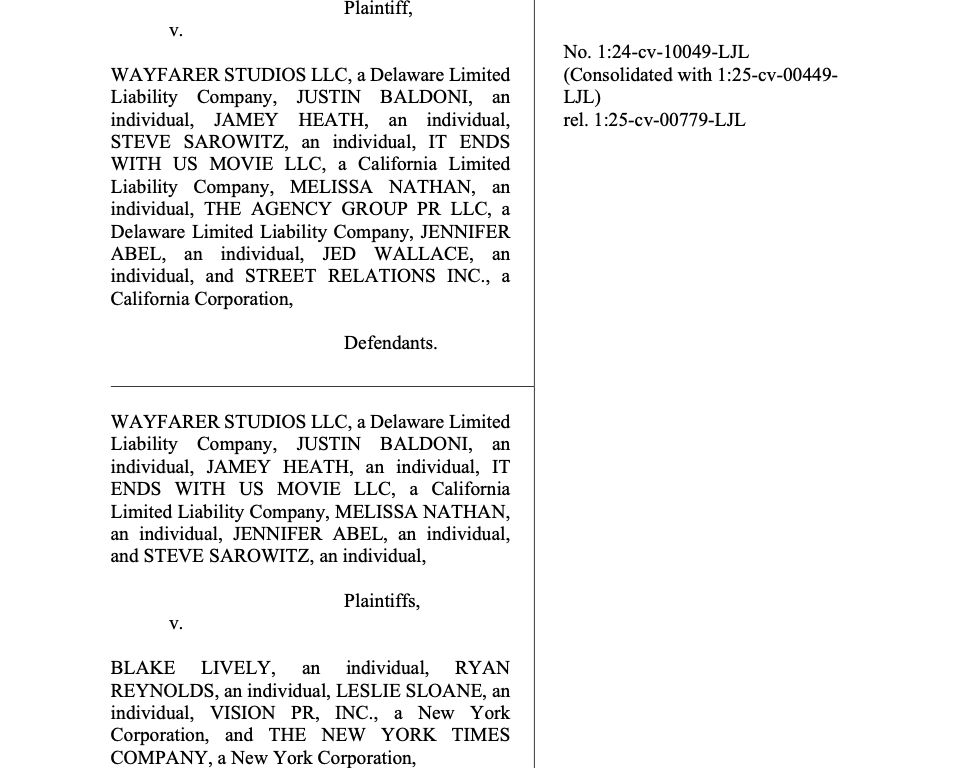
On June 23, 2025, Leslie Sloane and her firm Vision PR filed a blistering motion in federal court against Wayfarer Studios, Justin Baldoni, and other parties behind the It Ends With Us film. What began as a defamation lawsuit against Sloane has now been turned upside down. The court has already dismissed all claims against her with prejudice. Now, she’s demanding they pay her legal fees—under a law designed to punish lawsuits that are more about silencing speech than seeking justice.
The stakes are high. This isn’t just a fee motion—it’s a public reckoning. Sloane’s filing calls the Wayfarer parties’ claims a “publicity stunt” that had “no basis in law or fact,” and accuses them of using the court system to distract from their own misconduct.
The core of her argument? They lied.

According to the motion, the Wayfarer parties falsely accused Sloane of planting stories that Blake Lively had been “sexually assaulted” by Justin Baldoni. But the journalist they based this claim on—James Vituscka of the Daily Mail—gave sworn testimony that Sloane never made any such statement.
In his declaration, Vituscka makes it plain:
“Ms. Sloane never told me that Ms. Lively was sexually harassed or sexually assaulted by Justin Baldoni or anyone else.”
In fact, the now-debunked claim appears to have stemmed from a single ambiguous text message, which the Wayfarer parties interpreted without verifying with the journalist who wrote it. The motion says plainly:
“They never asked what he meant before attributing those words to Sloane and filing a bombshell lawsuit.”
It gets worse. Sloane’s team argues that this entire case was a PR maneuver by Justin Baldoni, who allegedly hired a crisis communications firm to “bury” and “destroy” Blake Lively after she came forward with complaints of harassment and retaliation.
The court itself already dismissed the claims against Sloane, stating unequivocally:
“Sloane did not commit a tort.”
Now Sloane wants justice—not only to clear her name but to hold those responsible accountable under New York’s Anti-SLAPP law, which mandates payment of attorneys’ fees when lawsuits are filed without legal or factual basis in an attempt to chill protected speech.
The motion also names celebrity attorney Bryan Freedman, accusing him of spreading lies about Sloane in multiple media outlets, including The New York Times and The Megyn Kelly Show, without having any credible basis for the claims.
This filing is more than a legal technicality—it is a direct challenge to how powerful parties can weaponize defamation law to control narratives and punish whistleblowers. If the court grants the motion, it could set a powerful precedent: Hollywood PR wars don’t belong in federal court, especially when they’re based on fabrications.
Sloane’s team is clear: this case was never about truth. It was about vengeance. And now, they want compensation for being dragged through months of reputational harm and emotional distress.
This case isn’t just about Blake Lively, Justin Baldoni, or even Leslie Sloane. It’s about how strategic lawsuits are used to manipulate the public, punish dissent, and twist the legal system into a megaphone for spin.
The question now is whether the court will send a message back: You can’t use defamation law as a PR weapon—and walk away without paying for it.
 celebchai.com