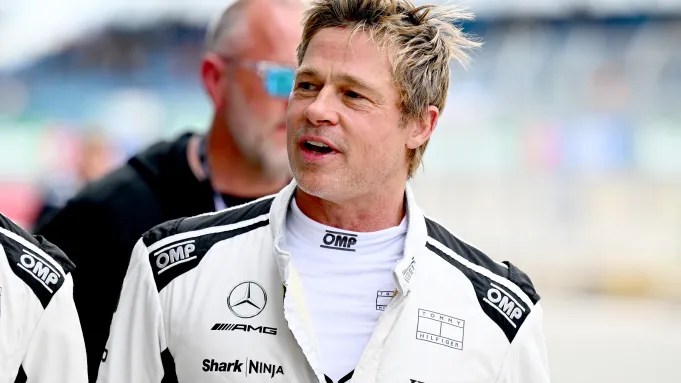
Brad Pitt’s return to the spotlight this summer is being carefully curated—but it hasn’t gone unnoticed. With promotional stops for his new movie F1 including GQ features and podcast interviews, Pitt is once again repositioning himself as Hollywood’s laid-back, introspective leading man. But the media tour raises pressing questions: What does accountability look like when you’re famous, wealthy, and accused of abuse?
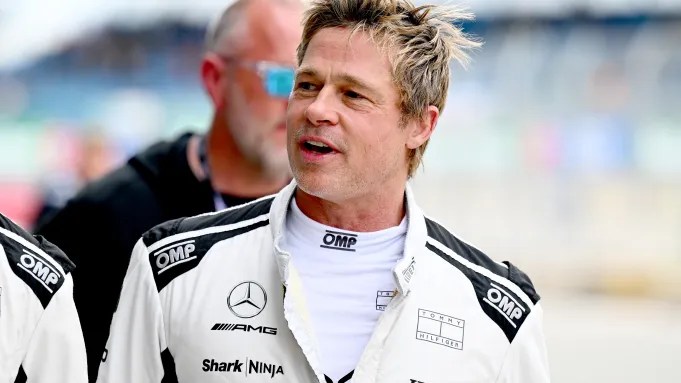
Brad Pitt trackside ‘F1’James Sutton/Getty Images
This week, Pitt appeared on both Armchair Expert and New Heights, sidestepping the years-long allegations from Angelina Jolie and their children. He chatted instead about Chiefs football, ice cream sundaes, and starstruck moments with Susan Sarandon and Geena Davis. While fans might welcome Pitt’s return to form, the silence around the elephant in the room—Jolie’s detailed allegations of physical abuse on a 2016 private jet and beyond—is hard to ignore.
The Allegations That Won’t Go Away
Jolie filed for divorce days after that infamous flight. Reports surfaced alleging that Pitt, intoxicated, became physically aggressive with her and their son Maddox. These claims resurfaced with added gravity in 2024, when Jolie’s legal team revealed that Pitt wanted her to sign a sweeping non-disclosure agreement (NDA) before finalizing their business dealings regarding Château Miraval. When she refused, he sued her.
That 2024 court filing contained new details: the abuse didn’t begin on the plane—it simply escalated there. Jolie alleged that Pitt’s behavior involved not just control but physical aggression toward the children, and financial retaliation when she tried to separate her life from his.
However, the legal reality is more complex than the allegations suggest. The FBI and child services officials investigated Pitt’s actions following the 2016 flight incident. Two months later, the FBI released a statement saying it would not investigate further, and federal prosecutors declined to press charges. A heavily redacted FBI report later revealed that while an agent provided a probable cause statement to prosecutors, “it was agreed by all parties that criminal charges would not be pursued.” Child services also closed their investigation without finding evidence of abuse.
Pitt’s representatives have consistently denied the allegations, calling them “another rehash that only harms the family.”
A Master Class in Media Deflection
None of this legal context is discussed in Pitt’s recent public appearances. Instead, he framed life’s hardships as struggles that are simply “thrown at you,” describing adversity as something external, random. “Sometimes everything goes quiet, it’s perfection,” Pitt mused on New Heights. “Other periods, life throws these struggles at you and it’s how you deal with those and how you come back from those.”
It’s a passive framing of a turbulent chapter that continues to reverberate. That’s especially true now that two of the former couple’s children, Shiloh and Vivienne, have taken legal steps to drop “Pitt” from their names—an unusually public act of disassociation. When asked about the finalization of his divorce in December 2024, Pitt dismissed the eight-year legal battle by saying it wasn’t “that major of a thing” and was just “something coming to fruition. Legally.”
The Machinery of Celebrity Rehabilitation
Pitt’s pivot toward redemption seems to be guided by seasoned crisis manager Matthew Hiltzik, who’s previously worked with embattled figures like Alec Baldwin and Johnny Depp. The move is familiar: focus on the work, deflect personal accountability, and build a new narrative with the help of powerful handlers. In fact, one of Hiltzik’s former employees is now working with Justin Baldoni, another celebrity caught in the shadow of a lawsuit.
The timing is telling. While Jolie scored a legal victory in November 2024 when a judge ruled that Pitt must turn over documents and communications that her legal team claims will prove allegations of abuse and “years of cover-up,” Pitt has embarked on a charm offensive that strategically avoids addressing any of these developments. The winery battle, which began when Jolie sold her shares in their jointly-owned Château Miraval vineyard in 2022 without Pitt’s consent, continues to escalate with no end in sight.
The Industry’s Tolerance Problem
It’s worth asking what these patterns say about the entertainment industry’s tolerance for alleged misconduct. Can a man rebrand with podcasts and red carpets without ever addressing the allegations that defined a decade of his personal life? Is a quiet omission enough to erase public memory?
The current legal landscape complicates simple narratives. While Jolie’s allegations remain unproven in court and investigations found insufficient evidence for charges, the ongoing civil litigation and the public estrangement of Pitt’s children suggest unresolved trauma within the family.
Meanwhile, sources suggest Pitt’s legal strategy may be motivated by more than business interests. According to recent reports, insiders claim Pitt “isn’t going to be backing down anytime soon” in the winery dispute and is “willing to drag out the lawsuit as long as possible if needed.” One source alleged he would pursue the case “to spite Angie,” despite the complex nature involving foreign parties. The case is expected to go to jury trial, potentially lasting 15 days, in what sources describe as potentially “one of the biggest Hollywood legal showdowns in history.”
Critics argue that Pitt’s refusal to address the accusations directly, even as he courts public sympathy, reinforces a dangerous culture of avoidance. It’s not that he owes an admission—but in his silence, he rewrites history as a series of unfortunate events life “threw” at him. Whether you view this as strategic damage control or legitimate privacy protection may depend on your perspective on celebrity accountability.
The Verdict of Public Opinion
And yet, many fans still cheer him on. The divorce settlement reached in December 2024 after eight years of litigation has officially closed one chapter, though the separate winery lawsuit promises to be an even more contentious battle. With a jury trial potentially lasting weeks and involving international business interests, the legal warfare between the former power couple shows no signs of ending. With Hollywood’s help, Brad Pitt appears poised for another reinvention.
But for the children choosing to shed his name and the woman whose allegations—proven or not—have shaped the narrative of their family’s dissolution, the wounds seem far from healed. Whether Pitt’s calculated return succeeds in rehabilitating his image may ultimately depend on whether the public distinguishes between legal vindication and moral accountability.
 celebchai.com