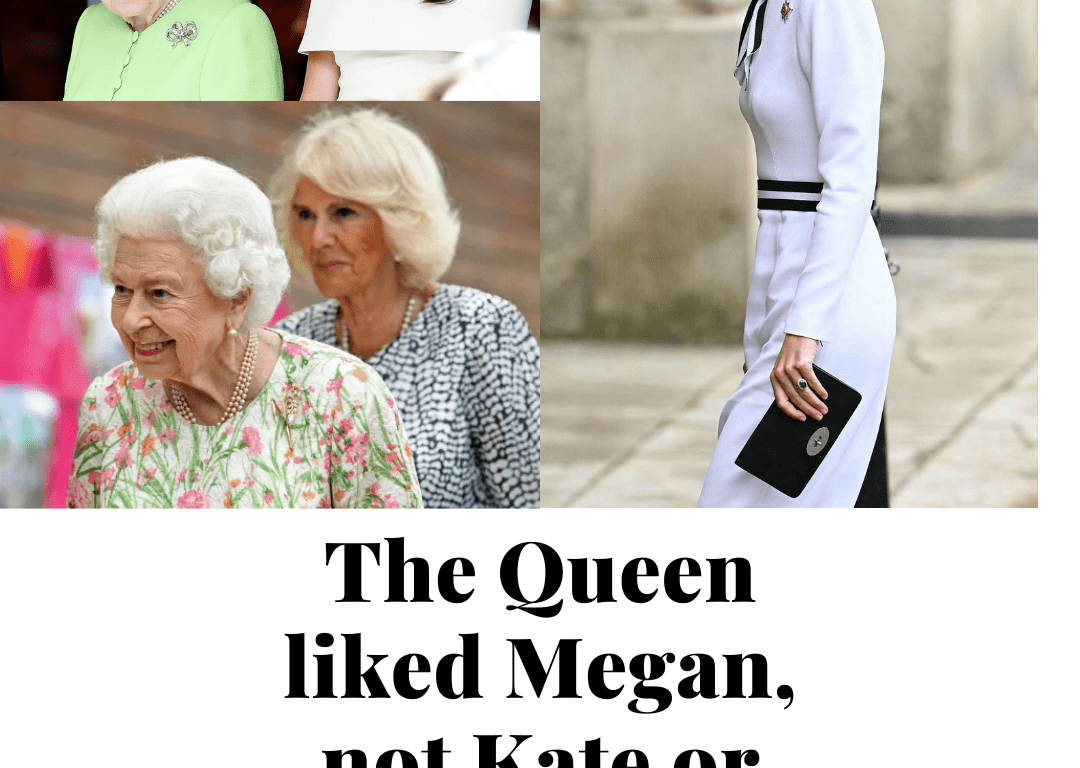
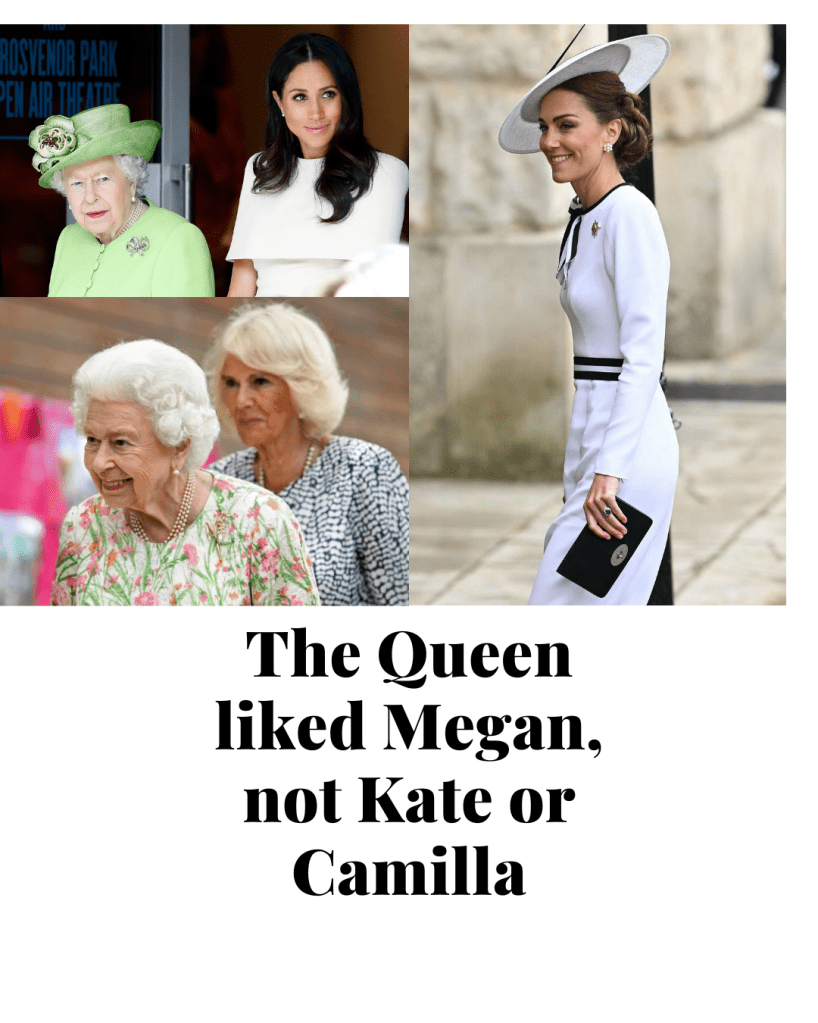
In recent years, the British press has painted Queen Elizabeth II as skeptical, even disapproving, of Meghan Markle, the Duchess of Sussex. Yet, the public record offers a different view—one that suggests Meghan was embraced, not ostracized, by the late monarch. In contrast, Queen Elizabeth reportedly harbored deep reservations about Kate Middleton’s work ethic and long resisted the idea of Camilla Parker Bowles becoming Queen Consort. So why was Meghan, an American divorcee and newcomer to royal life, granted one of the monarchy’s highest honors—an invitation aboard the Royal Train—just weeks after her wedding?
To understand the nuances of Queen Elizabeth’s relationships with the women closest to her heirs, we must go beyond posthumous speculation and revisit what was plainly visible in her lifetime.
The Queen Had ‘Grave Concerns’ About Kate Middleton’s Career Ambitions
Kate Middleton married Prince William in 2011, but her path to royalty was not without scrutiny. As royal biographer Katie Nicholl revealed in The Making of a Royal Romance, the Queen privately expressed “grave concerns” about Kate’s lack of independent career accomplishments before becoming a full-time royal. Kate, who had briefly worked at Jigsaw and her parents’ company, Party Pieces, was seen as directionless. One royal commentator noted that “there was a phase where she appeared to be doing very little,” adding that the Queen allegedly remarked that Kate “doesn’t do very much.”
This perception of inertia was exacerbated by Kate’s luxurious lifestyle—frequent vacations and minimal public engagements—especially during a period marked by economic hardship in the UK. Her wedding to William may have been celebrated, but it did not come without whispered reservations inside Buckingham Palace.
The Queen ‘Detested’ Camilla and Delayed Her Acceptance
Then there’s Queen Camilla, formerly Camilla Parker Bowles, whose journey into the royal family was even more fraught. According to The King: The Life of Charles III by Christopher Andersen, Queen Elizabeth “always detested” Camilla and blamed her for destabilizing the monarchy during the Diana years. Even after Camilla married Prince Charles in 2005, the Queen reportedly refused to accept her as a future Queen Consort. It took years of strategic lobbying—and a crisis involving Prince Andrew’s Jeffrey Epstein scandal—for Charles to finally secure the Queen’s endorsement in 2022.
The palace PR campaign to rehabilitate Camilla, dubbed “Operation PB,” lasted nearly a decade. Charles publicly promised she would be titled “Princess Consort,” not queen—an assurance many insiders knew was a political compromise. As Andersen notes, the Queen’s final endorsement came only when Charles had leverage: silence over Prince Andrew’s legal and financial troubles in exchange for Camilla’s elevation.
Meghan Markle Got What Neither Kate Nor Camilla Received
Amid these complex and often reluctant welcomes, Meghan Markle stands out.
1. She Fast-Tracked Meghan’s Transition into Royal Duties
Unlike Kate, who waited years after university to officially join the royal family’s working ranks, Meghan was immediately invited to participate in royal engagements. In fact, Meghan undertook her first official event with the Queen just three days after announcing her engagement to Prince Harry in November 2017. That’s record time.
2. She Invited Meghan to Christmas at Sandringham Before Marriage
It is a very rare honor to be invited to the royal family’s Christmas celebrations at Sandringham without being married. Even Kate Middleton wasn’t included until after her wedding. But Meghan was invited in December 2017, a full five months before marrying Harry. That gesture broke protocol—and tradition.
3. She Gifted Meghan a Set of Pearl and Diamond Earrings
During their joint outing to Cheshire in June 2018, the Queen was seen gifting Meghan a pair of elegant pearl and diamond earrings—a very personal and meaningful gesture. Such jewelry gifts are rare and highly symbolic in royal circles, signaling inclusion and high regard.
4. She Appointed Meghan Vice President of the Queen’s Commonwealth Trust
In 2019, Queen Elizabeth named Meghan the Vice President of the Queen’s Commonwealth Trust, a key position tied to the Queen’s lifelong dedication to the Commonwealth. The appointment was not ceremonial—it was high-level and strategic, particularly as Meghan was seen as a modern figure who could bridge generational and cultural divides.
5. She Allowed Meghan to Keep the Title Duchess of Sussex Post-Exit
After Meghan and Harry stepped down as senior royals, the Queen could have insisted they relinquish their titles entirely. Instead, the Queen allowed Meghan to retain the Duchess of Sussex title, and made a point in her public statement to refer to the couple as “much loved members of my family.”
6. Her Final Public Statement About Meghan Was Warm and Protective
In January 2020, after the Sussexes announced their decision to step back from royal duties, the Queen issued a personal statement—not from the Palace, but signed “Elizabeth R” herself—saying:
“Harry, Meghan and Archie will always be much loved members of my family. I recognise the challenges they have experienced as a result of intense scrutiny over the last two years…”
This was a rare public acknowledgment of the media pressure Meghan faced—and it came from the Queen directly.
7. She Invited Meghan to the Queen’s Commonwealth Day Services
Despite tension within the family and the media swirl surrounding the Sussexes’ exit, Meghan was invited to attend the Queen’s final public engagement before lockdown—Commonwealth Day 2020. This appearance, though icy behind the scenes with William and Kate, remained a signal that the Queen herself wasn’t shutting Meghan out.
8. She Personally Spoke with Meghan and Harry After the Oprah Interview
Multiple reports, including from Harper’s Bazaar and People, confirmed that the Queen reached out to Meghan and Harry after their Oprah interview in 2021, and was deeply concerned about the allegations of racism and mistreatment. The Palace’s statement famously included the line:
“Recollections may vary. But the issues raised, particularly that of race, are concerning.”
Within a month of marrying Prince Harry in 2018, Meghan was invited to travel overnight with Queen Elizabeth II on the Royal Train—an experience neither Kate nor Camilla ever shared with the monarch. The journey to Cheshire included public appearances at the opening of the Mersey Gateway Bridge and Chester’s Storyhouse Theatre, with Meghan representing the Crown independently, without Harry present.
This was no symbolic gesture—it was a declaration. The Royal Train was historically reserved for the monarch and her closest, most trusted confidants. Kate didn’t receive her own Royal Train experience until December 2020—and even then, the Queen did not accompany her. Camilla, despite decades in the royal circle, never joined Her Majesty aboard it.
The Queen’s choice to place Meghan in such a visible, prestigious position indicates a level of trust and favor that contradicts the ongoing media narrative of royal estrangement. Images from that day—Meghan laughing alongside the Queen, both relaxed and smiling—tell a story few tabloids are willing to print. That story is one of inclusion, not division.
Media Revisionism and the Real Record
Recent attempts to portray Meghan as divisive or distrusted rely heavily on anonymous sources and recycled anecdotes. But these stories fall apart when matched against the Queen’s public actions. Queen Elizabeth was known for her subtle but powerful symbolism. Seating Meghan beside her on the Royal Train—so early, and so publicly—was not accidental. It was a signal to the world.
The Queen may have had private misgivings about Kate’s preparation and publicly resisted Camilla’s ascent for years, but when it came to Meghan, she offered one of the highest honors in the royal arsenal. This act, far from the whispered doubts reported in tabloid columns, reveals how seriously Queen Elizabeth took her new granddaughter-in-law—and how much she was willing to do to endorse her.
In a world where palace insiders push competing narratives and commentators reinterpret history to fit current agendas, it’s worth returning to what was actually done by the monarch herself. The Queen chose Meghan for that train ride. She chose visibility. She chose inclusion. And that choice still speaks louder than the whispers that followed.
 celebchai.com