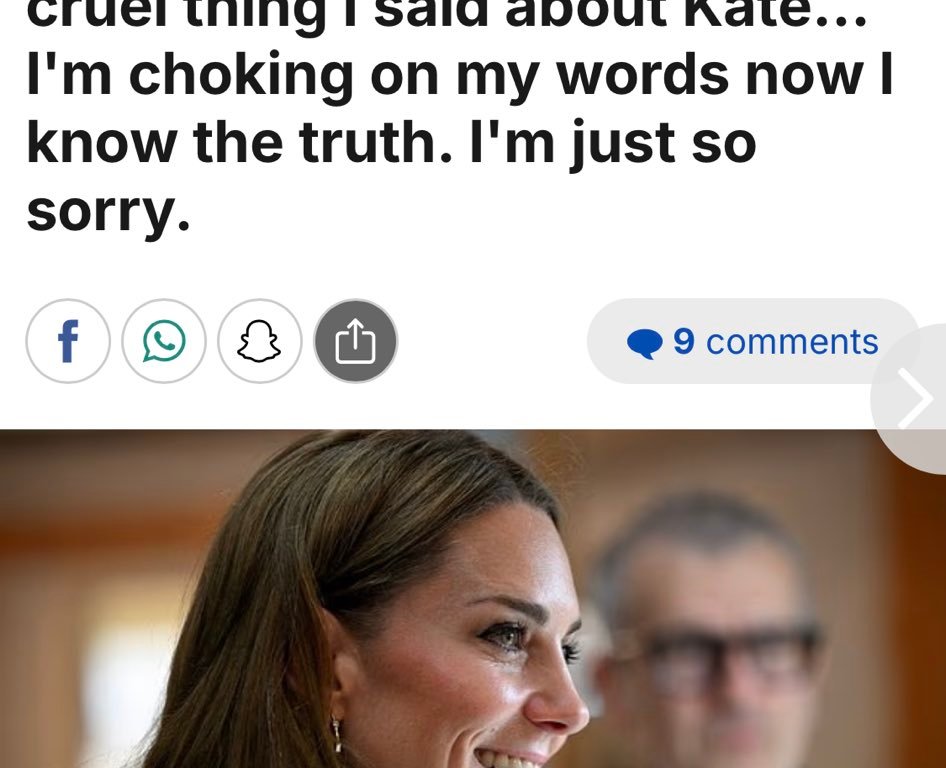
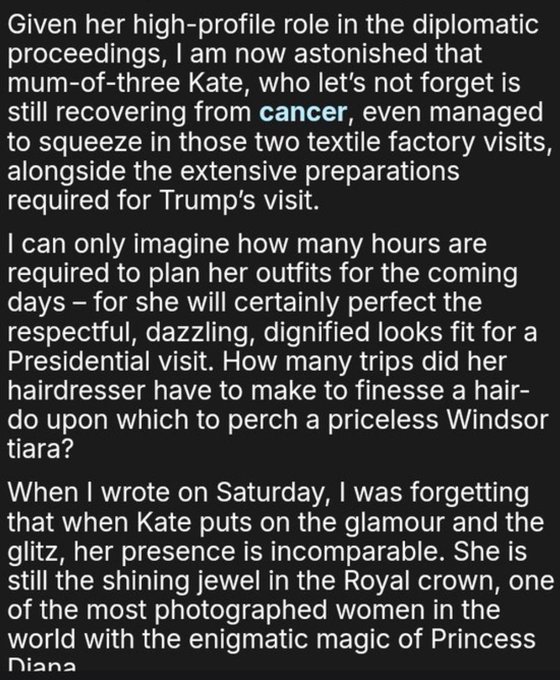
Amanda Platell shocked readers by publishing a groveling apology to Kate Middleton. Only days before, she mocked William and Kate as the “Prince and Princess of Boring” and praised Harry’s energy during his UK visit. Then came a dramatic reversal, with Platell claiming she was “choking on her words” and suddenly calling Kate the crown’s “shining jewel.”
Platell’s earlier digs, such as Kate spending “hours planning outfits” or “finessing a tiara at the hairdresser,” read like satire. Her sudden apology sounded less like heartfelt remorse and more like palace-enforced damage control. To many, this was not an apology but royal bootlicking dressed as regret, the kind of pivot that follows a furious phone call from Kensington Palace.
This was not the first time. In 2011, Platell admitted she was confronted after labeling Kate “Waity Katy” and William’s “idle girlfriend.” She quickly published a lengthy mea culpa, reframing Kate as a role model. The cycle has repeated: attack, backlash, and cloying apology.
The episode highlights the unspoken pact between the palace and the tabloids. Journalists can target Harry and Meghan without consequence, but criticism of William and Kate is swiftly neutralized. Platell briefly told the truth, describing the Waleses as dull and detached, before she fell back in line.
The bigger picture is not one columnist’s credibility but the press culture that bends to royal power instead of scrutinizing it. The palace manages the narrative while tabloids comply. The public is left with flattery instead of honest reporting.
Amanda Platell did not fall on her sword for Kate. She bowed to the palace machine, proving again that the crown still dictates the headlines while Meghan remains the unprotected target.
 celebchai.com