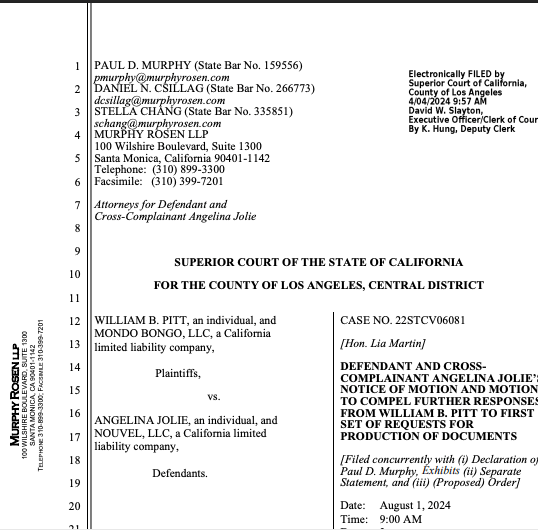
The Château Miraval lawsuit is routinely described as a bitter business dispute between former spouses. Angelina Jolie’s court filings tell a much more specific story: one about coercion, silence, and what happens when a woman refuses to sign away her right to ever speak about abuse.
Jolie and Brad Pitt purchased Château Miraval in 2008 as a family home and business, later becoming equal 50–50 owners through their respective companies. After Jolie filed for divorce in 2016 following a violent incident aboard a private flight, she left Miraval with their children and never returned. For years afterward, she did not seek alimony and did not publicly disclose details of Pitt’s conduct, focusing instead on helping the children recover.
By early 2021, Jolie sought to fully disentangle herself financially. After extensive negotiations, Pitt agreed in February 2021 to buy her interest in Miraval for approximately $54.5 million. The deal included a narrow, standard non-disparagement clause limited to Miraval’s wine business. Jolie has consistently stated that had this agreement closed, there would be no lawsuit today.
The deal collapsed not because Jolie changed her mind, but because Pitt did.
On March 12, 2021, during an ongoing custody dispute, Jolie filed sealed offers of proof in family court detailing evidence of Pitt’s domestic violence toward her and their children. The filings were confidential and inaccessible to the public. Within days, Pitt “stepped back” from the Miraval agreement. According to Jolie’s filings, his attorneys conveyed that Pitt now feared the information could eventually become public.
Pitt then conditioned the buyout on Jolie signing a dramatically expanded NDA. Unlike the original business-only clause, this new NDA would have covered Pitt’s personal reputation and misconduct, effectively prohibiting Jolie from ever speaking—outside of court—about abuse or related events. Jolie rejected this demand, viewing it as an attempt to transform her years of voluntary silence into permanent contractual control.
She offered to proceed under the originally agreed terms. Pitt refused and escalated, proposing even broader NDA language. By June 2021, the deal was dead. Jolie notified Pitt that she would explore third-party buyers and later sold her interest to a Stoli Group affiliate. Only after Pitt walked away from the buyout did he sue her, accusing her of acting maliciously and seeking tens of millions of dollars in damages.
Pitt’s lawsuit alleges that Jolie abandoned the deal out of spite following an adverse custody ruling. Jolie’s filings point out that this narrative collapses under the timeline: Pitt stepped back weeks before any custody ruling was issued, and that ruling was later vacated entirely on appeal due to undisclosed conflicts involving the private judge Pitt insisted on using.
That unresolved factual dispute now sits at the center of the litigation, and it explains the aggressive discovery tactics that followed.
Pitt has sought expansive discovery into Jolie’s communications, intent, and prior NDA practices, arguing that her refusal to sign his NDA was merely a pretext. Jolie counters that this discovery is designed to distract from the core issue—why Pitt demanded an NDA so sweeping that it covered his personal conduct rather than Miraval’s business—and to punish her for refusing to be silenced.
On December 17, 2025, the Los Angeles Superior Court granted, as modified, Pitt’s motion to compel compliance with prior discovery responses. The order requires Jolie to produce a limited set of previously redacted, non-attorney communications identified on a privilege log. The court did not pierce attorney-client privilege, did not rule on the merits of the case, and did not endorse Pitt’s version of events. It was a procedural discovery ruling, not a judgment on truth or liability.
Jolie has publicly stated she will appeal aspects of that order. Her position is that California law protects communications with non-lawyer advisors when they convey or implement legal advice, and that forcing disclosure of such materials undermines both privilege doctrine and fair-trial rights. Because compelled disclosure of privileged material cannot be undone, discovery orders of this kind are commonly reviewed through writ proceedings, where appellate courts can intervene before irreversible harm occurs.
From Jolie’s perspective, the discovery fight is a continuation of the same pattern. She attempted to exit the business quietly. She attempted to keep family matters sealed. She attempted to close the chapter through a negotiated buyout. Each attempt was met with broader demands, deeper entanglement, and ultimately litigation when she refused to surrender her silence.
Seen through her filings, the Miraval dispute is not about a vineyard or a vendetta. It is about whether a woman can leave an abusive relationship without being contractually gagged as the price of financial freedom—and whether the legal system will allow discovery to be used as leverage when control through other means has failed.
 celebchai.com