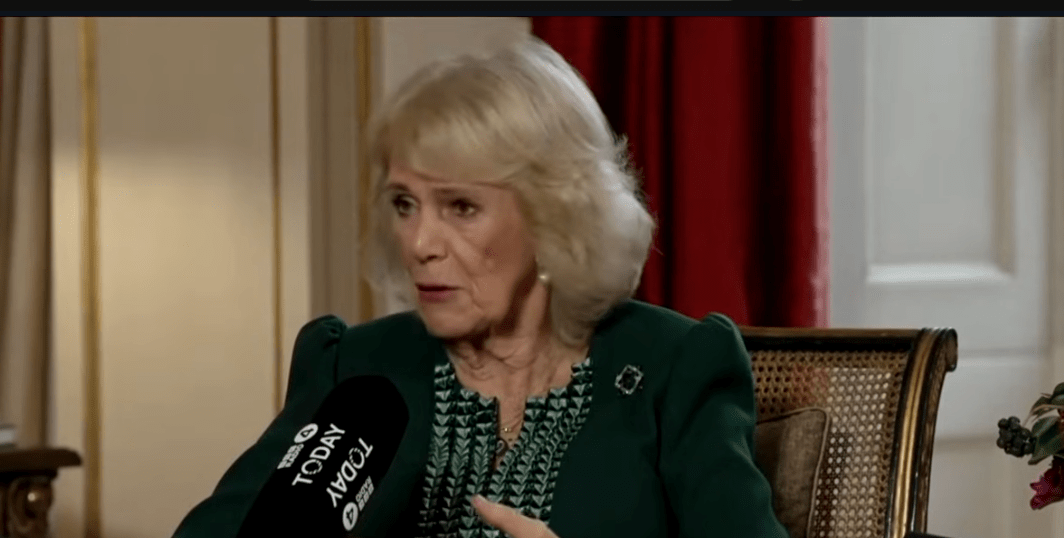
Queen Camilla revealed on BBC Radio 4 that she was attacked by a stranger on a train as a teenager. The comment sections immediately split into familiar camps: those who believe survivors regardless of whether they like the person, and those who couldn’t resist adding “but” to their sympathy.
The most honest responses came from women who simply recognized the universality: “Every woman has a story. Every single one.” No qualifications, no pivot to Diana, no speculation about motives.
Then there’s the other contingent—people who can’t offer basic human acknowledgment without first establishing their disapproval. “I don’t like her BUT no one deserves assault.” The “but” is doing a lot of work there. It’s a permission structure: I’m allowed to believe a survivor only after I’ve signaled that I’m not endorsing her as a person.
The timing skeptics emerged predictably. “Why now?” “Why in this context?” “Seems convenient given what’s happening with Andrew.” This is the same scrutiny applied to every woman who discloses assault at any moment other than immediately after it happens—which is also criticized as attention-seeking. The window for acceptable disclosure doesn’t actually exist.
Some commenters noticed something worth noting: the conversation was ostensibly about the Hunt family’s loss, and Camilla inserted her own experience. Whether that’s solidarity or scene-stealing depends on your priors. Sally Peacock asked directly: “Was it appropriate to disclose this to a family that have suffered such an horrific tragedy?”
The Diana loyalists showed up on schedule. “Not a queen, only Diana.” “She’ll never be queen to me.” Decades later, and this is still the lens. Whatever Camilla does or experiences gets filtered through that prism.
What’s actually interesting is the generational divide. Several commenters noted that women of Camilla’s era were taught such things were their fault, that silence was expected, that you didn’t speak of it. The older British women in the comments seem to understand the weight of disclosure in ways the younger American commenters demanding “why didn’t you say something then?” do not.
The discourse proves its own point. Women don’t report because they won’t be believed. Women don’t disclose because their motives will be questioned. Women don’t speak publicly because it will be made about their character rather than their experience. The comments demonstrate exactly why assault survivors stay silent—and then some of those same commenters will wonder why assault survivors stay silent.
Camilla’s disclosure may be strategic. It may be genuine. It may be both. But the response to it reveals more about how we process women’s trauma than it does about Camilla herself.
 celebchai.com