A woman sold jam. That is the news.
Meghan Markle, through her As Ever lifestyle brand, reportedly moved over 862,000 boxes of fruit spread at $42 each. A technical glitch on the website revealed the inventory numbers, internet sleuths did the math, and the figure came out to approximately £26.7 million in sales.
This is, by any reasonable measure, a successful product launch. A celebrity leveraged her platform to sell a lifestyle product. It happens every day. George Clooney did it with tequila. Ryan Reynolds did it with gin. Jessica Alba built a billion dollar company selling diapers and cleaning supplies.
But when Meghan does it, the coverage takes a peculiar turn.
The Bitter Pill
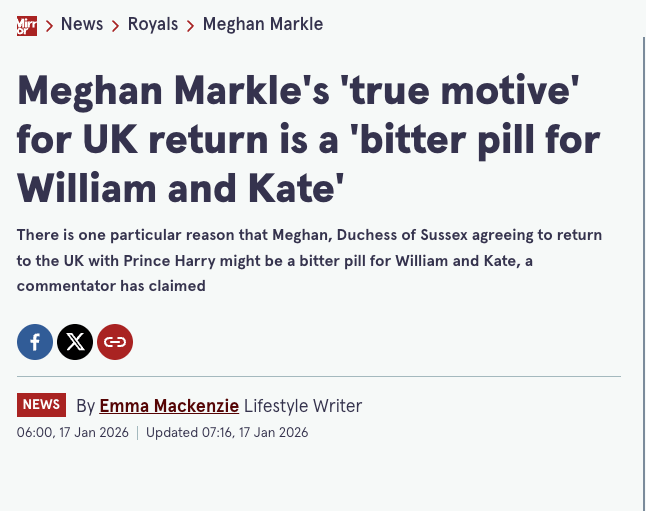
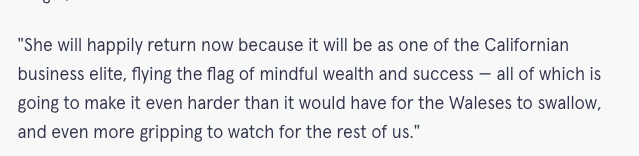
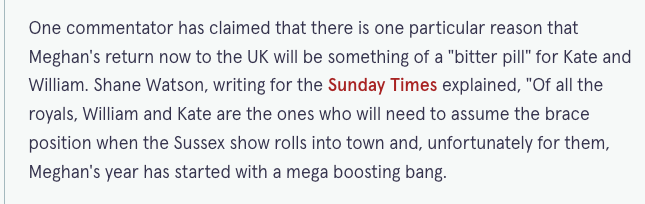
The Sunday Times commentator Shane Watson wrote that Meghan’s success would be a “bitter pill” for William and Kate to swallow. The Daily Mirror amplified this framing, running a headline about the “true motive” behind Meghan’s planned UK return and why it would be so hard for the Waleses to accept.
Let us pause on that word: bitter.
Bitter pills are things you are forced to accept against your will. Medicine that hurts going down. The framing presumes that William and Kate are suffering, that something is being done to them, that they are on the receiving end of an attack.
But what attack? Meghan launched a jam. She did not mention William. She did not mention Kate. She did not hold a press conference gloating about her sales figures. She sold a product and the website had a glitch.
The aggression is entirely invented.
How Victimhood Gets Manufactured
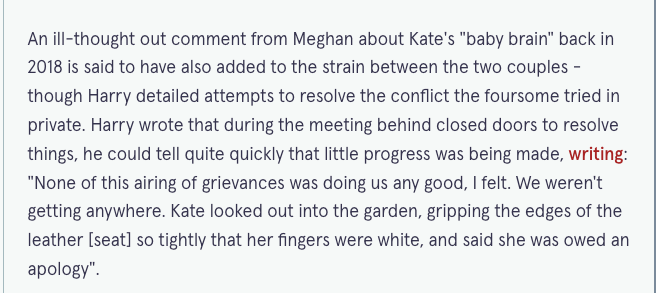
The article in question uses a familiar formula. First, establish that tensions exist. The bridesmaid dress argument from 2018. The “baby brain” comment. The Oprah interview. The Netflix documentary. The memoir. These are presented as context but they function as priming, reminding the reader that Meghan has been Bad before.
Then, take a neutral event and frame it as an assault. Meghan’s commercial success becomes something William and Kate must “brace” for, something “hard to swallow.” The passive construction does important work here. We are not told that William and Kate actually feel this way. We are not given sources inside Kensington Palace. We are simply told that they will need to assume a defensive position.
The victim status is assigned, not reported.
Why the Framing Matters
Consider the power dynamics at play. William is the Prince of Wales, heir to the British throne. Kate is the Princess of Wales, future queen consort. They live in palaces. They have a staff of hundreds. They have the machinery of the British state behind them.
Meghan lives in Montecito and sells jam.
But in the tabloid telling, the global monarchy is somehow the underdog. The institution with a thousand years of history and billions in assets must “brace” itself against a woman with a lifestyle brand. The framing inverts reality so completely that it becomes absurd when you state it plainly.
And that is precisely the point. The framing is not meant to be stated plainly. It is meant to be absorbed. The reader is supposed to feel protective of William and Kate without ever asking why the heir to the throne would care about his estranged sister-in-law’s condiment business.
The Closed Loop
Here is how the machine works. Meghan does something neutral. Sells jam. Launches a show. Appears at an event. The tabloids frame it as an attack on the royals. Commentators are brought in to speculate about how William and Kate feel about this attack. Their presumed feelings become the story. Meghan is now the aggressor, William and Kate are now victims, and the original neutral event has been transformed into evidence of ongoing hostility.
Note what is missing from this loop: anything Meghan actually said or did that was aggressive. The aggression is imputed based on the mere fact of her success. In this framework, her winning is itself an attack on them. Her thriving is an insult to the institution she left.
This tells us something important. The offense was leaving. Everything since then is just extended punishment for that original sin.
The Yoko Problem
Shane Watson’s commentary includes a telling phrase. She writes that Meghan is not returning as “the Yoko of the royal family, somewhat chastened.”
The Yoko Ono reference is instructive. Yoko has been blamed for decades for breaking up the Beatles, despite the fact that the band’s dissolution was vastly more complicated than one woman’s influence. The Yoko narrative is a convenient way to blame a woman, usually a woman of color, usually an outsider, for the fracturing of a beloved male institution.
Watson is saying, essentially, that Meghan was supposed to come back humiliated. The cancelled Spotify deal, the scaled back Netflix deal, the alleged American backlash. These were supposed to be her punishment. She was supposed to return diminished.
Instead she sold £26.7 million worth of jam.
The “bitter pill” is not really about jam at all. It is about a narrative that did not go according to plan.
What Would Normal Coverage Look Like
Imagine a different article. Imagine a headline that read: “Meghan Markle’s As Ever Brand Reports Strong Sales in First Year.” Imagine a story that quoted retail analysts about celebrity brand launches. Imagine a piece that compared her numbers to other celebrity lifestyle ventures. Imagine coverage that treated her as a businesswoman rather than a weapon aimed at the monarchy.
That article would be boring. It would not generate clicks. It would not feed the endless appetite for royal conflict content.
And so we get bitter pills instead.
The Real Story
There is actually an interesting story buried in all of this. A woman who was globally famous but had no traditional business background launched a premium lifestyle brand and moved nearly a million units in her first year. How did she do it? What is her marketing strategy? Who is her customer base? What does this tell us about celebrity commerce in 2026?
Those are questions a journalist might ask. They are not the questions the tabloids are interested in.
The tabloids are interested in conflict. They are interested in framing Meghan as an aggressor and William and Kate as victims. They are interested in manufacturing emotion where none has been expressed.
A woman sold jam. The rest is fiction.
 celebchai.com