Blake Lively’s Legal Defense Against Wayfarer Studios’ Retaliatory Lawsuit

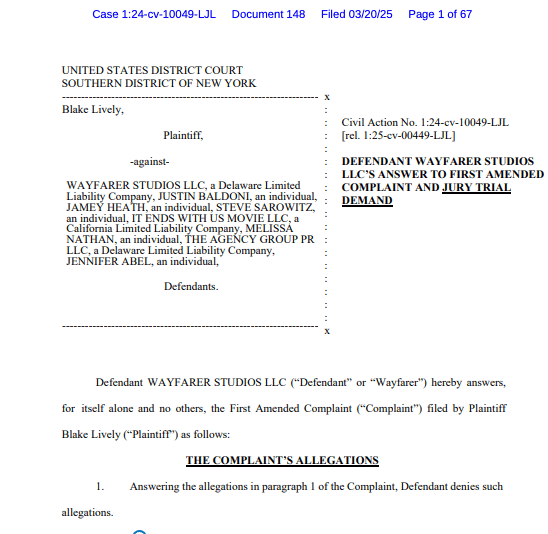
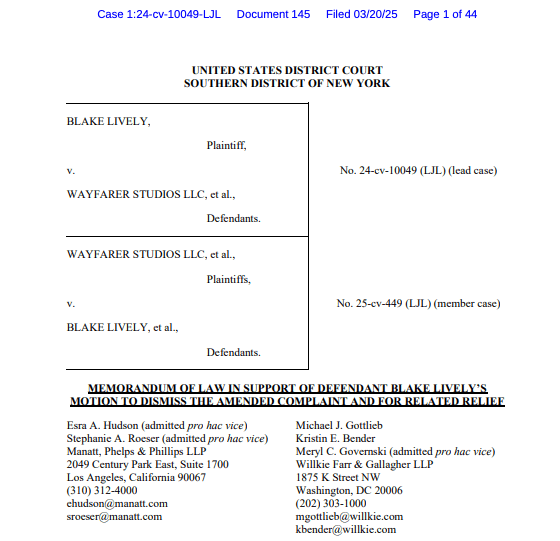
Blake Lively has filed a motion to dismiss a lawsuit from Wayfarer Studios, stating it retaliates against her for reporting sexual harassment during filming. Lively’s defense cites California Civil Code Section 47.1, arguing the claims are flawed and malicious, aiming to damage her reputation. The motion seeks to invoke protections against retaliatory actions. Continue reading Blake Lively’s Legal Defense Against Wayfarer Studios’ Retaliatory Lawsuit

Justin Baldoni’s Own Words Could Undermine His Lawsuit Against Ryan Reynolds

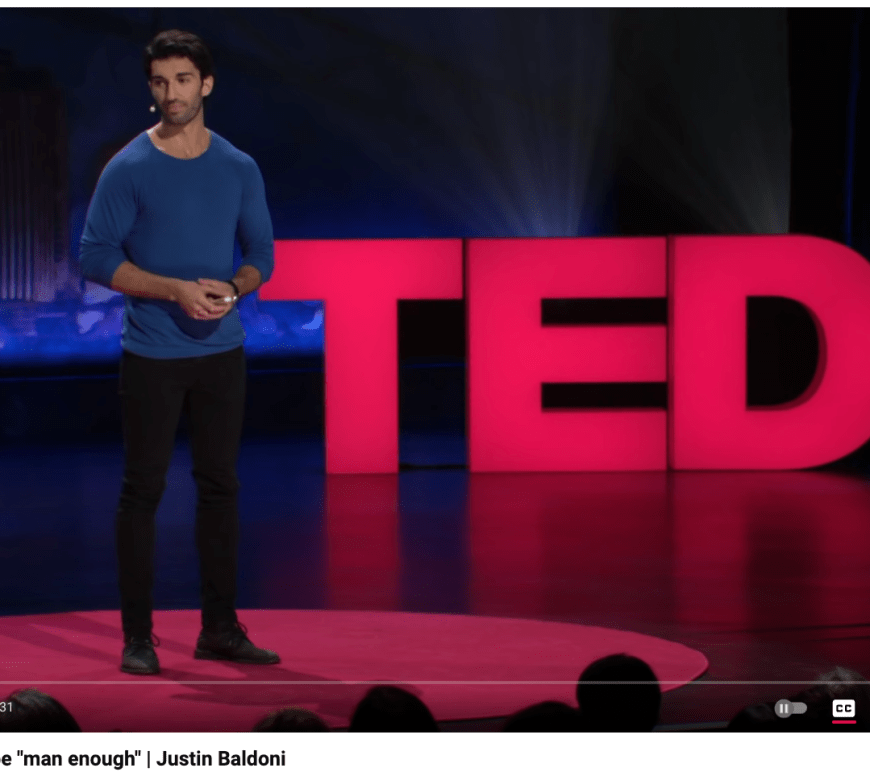
Justin Baldoni’s TED Talk addresses societal pressures on masculinity, emphasizing emotional openness and vulnerability. He reflects on his own struggles with conventional masculinity, acknowledges past behaviors, and calls for redefining strength as empathy. Baldoni’s admissions are used by Ryan Reynolds’ legal team to argue that statements about Baldoni are not defamatory but opinions grounded in Baldoni’s own words. Continue reading Justin Baldoni’s Own Words Could Undermine His Lawsuit Against Ryan Reynolds

Ryan Reynolds’ Defamation Defense: Can a Belief Be Libelous?

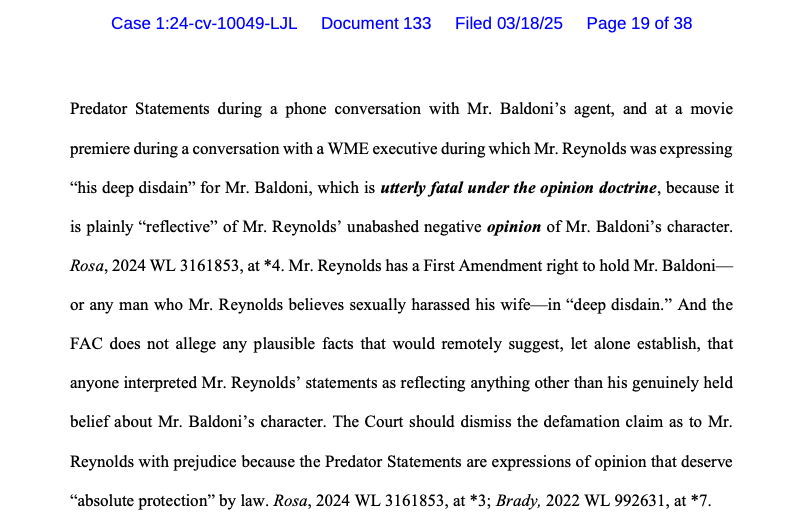
Ryan Reynolds is countering Justin Baldoni’s defamation lawsuit, claiming his statements about Baldoni being a “sexual predator” stem from genuine beliefs, thus protected by the First Amendment. The case raises significant questions about defamation laws and free speech, especially regarding public figures and the implications for reputational harm in Hollywood. Continue reading Ryan Reynolds’ Defamation Defense: Can a Belief Be Libelous?

The Legal Battle Between Ryan Reynolds and Justin Baldoni: Free Speech or Defamation?

The lawsuit between Justin Baldoni and Ryan Reynolds centers on allegations of defamation and career sabotage. Baldoni claims Reynolds harmed his reputation following accusations from Blake Lively. Reynolds aims to dismiss the case, arguing his statements reflect protected opinion. The outcome may significantly impact free speech and defamation laws in Hollywood. Continue reading The Legal Battle Between Ryan Reynolds and Justin Baldoni: Free Speech or Defamation?

Ryan Reynolds’ MTD Justin Baldoni

The Baldoni/Lively legal case faces dismissal as the NYT, Sloane, and Ryan argue against various claims. Key points include lack of specific defamatory statements, protected opinions, inadequate damage details, and failure to show actual malice. There’s a high chance of dismissal due to insufficient legal grounds in the plaintiffs’ case. Continue reading Ryan Reynolds’ MTD Justin Baldoni

Outcome of Sloane’s Motion to Dismiss

Sloane’s motion to dismiss the Wayfarer Parties’ defamation lawsuit highlights significant weaknesses in Wayfarer’s claims, including vague allegations and challenges in proving actual malice. Sloane’s legal arguments suggest a high likelihood of dismissal for many claims, with potential procedural advantages favoring her and a weak structure in Wayfarer’s filing. Continue reading Outcome of Sloane’s Motion to Dismiss

Blake Lively v. Baldoni: Key Motion Fully Briefed

In the Sloane v. Baldoni case, Leslie Sloane and Vision PR filed a reply supporting their Motion to Dismiss, arguing the Amended Complaint includes improper group pleading and fails on civil extortion and defamation claims. They seek attorneys’ fees and question the Wayfarer Parties’ repeated requests to amend their complaint without providing actionable proposals. Continue reading Blake Lively v. Baldoni: Key Motion Fully Briefed

Baldoni suffers a setback: NYT successfully pauses discovery

The New York Times successfully requested a pause in evidence collection in a lawsuit involving Blake Lively and the film “It Ends With Us.” The judge agreed, citing the Times’ strong argument against their involvement and legal protections for news organizations. Discovery will proceed for other parties while the decision on the Times’ involvement is pending. Continue reading Baldoni suffers a setback: NYT successfully pauses discovery

Legal Analysis of Wayfarer Studios et al. v. The New York Times et al. Motion to Dismiss and comparison to Leslie Sloane’s MTD

There is another MTD in the case at Dkt. 87 This is Dkt. #106 This case revolves around a defamation lawsuit initiated by Wayfarer Studios, Justin Baldoni, and other plaintiffs against The New York Times following its publication of an article discussing a workplace misconduct complaint filed by Blake Lively. The article, titled “We Can Bury Anyone: Inside a Hollywood Smear Machine”, reported on Lively’s … Continue reading Legal Analysis of Wayfarer Studios et al. v. The New York Times et al. Motion to Dismiss and comparison to Leslie Sloane’s MTD

Blake Lively v. Baldoni: Analysis of Legal Documents by Date and Docket Number

The legal battle between Blake Lively and the producers of “It Ends With Us” involves sexual harassment allegations against Justin Baldoni, with Lively claiming harassment and subsequent retaliation. Recent filings highlight disputes over subpoenas for phone records and the extent of protective orders. A judge must decide on these critical issues as the case progresses. Continue reading Blake Lively v. Baldoni: Analysis of Legal Documents by Date and Docket Number