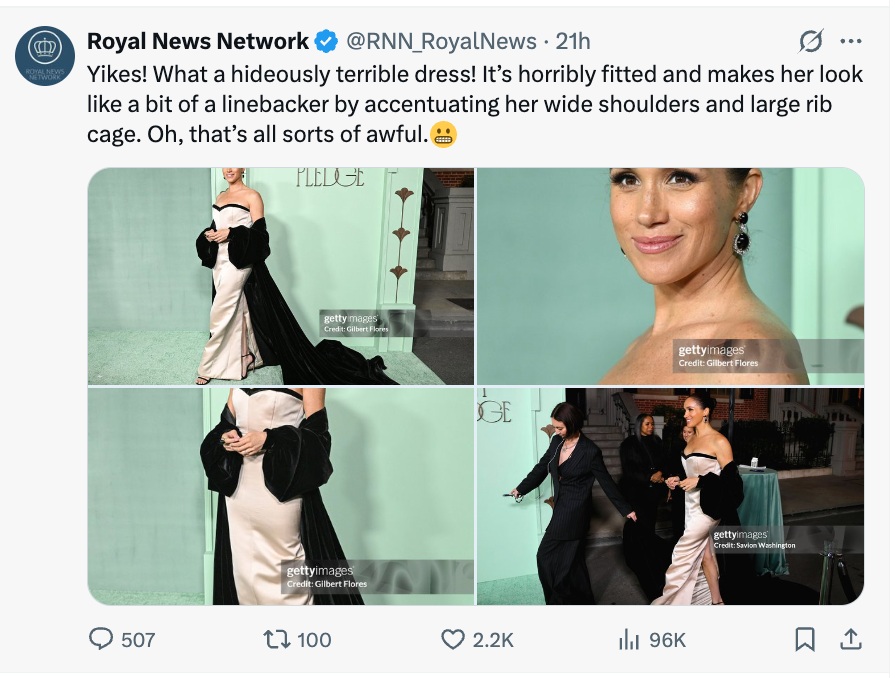
On Saturday, February 8, 2026, Meghan Markle attended the Fifteen Percent Pledge Fundraising Gala at Paramount Studios in Los Angeles. The Fifteen Percent Pledge is a nonprofit that calls on major retailers to dedicate 15 percent of their shelf space to Black-owned businesses, reflecting the proportion of the U.S. population that is Black. The gala celebrated that mission.
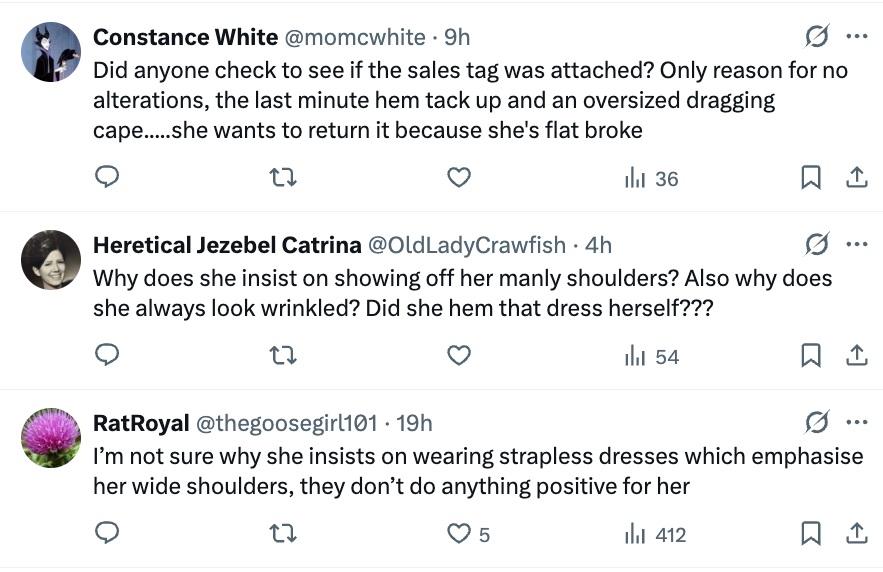
On Monday, February 9, the Daily Express published its coverage. The headline: “Royal fans all say the same thing about Meghan Markle’s ‘terrible’ appearance.”
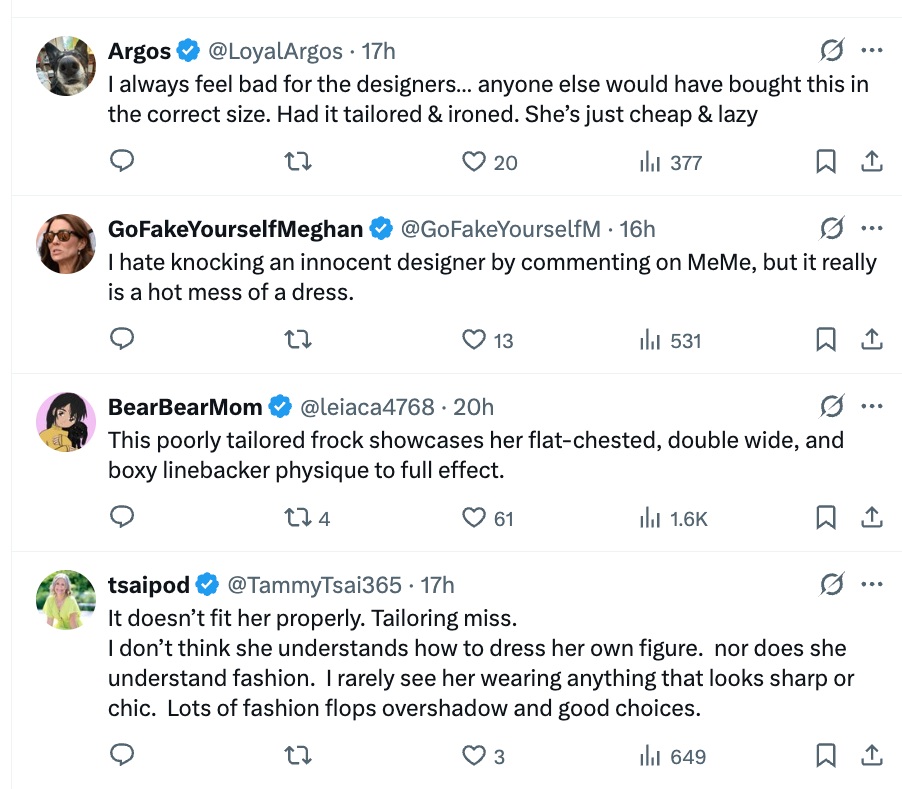
The article does not mention the Fifteen Percent Pledge by name beyond the event title. It does not describe the organization’s mission. It does not note that Meghan attended an event dedicated to uplifting Black-owned businesses. It does not quote anyone involved with the charity. Instead, it quotes six anonymous social media users criticizing how her dress fit her body.
On the same page, the sidebar is wall-to-wall Andrew Mountbatten-Windsor and Jeffrey Epstein.
What the Article Says
The Express piece is structured as a fashion review sourced entirely from social media. Six negative comments are quoted at length. Three positive ones are compressed into a paragraph near the bottom. The negative comments are presented first, given individual paragraphs, and collectively frame the article’s argument: Meghan looked bad.
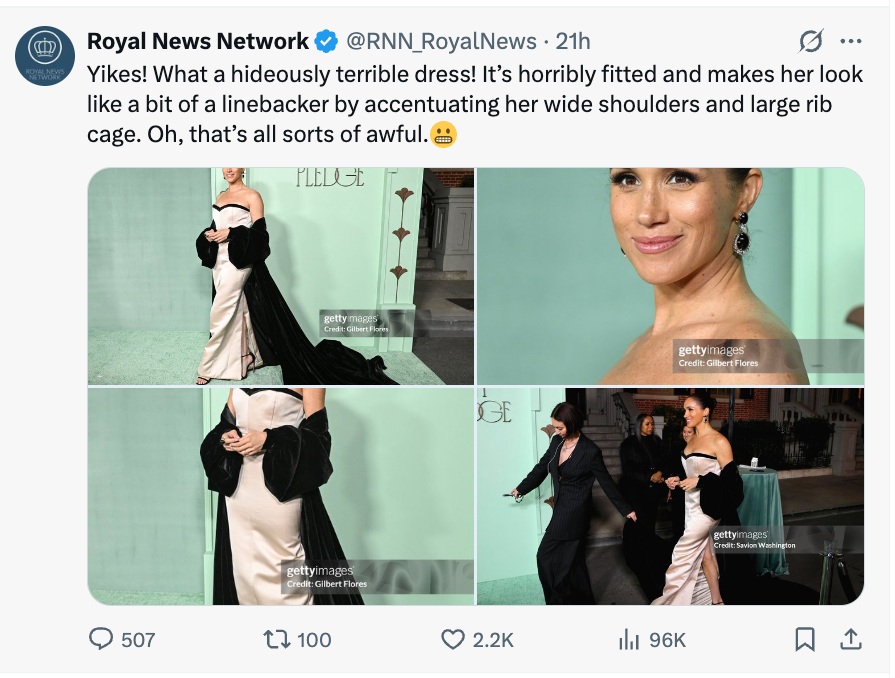
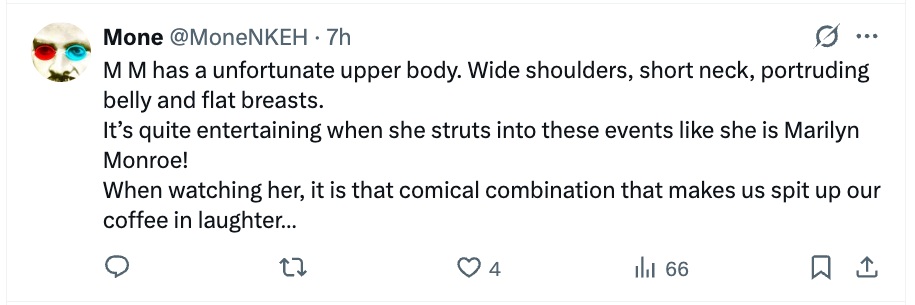
Here is what those “royal fans” actually said about Meghan’s body at a charity event celebrating Black businesses:
“It’s horribly fitted and makes her look like a bit of a linebacker by accentuating her wide shoulders and large rib cage.”
“She never dresses appropriately for her body shape.”
“It’s another bad fashion choice for the desperate Duchess with no sense of style or class.”
“It would look so much better on someone it actually fit properly.”
“I don’t think she understands how to dress her own figure.”
This is not fashion criticism. Fashion criticism evaluates design choices, fabric, construction, and styling. This is body commentary, and it carries specific connotations when directed at a biracial woman. “Linebacker.” “Wide shoulders.” “Large rib cage.” These descriptors pull from a long tradition of masculinizing and dehumanizing Black women’s bodies, framing them as too large, too strong, too much. The Express didn’t write those words, but it chose to amplify them, gave them individual paragraphs, and built an entire article around them.
The positive comments, compressed into a closing paragraph, describe Meghan as “stunning,” “serene and elegant,” and note the dress was “perfectly proportioned to her petite frame.” The Express included them for the appearance of balance. The structure did the editorial work of ensuring they wouldn’t be what readers remembered.
What the Sidebar Says
Here is a partial list of stories running on the same Express page, in the sidebar and related content sections, on the same day:
“Andrew Mountbatten-Windsor shared confidential information with Epstein as trade envoy.”
“Andrew WAS in New York when Virginia Giuffre claimed he sexually abused her, files show.”
“Andrew’s night with prostitutes where sensitive trade deals were shared with Epstein.”
“Jeffrey Epstein’s sickening 4 words to Andrew after private meeting with mystery woman.”
“Major police update on Andrew Mountbatten-Windsor as statement issued.”
“King Charles releases bombshell statement on Andrew allegations.”
“Watch moment King Charles is brutally heckled over Andrew’s Epstein links.”
“Insider warns Andrew tell-all book would be ‘final nail in coffin’ as royals close ranks.”
“Prince William and Princess Kate break silence on Epstein scandal with official statement.”
“Andrew accuser’s family brand Ghislaine Maxwell ‘monster’ and ‘more vicious than Epstein.'”
And interspersed between these:
“Meghan Markle mocked over ‘cringe’ barefoot Prince Harry video as new parody goes viral.”
“Meghan Markle’s shocking UK ‘end game’ revealed by expert.”
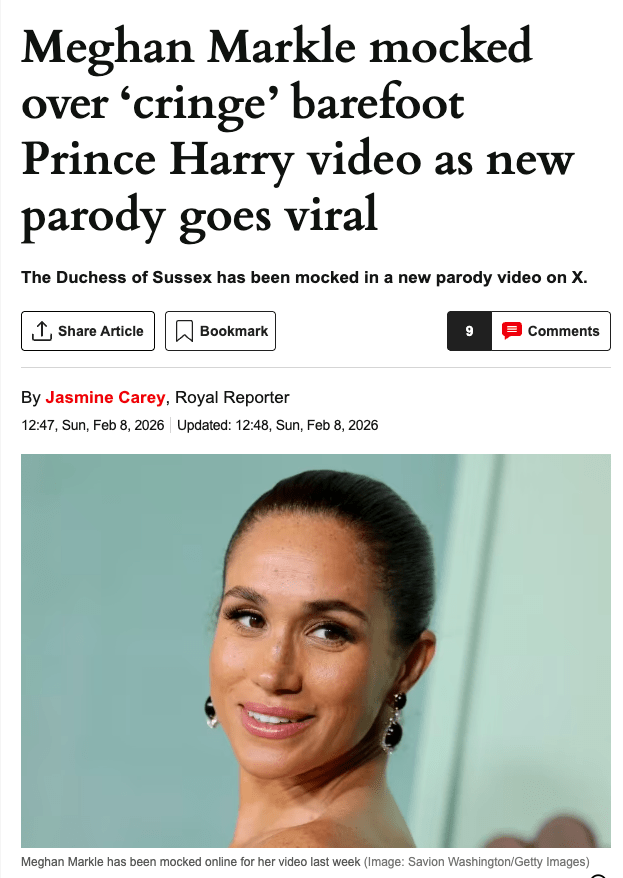
“Prince Harry and Meghan Markle’s ‘chaos’ exposed after ‘clumsy blunder.'”
The Express is running both stories on the same page. But the framing could not be more different.
The Two Editorial Registers
The Andrew coverage is treated as institutional news. The language is serious: “confidential information,” “police update,” “statement issued,” “allegations,” “bombshell.” Expert analysis is solicited. Palace statements are reported. The tone acknowledges that something consequential is happening. There are calls for accountability. There are legal implications.
The Meghan coverage is treated as entertainment content. The language is casual and contemptuous: “terrible,” “cringe,” “mocked,” “chaos,” “blunder.” The sourcing is anonymous social media users and unnamed “experts.” The tone invites participation in ridicule. There are no stakes. There are no consequences. It’s sport.
One subject is facing a potential criminal investigation involving allegations of sexual abuse, sex trafficking, sharing state secrets with a convicted pedophile, and a relationship with a man who exploited minors. That subject gets institutional framing.
The other subject attended a charity event in a dress. That subject gets body policing from anonymous Twitter accounts, amplified into a national newspaper article, with no mention of what the charity actually does.
What Disappears
The Fifteen Percent Pledge was founded by Aurora James in 2020. Its mission is structural: changing the retail landscape so that Black-owned businesses get proportional shelf space. Major retailers including Sephora, Macy’s, and Nordstrom have signed the pledge. The gala Meghan attended was a fundraiser for this work.
None of this context appears in the Express article. The event exists solely as a backdrop for fashion critique. The charity’s name appears in the event title and nowhere else. Its mission is not described. Its founder is not named. The word “Black” does not appear in the article except in reference to the color of Meghan’s cape, earrings, and shoes.
A woman attended a fundraiser for Black-owned businesses. The newspaper covering it erased the cause, erased the mission, erased the word “Black” from everything except the accessories, and replaced it all with anonymous commentary about her shoulders and rib cage. On a day when the actual news about the royal family involved photographs of Andrew Mountbatten-Windsor with Jeffrey Epstein and a police investigation into potential breaches of the Official Secrets Act.
The Architecture of Attention
The Express is not stupid. Its editors know that the Andrew story is the dominant news event. They are covering it, extensively, with appropriate gravity. The sidebar proves that.
But they are also, simultaneously and on the same page, running Meghan content designed to function as counter-programming. The dress article isn’t incidental. It’s strategic. On a day when the institution Meghan left is facing its most serious crisis in decades, the Express ensures that Meghan’s name still appears in a frame of mockery and inadequacy. The reader scrolling through Andrew’s Epstein emails will also encounter Meghan’s “terrible” dress, Meghan’s “cringe” video, Meghan’s “chaos.”
The effect is equalization. Not equalization of coverage, but equalization of negative attention. Andrew’s crisis is institutional, legal, and consequential. Meghan’s “crisis” is a dress at a charity gala. But on the same page, in the same scroll, they occupy comparable visual real estate. The reader absorbs both as ongoing problems associated with the royal family. The distinction between “facing a police investigation for sharing state secrets with a sex trafficker” and “wore a dress some people on Twitter didn’t like” collapses into the same ambient noise of royal dysfunction.
That collapse is not accidental. It is the product.
The Body as Battleground
It is worth sitting with what was actually published in a national newspaper about a woman’s body on the day she attended a charity event.
“Linebacker.” “Wide shoulders.” “Large rib cage.” “She never dresses appropriately for her body shape.” “I don’t think she understands how to dress her own figure.”
These comments were selected from social media, where thousands of reactions existed. The Express chose these. It gave each one its own paragraph. It structured the article so that readers would encounter the body criticism first and the positive reactions second. This is editorial decision-making, not passive aggregation.
The racialized dimension of this body commentary is well documented in media studies. Black women’s bodies have historically been subjected to a specific kind of scrutiny that frames them as unfeminine, excessive, or inappropriately proportioned relative to a white European standard. “Linebacker” is not a neutral descriptor. Applied to a biracial woman at an event celebrating Black businesses, in a newspaper that chose not to mention what those businesses were or why they were being celebrated, it carries a weight that the Express can plausibly deny but cannot plausibly claim not to understand.
 celebchai.com