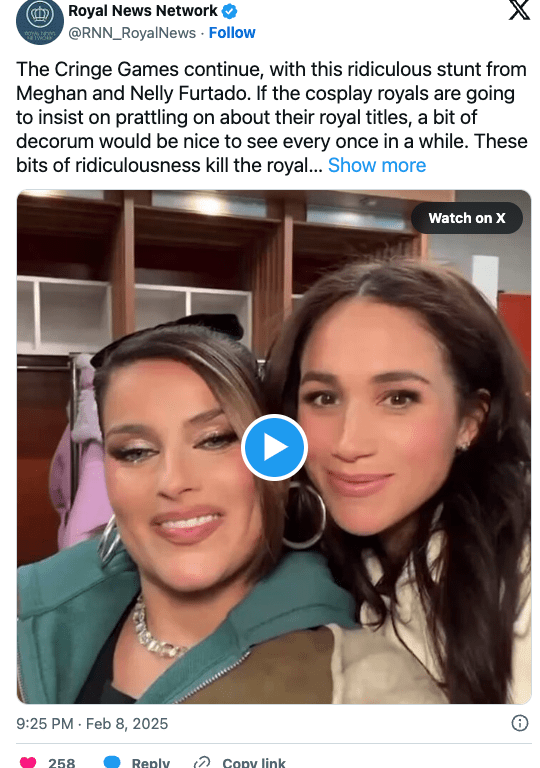
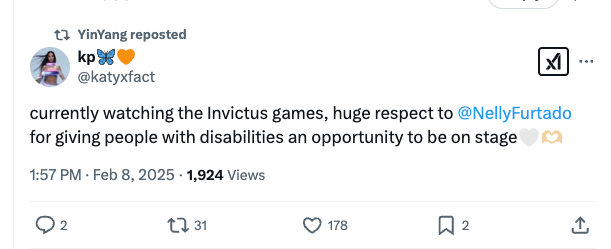
The recent collaboration between Meghan Markle and Nelly Furtado has ignited yet another wave of scrutiny, as critics argue that their public appearance at the Invictus Games has overshadowed the event’s core mission of honoring wounded veterans. While supporters view their involvement as a positive contribution to the visibility of the games, detractors insist that the event has been reduced to a PR opportunity, diminishing the focus on the athletes. This is not the first time. Meghan brought her star power to score merchandise from Billie Eilish, that, too, was deemed performative. It made a real impact. The video also counters that Meghan has no A-lister friends when she was seen at Kerry’s birthday party, Invictus Games, Billie, Adam Levine and Behati, to name a few.
Meghan Markle’s influence continues to drive real economic impact which unexpectedly propelled a small business into the spotlight. Chicago-based entrepreneur Ann Leachman, owner of Club Chainstitch, shared her shock and excitement after spotting the Duchess of Sussex wearing a custom sweatshirt from her shop. The design, stitched with “Archie” and “Lilibet,” led to an overwhelming surge in orders, forcing Leachman to cut her maternity leave short to meet demand.
This moment mirrors another example of Meghan’s cultural influence—her recent acquisition of exclusive Billie Eilish merchandise, which similarly sparked conversation and demand. While critics dismissed Meghan’s interest in the brand as performative, the reality was far different. Billie Eilish’s merchandise represents more than just clothing; it blends sustainability, mental health advocacy, and high fashion, aligning with Meghan’s long-standing values.
It’s William and Kate that are out of touch.
The backlash against Meghan and Nelly Furtado is emblematic of a larger media pattern—one that frequently fixates on optics rather than substance. Critics claim that Meghan’s presence is attention-seeking, with some going as far as to accuse her of leveraging her platform for personal gain. However, a closer look at the situation raises important questions about media bias, public expectations of women in the spotlight, and the ways in which celebrity involvement influences charitable initiatives. The media is still silent on Prince Andrew.
Celebrity Involvement: A Double-Edged Sword
Celebrity endorsements and appearances at philanthropic events are nothing new. In fact, figures from entertainment, politics, and business have long played significant roles in drawing attention to causes. From Princess Diana’s work on landmine awareness to Angelina Jolie’s UN refugee advocacy, celebrity involvement has historically been a powerful tool for mobilizing public support.
Yet, the moment Meghan Markle enters the conversation, the narrative shifts. What makes her participation different from that of other high-profile figures? Why is her presence viewed with skepticism while other celebrities receive praise for similar efforts? The answer may lie in a combination of entrenched media narratives, class biases, and ongoing resentment toward her departure from the British royal family.
The Invictus Games and the Question of Focus
At the heart of the criticism is the argument that Meghan’s actions detract from the veterans at the Invictus Games. Social media commentary has been rife with claims that the event has been turned into a spectacle centered on Meghan and Harry rather than the athletes. While it is reasonable to critique the balance between celebrity and cause, it is also important to acknowledge that the presence of high-profile figures often serves to bring greater visibility to events.
The Invictus Games, founded by Prince Harry, have consistently enjoyed media attention due in part to his involvement. Without his royal connection, the games might not have received the same level of international coverage. Meghan Markle’s association with the event is similarly a double-edged sword—while it draws scrutiny, it also ensures that the event remains in public discourse.
A Gendered Critique?
Another layer to the controversy is the gendered nature of the criticism aimed at Meghan. Male celebrities and public figures who use their platforms for advocacy seldom face the same degree of scrutiny. While Prince Harry’s presence at the Invictus Games is generally accepted, Meghan’s participation is framed as opportunistic.
This disparity highlights a broader issue in media narratives surrounding women in positions of influence. Women—especially those who marry into power—are often expected to conform to a certain archetype of humility, deference, and service. When they step outside these predefined roles, they face disproportionate backlash.
Media Narratives and Public Perception
The Royal News Network’s commentary on Meghan and Nelly Furtado’s involvement reflects a persistent media approach that thrives on controversy. By labeling their participation as a “stunt,” the narrative frames their presence as performative rather than genuine. However, the framing of an event as a PR move is often a matter of perspective—after all, every public appearance by a public figure is, to some extent, strategic.
It is worth considering whether the same level of scrutiny would be applied if another royal or celebrity had engaged in a similar manner. The selective outrage surrounding Meghan Markle often seems disproportionate to her actual actions, suggesting that preconceived biases play a significant role in shaping public reactions.
The Bigger Picture
Ultimately, the controversy surrounding Meghan and Nelly Furtado at the Invictus Games is indicative of a broader societal tendency to police public figures—especially women—for perceived infractions. While it is fair to critique public figures, it is equally important to question the motivations behind these criticisms.
If the goal is truly to support veterans and the mission of the Invictus Games, then the focus should remain on the athletes and their achievements rather than on the media-fueled drama surrounding Meghan Markle. By allowing personal biases and tabloid narratives to overshadow the event’s purpose, critics may unintentionally contribute to the very problem they claim to oppose.
 celebchai.com