A recent wave of social media commentary has highlighted growing public skepticism about Catherine, Princess of Wales’s royal role and latest attempt at public rebranding. The discourse, particularly on Twitter, reveals deepening frustration over what many perceive as a disconnect between public image and substantive contribution to royal duties.
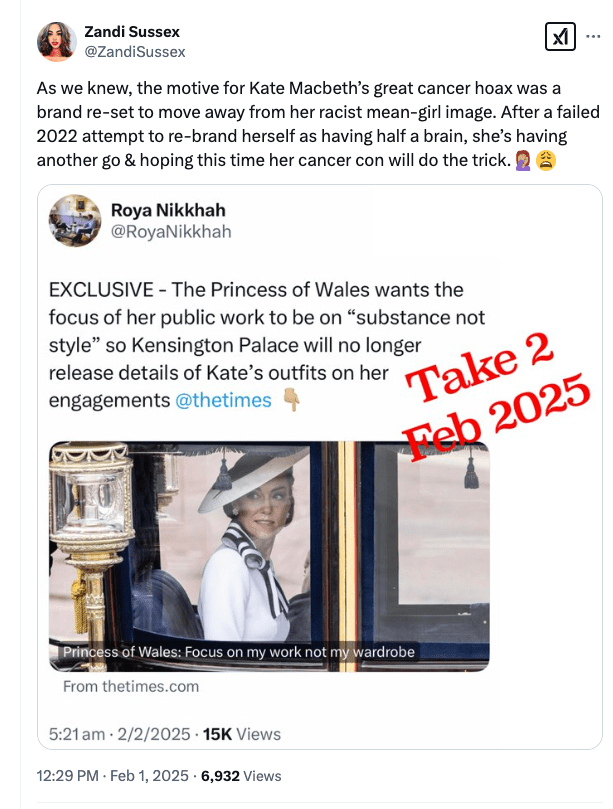
At the center of the criticism is the perceived superficiality of Kate’s public engagements. Social media users have taken particular issue with what they characterize as brief appearances, with one commentator notably reframing her “public works” as merely “public 20-minute outings.” Several users pointed to specific interactions that they believe demonstrate a lack of depth, including an exchange at Fortnum & Mason’s tea department and questions about Fabergé eggs during a royal engagement.
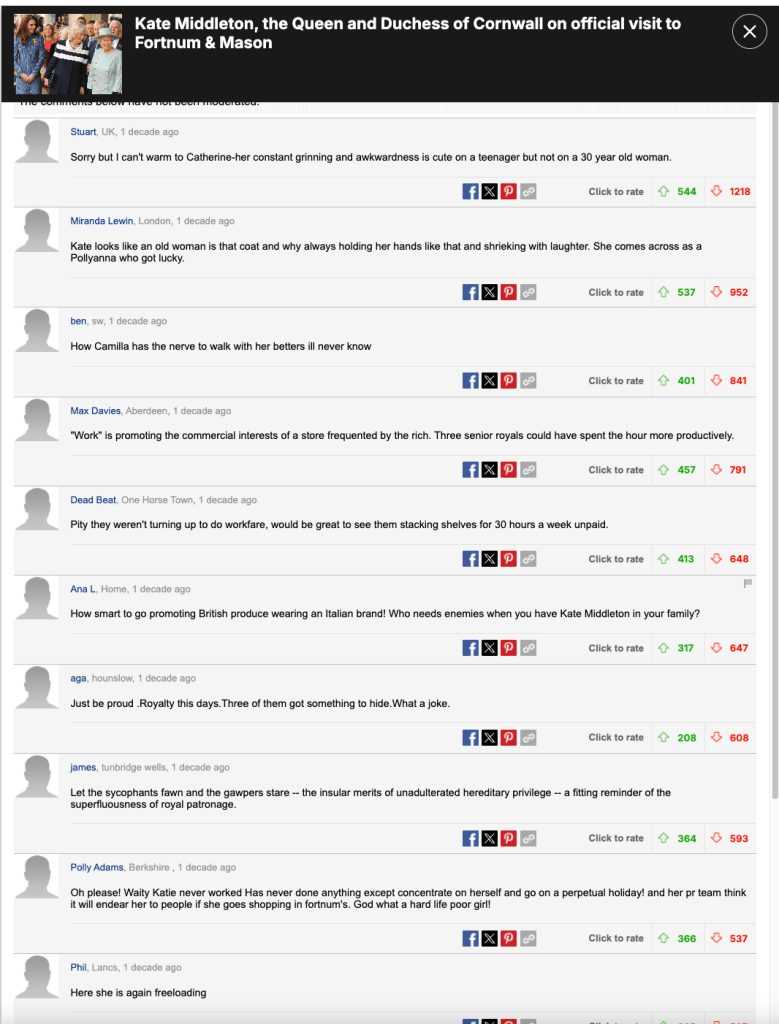
Fortnum & Mason’s tea department: Critics have pointed to specific instances in the Princess of Wales’s public engagements that they perceive as lacking depth. One such instance is her visit to Fortnum & Mason in March 2012, where she accompanied Queen Elizabeth II and Camilla, Duchess of Cornwall. During this visit, the royal trio toured the store’s renowned food hall, met with military personnel involved in the “Gifts For Troops” scheme, and attended a tea party with staff and suppliers. Some observers felt that this engagement was more ceremonial than substantive.
The public reaction to Kate Middleton’s Fortnum & Mason visit was overwhelmingly critical, with commenters accusing her of superficiality, privilege, and lack of meaningful work. Many saw the appearance as a symbolic, performative outing rather than a substantive engagement. Critics mocked her grinning demeanor, awkward body language, and fashion choices, with some likening her to a Pollyanna figure who got lucky. Others pointed out the irony of promoting British goods while wearing an Italian brand. Broader critiques extended to the royal family’s role in modern society, with accusations of freeloading, unearned privilege, and ineffective patronage. Many felt the visit was a missed opportunity for meaningful impact, reinforcing longstanding skepticism about Kate’s public work ethic.
Fabergé eggs: Kate Middleton’s Fabergé Exhibition Visit Sparks Criticism

Kate Middleton’s visit to the V&A Museum’s Fabergé in London: Romance to Revolution exhibit raised eyebrows when she appeared unfamiliar with key details about Fabergé eggs. Given her art history degree, royal patronage of the V&A, and the Queen’s personal connection to the collection, critics questioned why she didn’t engage more deeply. This aligns with past critiques of her public appearances being surface-level 20-minute outings rather than substantive engagements. Should royals be expected to show deeper knowledge in their patronages?
Kate Middleton’s visit to the Fabergé in London: Romance to Revolution exhibition was perceived as shallow for several reasons, despite the glowing reports about her sophisticated eye for detail:
- Lack of Deeper Engagement – While she reportedly admired the craftsmanship and asked basic questions about how Fabergé’s pieces were made, her remarks seemed surface-level (“I love the tree”) rather than demonstrating deeper knowledge or curiosity about Fabergé’s historical and cultural significance. Given her art history degree and patronage of the V&A, observers expected a more nuanced discussion rather than simple admiration.
- Limited Duration – The visit lasted under an hour, reinforcing the perception that many of Kate’s engagements are brief, photo-op-driven appearances rather than substantive contributions. Critics have long pointed out that she often spends 20-60 minutes at events, making them feel more symbolic than meaningful.
- No Discussion of Fabergé’s History or Controversies – Fabergé’s work is deeply intertwined with imperial Russia, wealth disparity, and political history, yet Kate’s visit focused solely on the aesthetics and craftsmanship. She could have used the opportunity to discuss historical context, Anglo-Russian ties, or even modern art conservation efforts, but there was no indication that these topics were addressed.
- PR-Driven Reporting – Coverage of the visit emphasized Kate’s outfit, her “keen interest,” and flattering quotes from the curator, but there was little evidence that she contributed substantial insights or discussion. The article reads as an orchestrated PR piece, highlighting her admiration rather than her engagement with the art in a meaningful way.
- Missed Opportunity as a Royal Patron – As the first royal patron of the V&A, Kate has a platform to advocate for art education, preservation, or accessibility, yet this visit did not demonstrate any initiative in those areas. It was framed as a passive viewing experience rather than an active contribution to the museum’s mission.
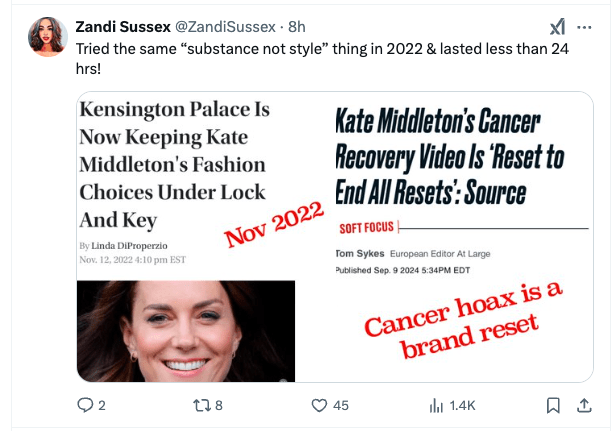
The financial aspect of her royal role has drawn significant attention, with multiple users expressing concern over taxpayer funding of her wardrobe, including designer handbags and coat dresses. This criticism has been amplified through comparisons to Meghan Markle, whom users note funds her own wardrobe. The discussion has taken on a particularly pointed tone when addressing recent style choices, with some describing them as “sister wife” fashion.
The timing of this discourse coincides with what appears to be another rebranding effort for the Princess of Wales. However, social media users remain skeptical, with many suggesting that without fundamental changes to her approach to royal duties, any rebranding attempt is “doomed to fail.” One user succinctly captured this sentiment: “Another year, another rebrand.”
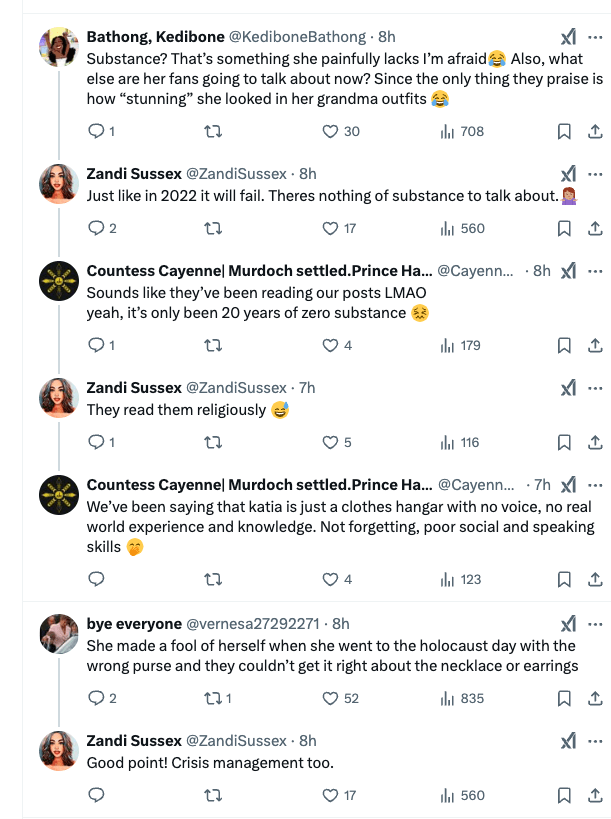
Public commentary has also touched on historical aspects of Kate’s public life, including questions about past relationships and her educational background. These references appear to feed into a broader narrative about perceived qualification and preparation for her royal role.
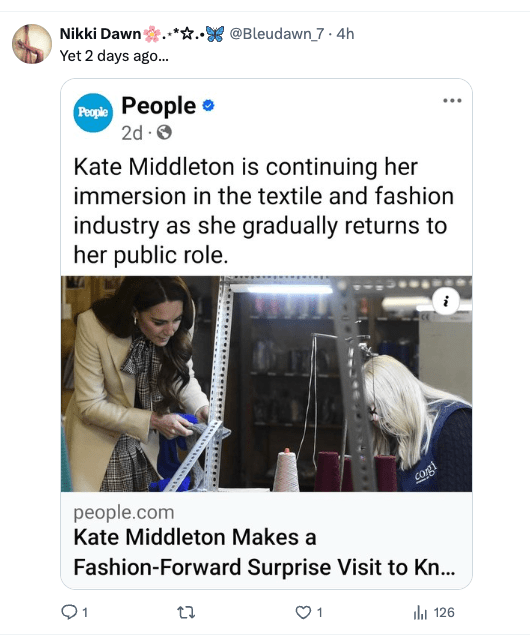
The online discourse reflects a challenging period for the monarchy’s public image, with social media users increasingly demanding more substantial contributions from working royals. While the Palace has traditionally maintained that the Princess of Wales’s work focuses on early childhood development and other charitable causes, social media users continue to question the depth and impact of these endeavors.

This wave of criticism emerges at a time when public scrutiny of the monarchy’s role and relevance continues to evolve, with social media platforms providing an unprecedented platform for public commentary on royal activities and expenditure. The conversation suggests a growing expectation for working royals to demonstrate clear, measurable impact in their public roles, beyond ceremonial appearances and charitable patronages.
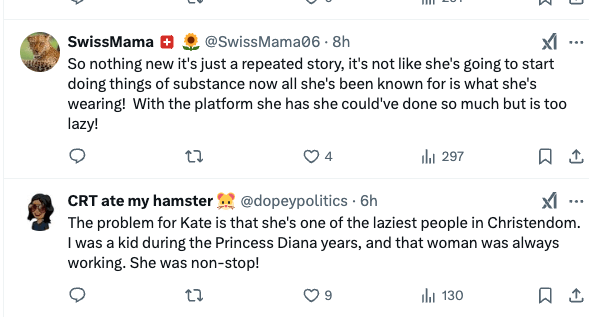
The discussion also highlights the challenges faced by royal figures in the social media age, where public perception can quickly coalesce around particular narratives, and where traditional approaches to public relations and image management may prove less effective than in previous eras.
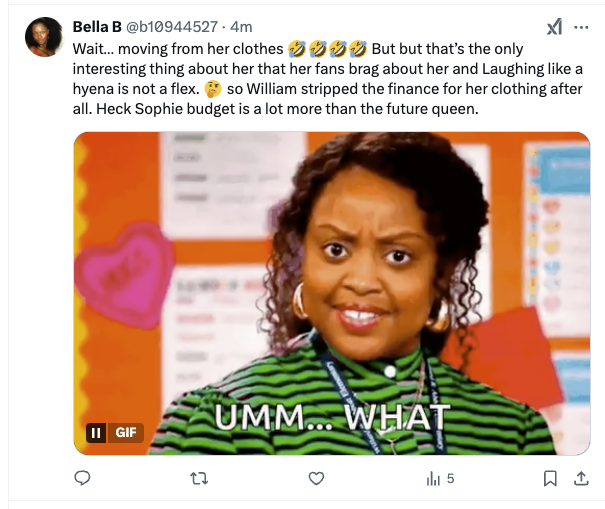
The idea that Prince William may have cut Kate’s budget is a possibility some users might consider, given the focus on her wardrobe, the taxpayer funds spent on her designer outfits, and the criticism about her public appearances being superficial. If her role in the family has been downplayed or redefined, this could translate into a reduced budget for public appearances, and the increased focus on her fashion choices over any significant public work might signal a shift in priorities within the royal household.
Kate Middleton’s recent fashion misstep—wearing a Chanel bag to a Holocaust remembrance event—has once again highlighted the royal family’s ongoing issue with accountability. Given Coco Chanel’s well-documented collaboration with the Nazis, the choice was more than just a simple oversight—it was a glaring mistake.
Is she refusing to share what she wears because of her fashion faux pas? Who can tell? William, the internet, and social media seems to be bored of Kate. How tough is it to get an outfit ready with millions at your disposal?


13 thoughts on “Public Frustration Mounts Over Kate Middleton’s Royal Role and Latest Rebranding Effort”