
Meghan Sussex has once again found herself at the center of an internet storm—this time over waffles. What began as an innocent Instagram post featuring a St. Patrick’s Day breakfast quickly turned into a full-fledged controversy, with critics accusing the Duchess of Sussex of faking homemade waffles for her children, Prince Archie and Princess Lilibet.
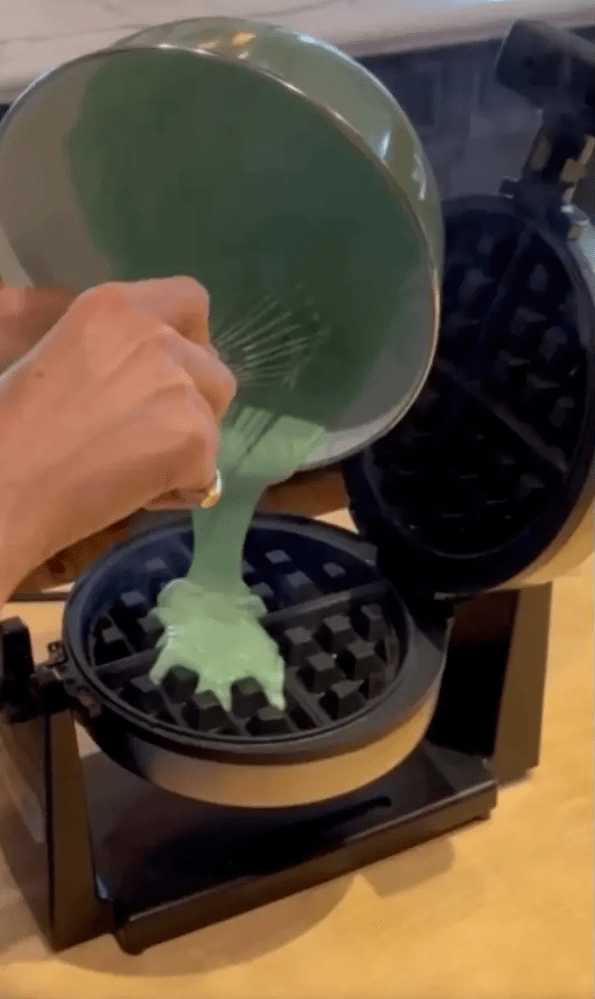
On Monday, Sussex shared Instagram Stories showing herself preparing green waffle batter and pouring it into a waffle iron. The festive post seemed simple enough—until eagle-eyed social media users noticed an apparent inconsistency. The waffle iron Sussex used in the video, identified as a Cuisinart Waring Pro Belgian Waffle Maker, featured grooves that divided the waffle into quadrants. However, when she plated the meal for her children, the waffles appeared flat, lacking the expected deep ridges.
This seemingly small discrepancy set off a firestorm of speculation online. Critics took to X (formerly Twitter), claiming that the waffles Sussex served resembled store-bought frozen waffles rather than freshly made ones. Some users went so far as to compare them to Kellogg’s Green Apple Dragon Waffles, insisting that Sussex had staged the cooking video while actually serving pre-packaged food to her children.
Social Media Backlash and Accusations of Deception
The response to Sussex’s post was swift and intense. Some users expressed genuine confusion over why the final waffles did not match the ones supposedly cooked in her waffle iron, while others outright accused her of lying.
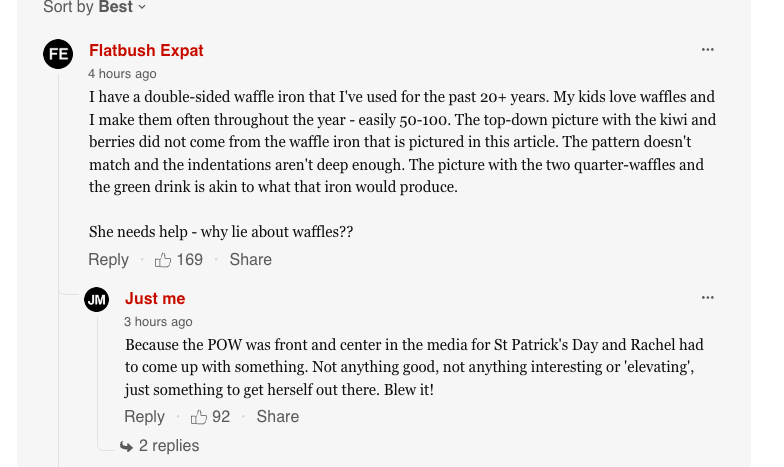
One social media user wrote, “Meghan Sussex’s relentless compulsion to lie about everything is baffling—even over something as trivial as a waffle.” Another commented, “Why go through all that just to fake a waffle? It’s like she can’t help herself.”
Adding fuel to the controversy, Sussex also shared an image of waffles allegedly made for herself and Prince Harry. The adult version featured neatly stacked waffles topped with strawberries and whipped cream, accompanied by what appeared to be an iced matcha latte. Some critics argued that Sussex may have used two different waffle makers—one for the children and another for the adults. However, this explanation did little to sway those who were convinced she had orchestrated an elaborate social media deception.

The discussion quickly escalated beyond waffles, with detractors claiming this was another example of Sussex curating an inauthentic image of domestic bliss. Others viewed it as part of a broader pattern of alleged exaggeration and manipulation in her public persona.


Defenders and the Larger Conversation
While many critics were quick to condemn Sussex, some supporters pushed back against what they saw as an overblown controversy. “It’s just breakfast,” one person commented. “People are acting like she staged a crime scene.” Another added, “If she did use frozen waffles, why does it even matter? Not everything has to be a scandal.”
Still, for Sussex’s harshest critics, the issue was not the waffles themselves but the perceived dishonesty. The debate highlighted a broader issue with how public figures—especially women in the spotlight—are treated. Sussex has long been a polarizing figure, facing relentless scrutiny since stepping back from royal duties alongside Prince Harry. This latest episode serves as yet another example of how even the most mundane aspects of her life can spark intense debate and speculation.
The Role of Social Media in Celebrity Scrutiny
The controversy over Sussex’s waffles underscores the modern phenomenon of social media-fueled celebrity scrutiny. With every public post, high-profile figures invite both admiration and criticism, and Sussex’s every move has been dissected to an extreme degree. The rise of digital platforms has made it easier than ever for critics to analyze, debunk, and question even the most trivial details of a celebrity’s life.
While some argue that Sussex’s public presence invites this level of scrutiny, others believe the relentless criticism she faces goes beyond normal celebrity gossip. This incident, trivial as it may seem, raises questions about whether certain public figures—especially women who challenge traditional roles—are held to impossible standards.
Why Does It Matter?
At the heart of this debate is a simple question: why does it matter so much? Whether Sussex made the waffles from scratch or used store-bought ones should not be a major issue, yet it became the subject of viral discourse. The controversy over her St. Patrick’s Day breakfast serves as a reflection of a culture that is quick to judge, eager to expose perceived inauthenticity, and relentless in its scrutiny of public figures.
Regardless of where one stands on the issue, one thing is clear—Sussex remains one of the most polarizing figures in modern media, where even a plate of waffles can spark a digital firestorm.
 celebchai.com