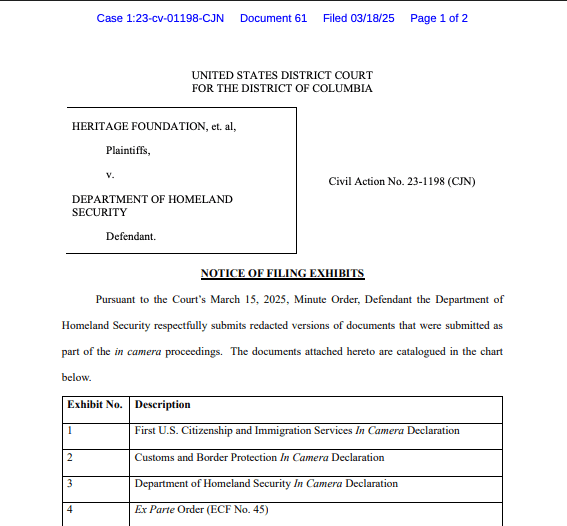
The Heritage Foundation’s lawsuit against the U.S. Department of Homeland Security (DHS) under the Freedom of Information Act (FOIA) sought to determine whether Prince Harry received special immigration treatment despite publicly admitting to drug use. The case raised critical questions of transparency, privacy, and government accountability in visa processing.
1. Timeline and Key Legal Developments
May 1, 2023 – The Heritage Foundation filed suit, demanding Prince Harry’s immigration records to determine if he had been granted a waiver for drug use under Section 212(d)(3) of the Immigration and Nationality Act (INA).
March 7, 2024 – Judge Carl J. Nichols ordered DHS to submit documents for an in-camera review (private judicial review) to assess whether the agency was justified in withholding them.
February 13, 2025 – The court ruled that DHS must disclose some documents but allowed redactions under FOIA’s Exemption 6 (privacy) and Exemption 7(C) (law enforcement records).
March 18, 2025 – DHS released heavily redacted documents, including:
- USCIS (U.S. Citizenship and Immigration Services) declarations
- CBP (Customs and Border Protection) statements
- DHS legal arguments on FOIA exemptions
- Transcript from the April 30, 2024, ex parte hearing
2. The Core Legal Debate: Privacy vs. Public Interest
The Heritage Foundation argued that the public has a right to know if Harry received special treatment, citing his own public admissions of drug use in Spare and his Netflix documentary.
DHS countered that:
- FOIA Exemption 6 protects personal visa records from public release.
- FOIA Exemption 7(C) allows withholding of law enforcement-related files.
- Disclosing Prince Harry’s immigration details would violate his privacy rights and set a precedent for exposing other high-profile visa records.
Judge Nichols struck a balance, requiring some disclosures while permitting redactions to protect Harry’s personal immigration details.
3. What the Redacted Documents Reveal (and What They Hide)
What We Now Know:
DHS followed standard visa processing procedures, at least on paper. Some documents mention “regulatory review” of immigration benefits, but key details are blacked out. There is no confirmed evidence (yet) of White House or DHS interference.
What Remains Unanswered:
Did Prince Harry receive a drug use waiver under INA Section 212(d)(3)? Was there pressure from U.S. officials to expedite his visa approval? Did DHS officials ignore standard protocols in approving his entry?
Since the most relevant details are redacted, the Heritage Foundation may appeal the ruling or challenge the redactions.
4. Political and Legal Implications
✔ Precedent for FOIA Cases – This ruling affects future transparency cases, especially for celebrity and high-profile immigration records.
✔ Potential for Further Legal Challenges – The Heritage Foundation may argue that the redactions conceal government misconduct and seek additional court orders.
✔ Prince Harry’s U.S. Residency at Risk? – If evidence emerges that he lied on his visa application, his immigration status could be reviewed or challenged.
5. Conclusion: The Case is Not Over
This case did not confirm or disprove preferential treatment but raised serious transparency questions about elite access to U.S. immigration benefits. While DHS successfully protected much of Harry’s visa information, the pressure for greater accountability remains.
The next phase depends on whether the Heritage Foundation pursues an appeal and whether additional legal challenges force more disclosures.
For now, the mystery of Prince Harry’s visa remains unresolved—but the fight for the truth is far from over.
This case highlights the tension between privacy rights and government accountability, and its impact will likely extend beyond Prince Harry to future immigration and FOIA disputes.
 celebchai.com