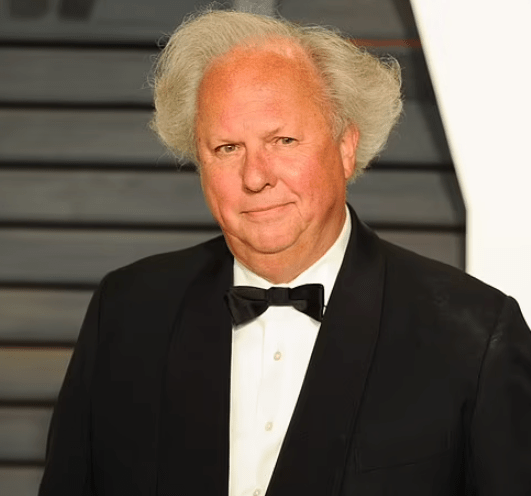
Former Vanity Fair editor Graydon Carter’s recent characterization of Meghan as “slightly adrift on the facts and reality” and as “The Undine Spragg of Montecito” deserves critical examination, not merely for its literary pretension but for what it reveals about persistent narratives that continue to shape media coverage of the Duchess of Sussex.
Slightly adrift on the facts and reality
The curious phrasing of Carter’s critique—that Meghan is “slightly adrift on the facts and reality” rather than the more conventional “adrift from reality”—merits linguistic scrutiny. This preposition choice transforms his intended meaning in subtle yet significant ways. To be “adrift on” suggests one is floating atop something, perhaps even surveying it from above, rather than being completely separated from it, as “adrift from” would imply. This distinction matters tremendously in the precision of language. Just as a vessel adrift on water remains in contact with the element while lacking direction, Carter’s phrasing unintentionally suggests Meghan maintains some connection to reality while merely lacking proper navigation within it. Such nuances in preposition selection demonstrate how proper English usage isn’t merely a pedantic concern—it’s the difference between suggesting someone has completely detached from factuality versus merely floating directionless upon its surface. One small preposition can dramatically alter the weight and implication of criticism.
Former Vanity Fair editor Graydon Carter’s recent characterization of Meghan Markle as “The Undine Spragg of Montecito” deserves critical examination, not merely for its literary pretension but for what it reveals about persistent narratives that continue to shape media coverage of the Duchess of Sussex.
The Literary Comparison Falls Flat
Carter’s comparison of Meghan to Undine Spragg, the protagonist of Edith Wharton’s “The Custom of the Country,” is as reductive as it is problematic. Spragg is characterized as a relentlessly ambitious social climber who is never satisfied despite marrying into high society. This simplistic parallel ignores Meghan’s established career prior to meeting Prince Harry, her demonstrated commitment to humanitarian causes long before her royal connection, and her willingness to walk away from the very institution Carter suggests she climbed into.
Unlike Wharton’s character, who desperately sought acceptance in elite circles, Meghan and Harry ultimately chose to step back from royal life when the institution failed to protect them from racist and sexist attacks. This decision directly contradicts the narrative of someone obsessed with status at all costs.
In addition, the Royal Family refused to fund them despite having 60 billion pounds. They need to make a living so Meghan started her own business as Harry needs security. He is a royal family member. She is working hard to find a corner to support her family. That is not a social climber. Even if she were, she can social climb. Besides, it is Kate Middleton who social climbed. She is called Waity Katie for a reason.
When Editors Become Gatekeepers
Carter’s comment that Meghan was “slightly adrift on the facts and reality” regarding her 2017 Vanity Fair interview reveals more about media expectations than about Meghan herself. When she reportedly asked why the interview focused heavily on Prince Harry rather than her charitable work, this wasn’t delusion—it was a legitimate question about interview framing.
For a woman who had built her own platform and career, being reduced to a royal girlfriend rather than a multifaceted individual with her own accomplishments wasn’t being “adrift on reality”—it was challenging a media paradigm that consistently diminishes women by defining them through their relationships to powerful men.
The Diana Comparison: Selective Memory
Carter’s invocation of Princess Diana’s supposed disappointment about Harry being “pulled away” from his family demonstrates selective memory about Diana’s own complicated relationship with the royal institution. Diana herself was planning a move to America before her untimely death and had expressed deep frustrations with royal protocols and lack of protection from media intrusion—issues that directly parallel Harry and Meghan’s stated reasons for stepping back.
Diana famously spoke of feeling isolated within the royal family and experiencing little support during her struggles. To suggest she would blame Meghan rather than recognize the institutional patterns Harry has explicitly identified shows a remarkable unwillingness to acknowledge the documented history.
The Broader Pattern
Carter’s comments don’t exist in isolation but are part of a persistent narrative that positions Meghan as calculating and manipulative rather than as someone responding to extraordinary circumstances. This framing ignores substantial evidence of the unprecedented media hostility she faced—hostility that prompted official statements from Prince Harry early in their relationship and culminated in legal action against particularly egregious offenders.
The “social climber” narrative also conveniently erases the documented racial undertones in much of the coverage, which Harry himself has identified as a primary factor in their decision to step back.
The Reality Check
What’s truly “adrift from reality” is the persistent refusal to acknowledge the well-documented double standards in coverage between Meghan and other royal women. Studies have quantified the disproportionately negative coverage Meghan received compared to Kate Middleton for nearly identical actions, from holding her baby bump to eating avocados.
When Meghan speaks about mental health challenges resulting from this treatment, she’s labeled as playing victim. When she pursues independent projects, she’s accused of capitalizing on royal connections—connections that other royals routinely leverage for their charitable endeavors without similar criticism.
Conclusion
Graydon Carter’s literary allusion might earn knowing nods in certain circles, but it fundamentally mischaracterizes a woman who has consistently demonstrated resilience in the face of extraordinary scrutiny. The persistent framing of Meghan as calculating and delusional rather than as a woman navigating unprecedented circumstances reveals more about media bias than about Meghan herself.
Perhaps what’s truly “adrift on reality” is the expectation that anyone should silently endure what Meghan experienced in service of an institution that seemed unwilling or unable to protect her. In challenging these expectations, Meghan hasn’t shown herself to be Undine Spragg—she’s shown herself to be remarkably clear-eyed about the reality of her situation and courageous enough to choose her family’s wellbeing over institutional approval.
That’s not being adrift from reality. That’s defining it on one’s own terms.
 celebchai.com