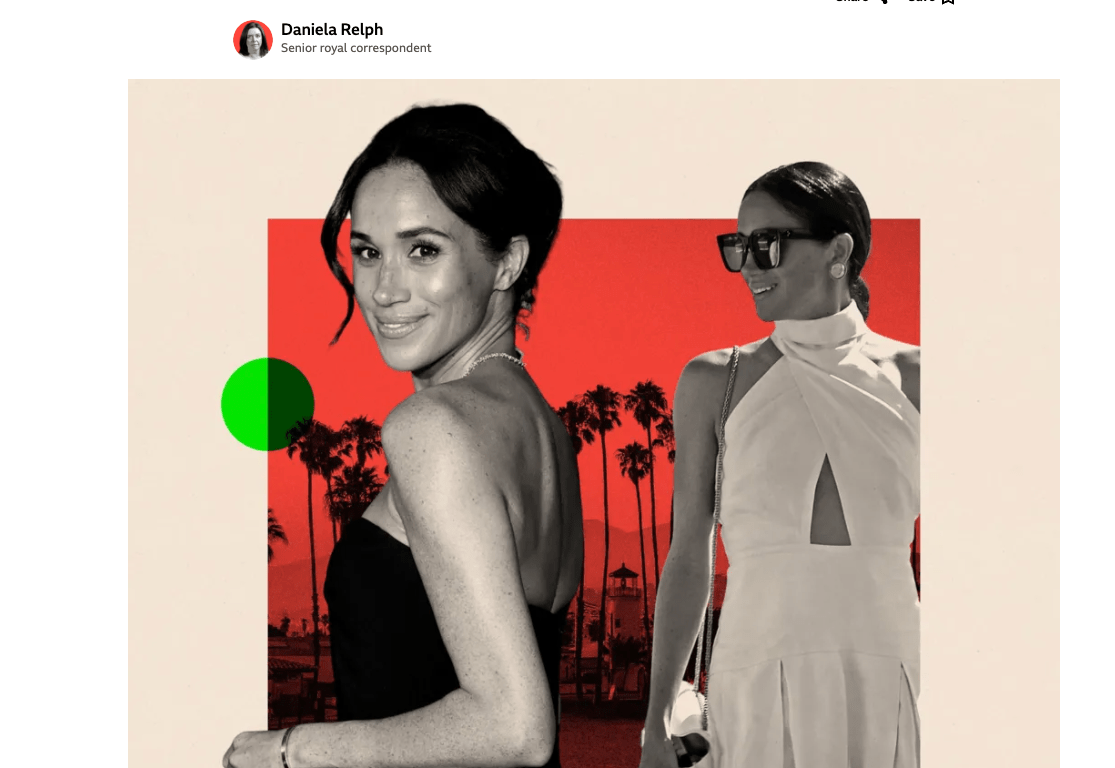
Always Divisive: How the BBC Can’t Quit Its Obsession with Dismantling Meghan Sussex
Let’s stop pretending the BBC is neutral when it comes to Meghan Sussex. Their latest article, “Meghan’s divisiveness may well work to her advantage”, masquerades as balanced commentary while doing exactly what the British press does best: undermine, reframe, and diminish. The piece reeks of passive-aggressive snobbery—heavy on royal nostalgia, light on facts—and it exposes the BBC’s ongoing fixation with policing Meghan’s success rather than reporting on it.
This isn’t journalism. It’s narrative management for a wounded institution. The headline alone is a masterclass in coded contempt. “Divisiveness” is not a descriptor they apply to Prince Andrew. It’s not how they write about Camilla’s rehabilitation tour. It’s reserved for Meghan—a biracial American woman who dared to exit quietly but has somehow remained the centerpiece of every BBC royal dispatch since 2020.
Let’s be clear: With Love, Meghan wasn’t a failure. It was a commercial hit. Netflix confirmed it debuted in the top ten globally. Waitrose reported a 3,200% spike in truffle salt sales. Edible flower orders surged. Sales of Le Creuset cookware in Meghan’s shades flew off shelves. These aren’t flukes—they’re proof of market influence. So what does the BBC focus on? Rotten Tomatoes scores and cherry-picked British reviews calling it “toe-curlingly unlovable.” It’s not a review. It’s a hit job dressed up in lowercase concern.
Meanwhile, hard business metrics go ignored. Meghan’s brand generated $10 million in media impact value (MIV). Loro Piana earned $1 million in MIV from her $1,325 sweater. Zara netted $973,000. Jenni Kayne pulled in nearly half a million. These numbers aren’t just impressive—they’re disruptive. Meghan is not merely surviving post-Monarchy. She’s monetizing it better than the monarchy ever could.
But the BBC doesn’t want that story. It wants the rags-to-riches-gone-rogue fairytale. It wants Meghan’s influence to be accidental, incidental—never strategic. Heaven forbid she know what she’s doing.
They invoke Tina Brown, whose cultural take is frozen in the 1990s, to suggest that Meghan has an “unerring instinct for getting it wrong.” Yet the only thing wrong here is the continued use of Brown as an expert on contemporary relevance. Brown criticized the launch of With Love, Meghan while completely sidestepping the core fact that Meghan is single-handedly driving revenue to the brands she touches—Valencia Key saw an 11,000% sales spike, Club Chainstitch shut down its waitlist, and The Gold Album is on track to become a cult favorite in luxury philanthropy. But sure, let’s keep quoting Brown.
Even the headline’s framing—“divisiveness may well work to her advantage”—is disingenuous. Divisiveness is not something Meghan engineered. It’s something imposed on her by a press ecosystem that needs her more than she needs them. The BBC, like the rest of the legacy outlets, depends on Meghan for traffic, engagement, and outrage—because their own royal coverage is otherwise stale, sycophantic, and irrelevant.
And let’s talk about who’s really being divisive. The BBC published this article days before Meghan’s podcast Confessions of a Female Founder is set to launch. Why? Because undermining a woman’s project before it even drops is how the British press maintains its upper hand. They feign curiosity—“Can she broaden her appeal?”—while subtly reinforcing the narrative that she shouldn’t have any.
What’s particularly galling is how the BBC ignores its own role in shaping public perception. It reports Meghan’s UK approval rating (19%) without accounting for its own tabloid-style reporting, nor its platforming of experts whose entire careers are based on recycling anti-Meghan talking points. The BBC has long since abandoned any pretense of objectivity where Meghan is concerned. It couches criticism in polite language, calls gossip “commentary,” and frames economic success as personal ambition gone rogue.
Contrast that with its treatment of other royals. Prince Harry is now referred to as “a spare to his wife,” as if being supportive of his partner is some sort of emasculating failure. No mention of the fact that he co-founded Sentebale, supported Invictus Games, or has continued to advocate for mental health. His accomplishments vanish when there’s a more salacious narrative to sell: that he is now eclipsed. That he’s been domesticated. That the real story is Meghan—always Meghan.
And make no mistake, Meghan’s influence isn’t divisive. It’s disruptive. That’s why they can’t stand her. She didn’t fade away after Megxit. She pivoted. She built. She launched a product line, a media series, a podcast, and a business partnership with Netflix. Her lifestyle brand is thriving, her audience is global, and her name remains magnetic. That’s not divisiveness. That’s power.
So let’s call the BBC piece what it is: a soft-spoken hit cloaked in the language of thoughtful inquiry. It’s not just unfair—it’s strategic. It continues a long-standing pattern of media institutions pathologizing Meghan’s success while legitimizing their own bias as public interest.
If the BBC truly wants to discuss “divisiveness,” it should start by looking in the mirror.
 celebchai.com