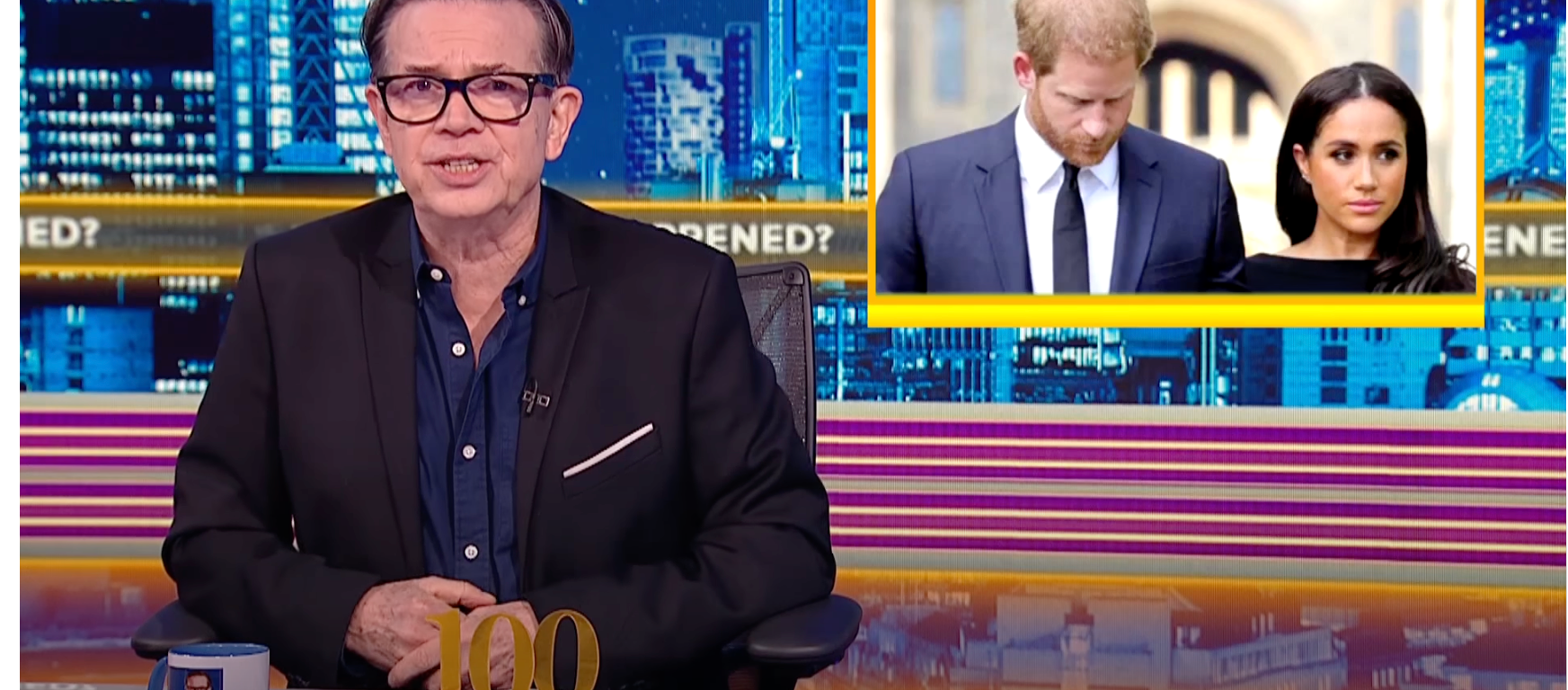
Kevin O’Sullivan’s 100th episode of What Just Happened presents a troubling case study in how media figures can weaponize satire and commentary against public figures, particularly women of color. This analysis examines the rhetoric employed and offers counterpoints to the show’s most problematic claims.

Key Themes in the Broadcast
1. Targeted Criticism of Meghan Markle’s Professional Ventures

The episode systematically undermines Markle’s podcast Confessions of a Female Founder through dismissive language (“dull,” “inauthentic”) rather than substantive critique. The hosts frame her entrepreneurial efforts as illegitimate by suggesting her business success stems solely from her royal marriage, ignoring her established career prior to meeting Prince Harry.
2. Prince Harry’s Security Concerns Trivialized
The show dismisses Harry’s legal battle for UK police protection as stemming from “status anxiety” and sibling rivalry, deliberately overlooking documented security threats and the trauma informing his concern (the circumstances of Princess Diana’s death).

3. Selective Reporting on Allegations
While the show references allegations of racism against Prince Harry by Dr. Sophie Chandauka, it fails to provide adequate context or explore the complexities of these claims, using them primarily as ammunition rather than subjects for thoughtful discussion.

4. Political Commentary with Limited Context
The discussion of the grooming gang scandal investigations frames complex political decisions through an overly simplistic lens, attributing the government’s actions to cynical vote-seeking rather than engaging with the full scope of the issue.
Examining the Treatment of Meghan Markle
Gendered Double Standards
The criticism directed at Markle reveals familiar patterns in how media treats women in public life:
- Her podcast is criticized not for content but for tone—labeled “self-obsessed” when following standard conversational formats
- Her business ventures are deemed “tacky” through criteria not applied to male entrepreneurs
- Her role as interviewer is questioned despite this being common practice across media platforms
The Health Discussion Controversy
The mockery of Markle’s discussion of preeclampsia—a potentially life-threatening pregnancy complication that disproportionately affects women of color—reveals a troubling disregard for women’s health issues. Framing medical disclosures as publicity stunts perpetuates stigma around women’s health discussions.
Coded Language and Racial Undertones
Comments about Montecito being where “people of color do all the serving” attempt to position Markle as hypocritical through racial stereotyping. This continues a pattern where her actions are scrutinized through frameworks rarely applied to her white counterparts.
The Media Strategy at Work
The episode employs several recognizable tactics:
- Humor as Shield: Using comedy to deliver criticism that would appear unacceptable in straight reporting
- Impossible Standards: Creating no-win scenarios where both speaking and silence are used against the subject
- Personalization: Shifting focus from ideas to personal attributes (“boring,” “megalomaniac”)
- Context Removal: Isolating statements from their surrounding context to create misleading impressions
Beyond Personal Attacks
The sustained campaign against Markle reflects broader societal discomfort with women who refuse traditional narratives. When examining media coverage:
- Look beyond the stated criticism to identify underlying patterns
- Question why certain figures attract disproportionate criticism
- Consider what voices and perspectives are missing from the conversation
This episode demonstrates how comedy and commentary can mask genuine hostility, making it all the more important to analyze media critically rather than accepting its framing at face value.
Analysis of Public Commentary on Meghan Markle: YouTube Comment Patterns
https://www.youtube.com/watch?v=TqgGOfOukK4
The comments section from the Kevin O’Sullivan “What Just Happened” video reveals several recurring themes and narrative patterns in the public discourse surrounding Meghan Markle and Prince Harry. This analysis examines these patterns and what they suggest about media influence and audience reception.
Dominant Narrative Themes
1. Skepticism About Health Claims
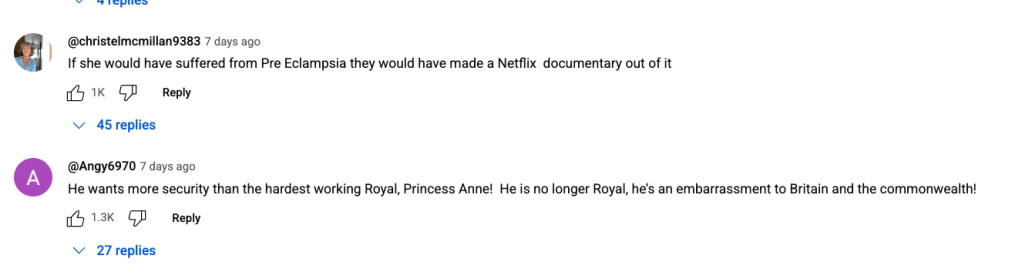
A significant cluster of comments challenges Meghan’s preeclampsia claim, with commenters asserting:
- If true, it would have been announced publicly at the time
- Hospital discharge protocols for preeclampsia contradict her story
- Her sharing this information now is strategically timed rather than authentic
Medical professionals in the comments section (claiming to be nurses and healthcare workers) use their expertise to question the timeline, noting that preeclampsia typically requires extended monitoring and hospitalization.
2. Security Concerns vs. Behavior Inconsistency
Commenters repeatedly highlight what they perceive as contradictions in Harry’s security concerns:
- His willingness to travel to high-risk areas (Colombia, Nigeria, Ukraine) while claiming danger in the UK
- The suggestion that his pursuit of IPP (Internationally Protected Person) status is financially motivated
- References to his military service and security arrangements during that period
3. International Perception
The comments reveal a pattern of self-identification by nationality, with viewers from multiple countries weighing in:
- Australian commenters frequently mention Markle’s low ranking (#57) in popularity polls
- American commenters express concern about potential taxpayer costs
- British commenters focus on legal proceedings and royal family dynamics
- Additional perspectives come from Canada, South Africa, Italy and other nations
4. Credibility and Consistency Issues
Many commenters maintain lists of perceived contradictions in statements made by Meghan, including:
- Claims about prior knowledge of royal family
- Marriage timeline discrepancies
- Travel restrictions while in royal service
- Title and status expectations for their children
Rhetorical Strategies in the Comments
Humor and Mockery
The comment section employs several recurring humorous devices:
- Wordplay on Meghan’s name (“Megalomaniac,” “Me-gain”)
- Reframing business ventures with dismissive terms (“jam spread, not jam”)
- Sarcastic references to self-absorption (“That’s enough about me, what do you think of me?”)
Appeal to Expertise
Many commenters establish authority through:
- Professional credentials (nurses, security experts)
- National identity (“As an Australian…”)
- Direct experience with similar medical conditions
Reinforcement Through Agreement
The comment section demonstrates strong social reinforcement patterns:
- High like counts on negative comments (some exceeding 1,000 likes)
- “Pile-on” replies that affirm and expand initial criticisms
- Limited presence of dissenting or supportive viewpoints
Media Influence Considerations
Cross-Platform Narrative Consistency
The criticisms in these comments align with broader media narratives about Meghan and Harry that appear across multiple platforms:
- Questions about authenticity and motivations
- Focus on perceived inconsistencies
- Skepticism toward their projects and initiatives
Conclusion
This comment section reveals not just opinions about two public figures, but a complex ecosystem of narrative reinforcement where:
- Viewers absorb and repeat media framing
- Communities form around shared criticism
- Nationality becomes a significant identity marker in the discourse
- Perceived inconsistencies take precedence over accomplishments or initiatives
- Medical claims become particularly contested terrain
The intensity and volume of the commentary suggest that Meghan Markle and Prince Harry remain lightning rods for public opinion, with their statements and actions subjected to unusually high levels of scrutiny and skepticism compared to other public figures.
 celebchai.com