May 1, 2025 | Legal Analysis | 5 min read
https://www.courtlistener.com/docket/69510553/186/lively-v-wayfarer-studios-llc/
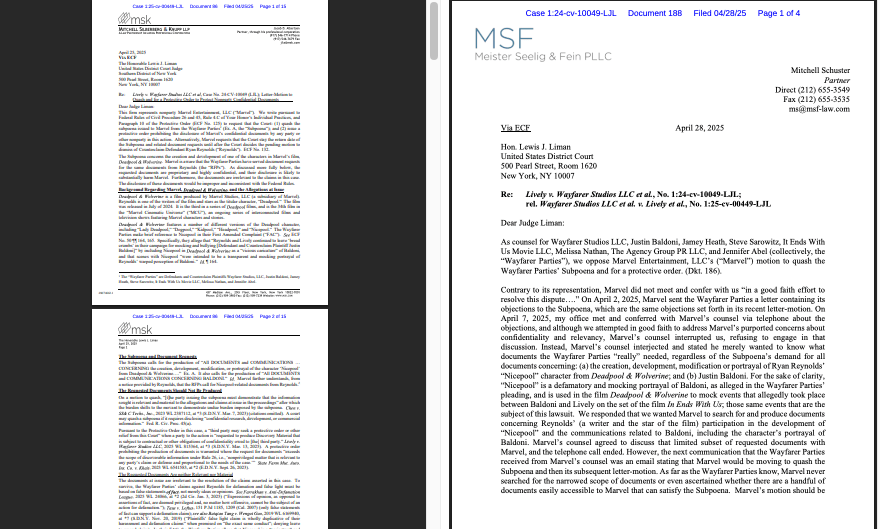
In an interesting development in the high-profile legal battle between Blake Lively and Wayfarer Studios, Marvel has now stepped into the ring, filing a motion to quash a subpoena that would force them to reveal sensitive creative materials related to the character “Nicepool” from the Deadpool franchise.
The Background: Wayfarer vs. Reynolds
For those just catching up, this lawsuit has become one of Hollywood’s most-watched legal battles. Wayfarer Studios, co-founded by Justin Baldoni (who directed Lively in “It Ends With Us”), alleges that Ryan Reynolds (Lively’s husband) created the character “Nicepool” as a mockery of Baldoni.
Wayfarer claims this portrayal is defamatory and now wants Marvel to turn over all documents related to the character’s creation, including communications that reference Baldoni and details about Reynolds’ involvement in developing Nicepool.
Marvel’s Strong Objections
Marvel’s legal team has filed a powerful motion to protect their creative content, making several compelling arguments:
- Parody is Protected Speech: Marvel argues that the portrayal of Nicepool is “clearly a joke” and not “grounded in any factual basis,” making it non-actionable as defamation. They point out that Wayfarer themselves describe Nicepool as a “caricature” and “mocking portrayal” but identify no false statement of fact.
- Protecting Proprietary Creative Content: What makes this case particularly interesting is Marvel’s stance on protecting their creative process. They’re not simply objecting to the burden of production but fighting against what they call a “precedent-setting intrusion into satire.”
- Risk of Public Disclosure: Marvel notes the court has already observed that details of this case “have been closely followed in the media” and that parties have been accused of leaking “private, sensitive, or confidential information.” Even with a protective order, Marvel argues there remains a serious risk their confidential materials would be disclosed.
Wayfarer’s Response: Narrowing the Request
Wayfarer Studios has fired back, claiming Marvel didn’t genuinely attempt to resolve the dispute before filing their motion. They offered to narrow the subpoena to just documents about:
- Ryan Reynolds’ involvement in creating “Nicepool”
- Communications referencing Baldoni
However, Marvel maintains that even this narrowed request would still demand highly sensitive creative files from a global studio with significant reputational and commercial concerns.
The Legal Principles at Stake
This dispute highlights several important legal principles that could impact how creative industries protect their intellectual property:
- Third-Party Discovery: As a non-party to the lawsuit, Marvel enjoys heightened protection against discovery requests. Courts generally require parties to exhaust discovery from each other before burdening third parties.
- IP Protection in Litigation: Marvel argues their franchise thrives on character resurrection, multiverse rewrites, and crossovers—meaning even a supposedly “dead” character could have future commercial sensitivity.
- Parody vs. Defamation: The case touches on the line between protected satirical speech and potentially actionable defamation. Marvel contends that parody—especially in satire-heavy franchises like Deadpool—receives robust First Amendment protection unless there’s a false factual assertion.
What’s Next?
Marvel has requested that if the court declines to quash the subpoena entirely, disclosure should be stayed pending the decision on Reynolds’ motion to dismiss the case altogether. They point out that the court has already granted a similar stay to another defendant, The New York Times.
Reynolds will soon file his reply to Wayfarer’s response. The court’s decision could set an important precedent for how far defamation claims can reach into creative works and how much protection non-parties receive when their creative content becomes entangled in others’ legal disputes.
For Hollywood studios watching this case, the stakes are significant: will their creative processes and internal communications be subject to discovery whenever a character might be perceived as mocking a real person? Or will courts maintain strong protections for satirical content?
We’ll continue monitoring this case as it develops. In the meantime, it serves as a stark reminder of how personal conflicts in Hollywood can quickly escalate into complex legal battles with far-reaching implications for creative freedom and expression.
This blog post is based on publicly available court documents and does not constitute legal advice. All allegations described are claims made in legal filings and have not been proven in court.
 celebchai.com