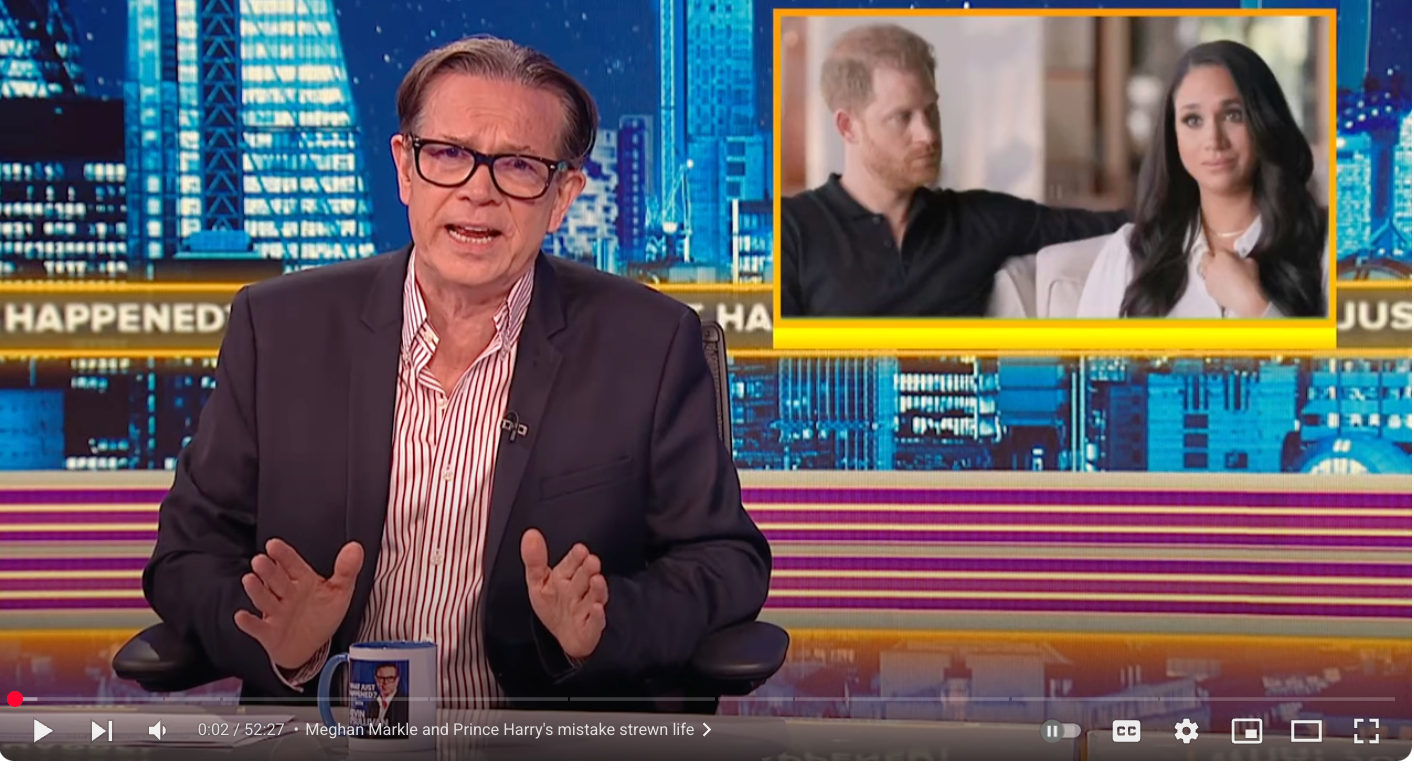
On the seventh anniversary of Meghan Markle and Prince Harry’s 2018 royal wedding, the couple was once again thrust into a media circus—only this time, the glitter of Windsor had been replaced by a storm of scorn, sarcasm, and social media mockery. The British press responded not with reflection or celebration, but with relentless attacks, implying that their marriage is fraying, their children may not exist, and Meghan is both manipulative and delusional. In doing so, these narratives reveal less about the Sussexes and more about the media’s own discomfort with race, power, and gender.
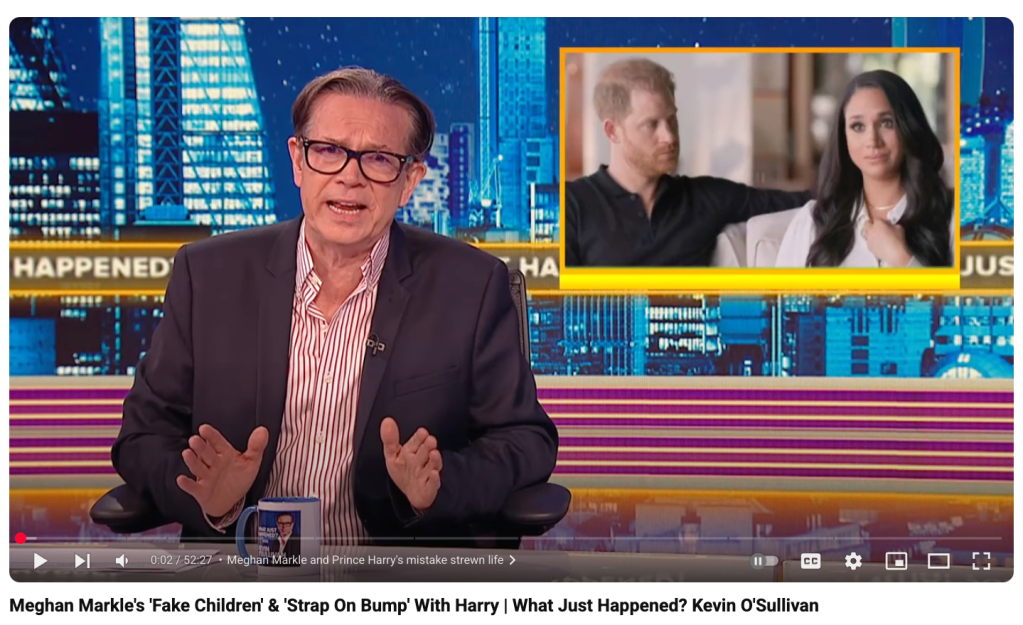
The latest episodes of “What Just Happened” and similar programs featured lengthy segments mocking Meghan’s recent anniversary Instagram post. She was ridiculed for not explicitly mentioning Harry, as if a woman acknowledging her own milestones must be penalized for failing to center her husband. This framing conveniently ignores how often men in the public eye are celebrated for being independent and self-focused.
But the coverage didn’t stop at tone policing. Instead, it veered into longstanding conspiracies: accusations that Meghan wore a fake pregnancy bump, insinuations that her children are fake or adopted in secret, and implications that she deliberately manipulated Harry away from his family for personal gain. These narratives are not just false—they are historically familiar. Accusations of deceit, sexuality, and ambition have long been weaponized against women, especially Black women, who defy expected roles.
Consider the tone: Meghan is called a “narcissist,” a “psychopath,” a “whipping boy master,” and a “woman who might marry a hedge funder next.” Harry is referred to as “hapless,” “emasculated,” and “invisible.” These gendered tropes reduce them both to caricatures. What is rarely interrogated is why a duchess posting anniversary reflections about her journey would provoke such rage in the first place. Why is her financial independence interpreted as desperation? Why is her control over her public image viewed as deceit rather than survival?
Meanwhile, the legitimate media critique—such as questioning the commercial success of Meghan’s lifestyle brand or Harry’s lawsuits against the press—is buried under cruelty and innuendo. Meghan’s $28 honey and $14 cookies might be overpriced, but they are also standard for celebrity-backed ventures. Instead of offering thoughtful analysis of branding strategy or market miscalculations, outlets weaponize failure to fuel personal attacks.
This scrutiny also reveals a selective memory. Prince Andrew’s scandals are often buried in legalese, while Meghan’s family estrangement is dissected as if the public were entitled to judge her personal boundaries. Kate Middleton’s silence during pregnancies was called dignified. Meghan’s is called deceitful. Diana, once dubbed manipulative by the same tabloids, is now invoked as the archetype Meghan supposedly fails to live up to.
What emerges is not honest criticism, but a sustained campaign of cultural punishment. Meghan, an outsider in terms of race, nationality, and class, represents an existential disruption to an institution rooted in tradition and secrecy. Her insistence on doing things differently is met not with curiosity, but with contempt. Harry, in leaving the royal institution, is treated as a man who betrayed duty rather than one who prioritized his mental health and family safety.
The most disturbing part of the coverage is the repeated suggestion that their children might not be real—a narrative with deeply racist undertones, evoking historic denials of Black motherhood and legitimacy. That such speculation can be aired on mainstream platforms in 2025 is a sobering reminder of how far we have not come.
None of this is to say that Meghan and Harry are above critique. But critique must be rooted in evidence and ethics, not clickbait and cruelty. The ongoing obsession with their failure says less about them and more about our unwillingness to let go of myths: that royalty must be silent, that women must be subservient, that race must be invisible.
Seven years on, Meghan and Harry are not the problem. The mirror we hold up to them is.
 celebchai.com
2 thoughts on “Seven Years Later: How Media Contempt and Cultural Backlash Distorted Meghan Markle and Prince Harry’s Story”