When Petty Backfires: How One Hater Accidentally Proved Meghan Markle’s Brand Power
A now-viral tweet from a self-described royal commentator who goes by “Salty Duchess” attempted to mock Meghan Markle’s lifestyle brand As Ever—but instead, it exposed the desperation, ignorance, and deep-seated obsession some people still harbor toward the Duchess of Sussex.
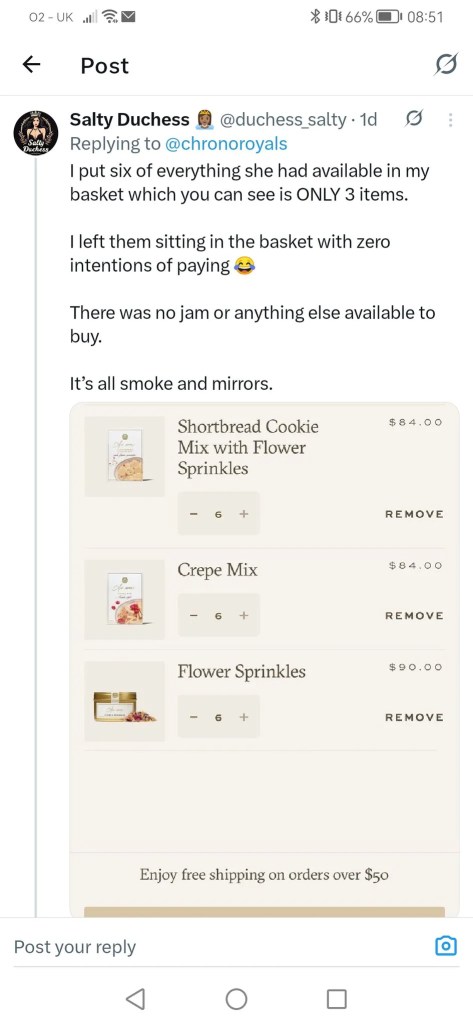
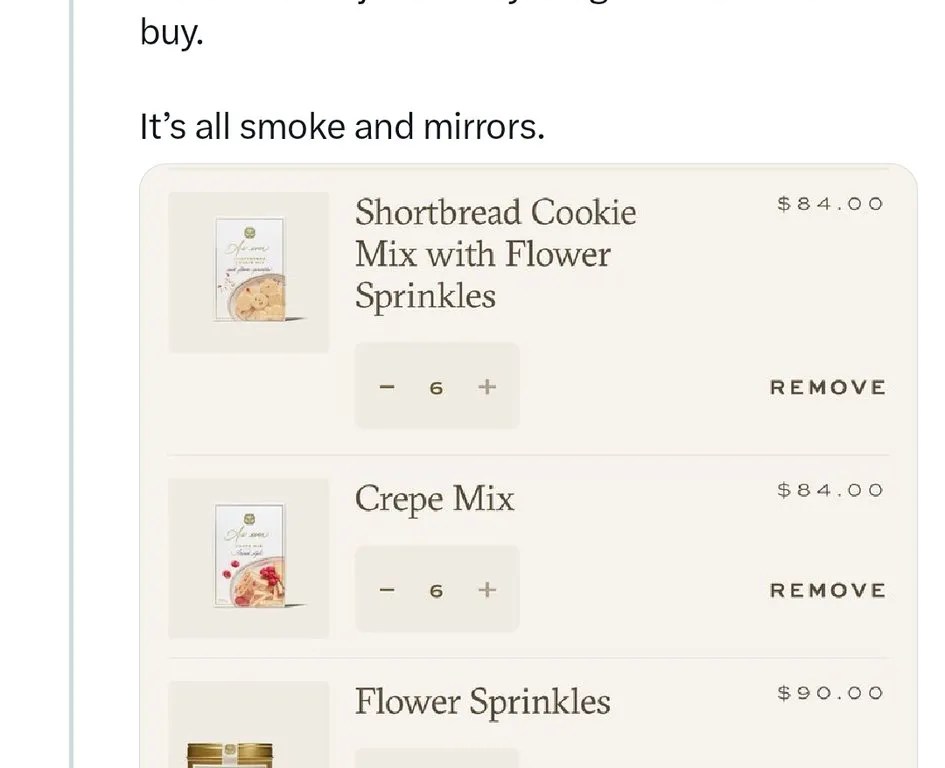
In the tweet, “Salty Duchess” proudly claims to have added six of each available product to her cart and then left it there “with zero intentions of paying,” believing this action would somehow sabotage Meghan’s business. The screenshot reveals only three products: shortbread cookie mix, crepe mix, and flower sprinkles—each priced between $84 and $90. The tweet attempts to imply that the store is lacking inventory and falsely advertises variety. It ends with the smug conclusion: “It’s all smoke and mirrors.”
But within hours, hundreds of users turned the mockery back on her.
Basic E-commerce 101: You Didn’t Do What You Think You Did
The flaw in her logic was immediately exposed: items in an online cart are not reserved. Unlike ticketing platforms or boutique sites that hold inventory for a limited time at checkout, most modern e-commerce platforms do not remove products from stock until payment is completed. While the original poster believed she was depriving someone else of the opportunity to purchase, in reality, she was just wasting her own time.
Multiple commenters pointed out that As Ever products sold out within minutes, with many customers unable to complete their orders in time. One reply summed it up best: “While those sat in her cart, other people were actually purchasing that same inventory.”

Deranged Behavior or Free Advertising?
The incident quickly spiraled into a larger conversation about obsessive anti-Meghan sentiment. Commenters noted the irony: people who claim to dislike Meghan are often the first to track her every move, monitor her product drops, create burner accounts, and even stage performative ‘boycotts’ that no one asked for.
One user wrote: “This is what ‘not having a life’ looks like.” Another added: “She thinks she’s hurting Meghan and Meghan doesn’t even know she did it.”

The Racial Undertone: Diana Was Loved, Meghan Is Loathed—Why?
A sobering thread emerged beneath the laughter: many noted that Princess Diana—who similarly rejected royal norms—was embraced despite her rebelliousness. Meghan, on the other hand, faces daily abuse for asserting boundaries, launching businesses, and existing outside the mold of traditional royalty.
The difference? As one commenter bluntly stated: “If things were reversed and Diana was Meghan’s color, they would have burned her in effigy.”
The vitriol isn’t about shortbread cookies or lifestyle branding. It’s about who is ‘allowed’ to be seen as regal, successful, and admired. Meghan’s crime, it seems, is daring to thrive on her own terms—while being a woman of color.

Meghan’s Power? The Products Still Sold Out
While the original tweet intended to mock the brand’s availability and pricing, it actually confirmed the opposite: As Ever sold out almost instantly. In fact, the tweet served as unpaid marketing. Customers who were able to place orders confirmed that their products shipped within days. Others were excited just to get tracking updates.
The real joke? The person who tried to “clog” the cart didn’t stop anything. They just told thousands of people where to shop.

Conclusion: The Obsession Is the Brand
You don’t need to like Meghan Markle to acknowledge a simple truth: obsessively hate-scrolling through her product launch, creating fake shopping carts, and then bragging about it publicly doesn’t make her look foolish—it makes you look unwell.
As long as Meghan stays focused and lets her work speak for itself, these antics only validate the strength of her brand. And ironically, every attempt to tear her down only fuels the interest, loyalty, and momentum behind her.
 celebchai.com