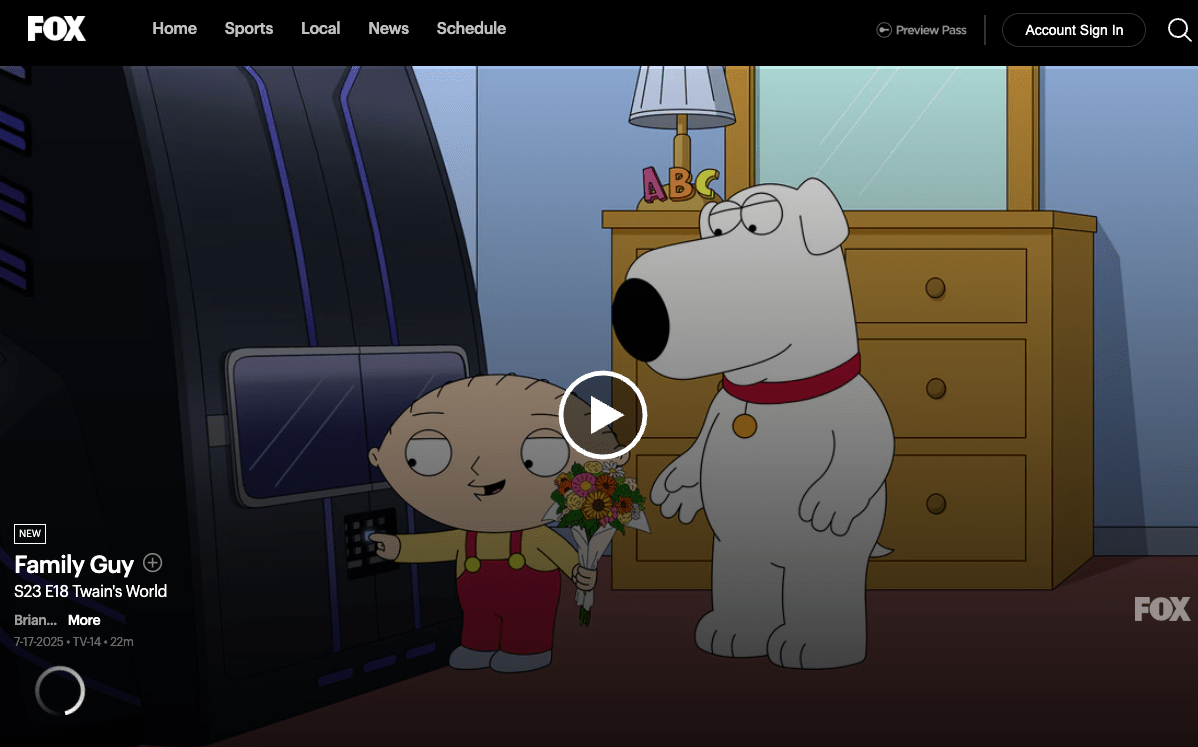
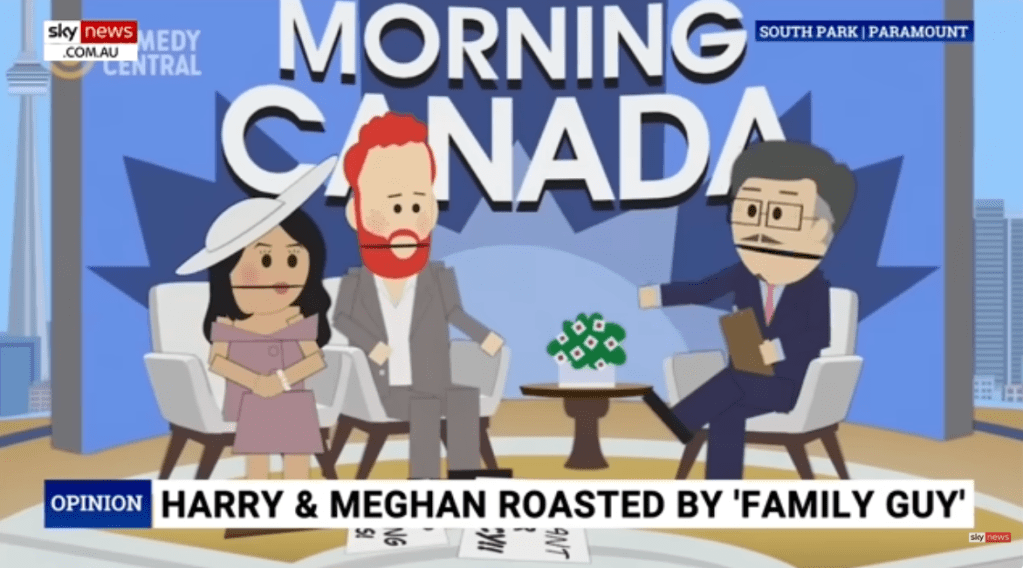
When a television show with just 566,000 viewers decides to mock figures who command global attention and significantly higher approval ratings, it raises an uncomfortable question: who’s really the target of ridicule here? Family Guy’s latest episode comparing Prince Harry and Meghan Markle’s marriage to Hitler and the Crusades says less about the royal couple’s cultural standing and more about a declining animated series desperately grasping for relevance.
The Numbers Don’t Lie
While Family Guy attempts to position Harry and Meghan as figures of public mockery, the reality of their respective cultural influence reveals a more complex dynamic. Although Family Guy ranks #18 in online engagement and claims the #1 spot on Fox’s digital metrics, its traditional television viewership tells a different story—just 566,000 viewers, highlighting the gap between internet buzz and actual audience commitment.
Meanwhile, the targets of their satirical attack maintain significantly higher public profiles. Prince Harry enjoys a 56% approval rating among Americans, while Meghan registers 41% positive sentiment in the US. Even in the UK, where their approval has declined, they remain subjects of intense public interest and media coverage that dwarfs attention paid to animated comedies.
When Online Buzz Doesn’t Equal Real Viewership
The disconnect becomes even more apparent when examining Family Guy’s performance metrics. While the show generates significant online engagement—ranking #18 in digital buzz and #1 on Fox’s online platforms—this digital chatter translates to surprisingly modest actual viewership. The gap between internet discussion and viewer commitment suggests a show that generates more controversy than genuine audience loyalty.
This phenomenon isn’t uncommon in modern media: controversial content often drives online engagement without converting to sustained viewership. Family Guy appears to be mastering the art of digital noise while struggling with the more fundamental challenge of keeping viewers actually watching.
Family Guy’s decision to compare anyone to Hitler reveals not edgy comedy but creative bankruptcy. When your show’s ratings hover near irrelevance, shock value becomes the last refuge of writers who can no longer compete on wit or cultural insight.
The Attention vs. Engagement Paradox
Family Guy’s situation illustrates a modern media paradox: generating online buzz while maintaining relatively modest actual viewership. Despite ranking #18 in digital engagement and leading Fox’s online metrics, the show’s traditional TV audience of 566,000 viewers represents a fraction of the global attention commanded by its targets.
This disparity reveals something telling about contemporary content strategy. The show excels at creating shareable moments and digital discussion, but struggles to convert that online activity into the sustained viewer loyalty that defines true cultural influence. Harry and Meghan, by contrast, generate both digital engagement and direct audience reach through their various platforms and ventures.
Consider the irony: Harry and Meghan’s Netflix deals, podcast ventures, and lifestyle brands reach millions of people worldwide. Their interviews generate international headlines and shape public discourse about monarchy, celebrity, and social issues. Meanwhile, Family Guy struggles to crack the top 100 shows on television.
Cashing In on Higher Profiles
The most telling aspect of Family Guy’s approach isn’t the comedy itself—it’s the calculated strategy of leveraging Harry and Meghan’s significantly higher cultural profile for the show’s own benefit. This represents a recurring pattern where the animated series parasitically feeds off more popular figures’ relevance to generate attention it cannot achieve independently.
The Headlines Are the Product: When Family Guy mocks Harry and Meghan, it doesn’t just create a comedy segment—it creates international news coverage. The episode generates headlines across multiple countries, social media discussions, and widespread media analysis that reaches millions more people than the show’s actual viewership. This is content strategy masquerading as comedy.
Multiple Targeting Strategy: This isn’t Family Guy’s first royal roast—they previously targeted the couple in 2023, following South Park’s successful satirical playbook. The recurring attacks reveal a deliberate content strategy rather than organic humor. When you repeatedly return to the same targets, you’re essentially admitting they’re more interesting than your original material.
Amplification Economics: Family Guy’s online engagement ranking (#18) versus its modest viewership (566,000) demonstrates mastery of controversy-driven attention. By targeting polarizing figures like Harry and Meghan, they guarantee social media sharing, news coverage, and cultural discussion that extends their reach far beyond their core audience. They’re not creating content—they’re creating conversations about other people’s content.
The financial calculation is obvious: Why develop original storylines that might organically capture attention when you can generate maximum buzz by attacking figures who already command global interest? This isn’t satirical commentary—it’s attention arbitrage.
Public Response: Missing the Real Story
The enthusiastic response from some commenters to Family Guy’s royal roast actually highlights the show’s irrelevance rather than Harry and Meghan’s unpopularity. Many of the most supportive comments came from people expressing surprise that Family Guy was still on the air, or admitting they hadn’t watched it in years.
“I still haven’t grown out of Family Guy… absolutely love it,” wrote one commenter, inadvertently highlighting how the show’s core audience consists largely of people clinging to nostalgia rather than engaged contemporary viewers.
The real story isn’t that Harry and Meghan have become figures of ridicule—it’s that a once-successful comedy has fallen so far that its only remaining strategy is to attack figures who command infinitely more cultural attention.
The Comparison Problem
When Family Guy compares the Sussex marriage to historical tragedies, it reveals not just poor taste but poor judgment about cultural positioning. The show is essentially arguing that a royal couple’s personal decisions rank alongside humanity’s darkest chapters—a comparison so disproportionate it undermines any satirical point.
This isn’t clever commentary; it’s a failing show throwing increasingly desperate punches at figures who remain more culturally significant than the program itself.
What This Really Reveals
The Family Guy episode and subsequent public reaction illuminate several uncomfortable truths about contemporary media:
Declining Properties Targeting Successful Ones: When content can’t succeed on its own merits, it often pivots to attacking more successful properties or personalities.
Shock Value as Last Resort: Programs that can no longer compete creatively often resort to increasingly extreme content to generate attention.
Mistaking Controversy for Relevance: Creating negative buzz isn’t the same as cultural significance—and Family Guy’s approach suggests confusion about this distinction.
Punching Up vs. Punching Down: While the show frames this as “punching up” at privileged figures, the actual power dynamic shows a struggling property attacking more successful ones.
The Real Question
Rather than asking why Harry and Meghan deserve satirical treatment, perhaps we should question why a show with half a million viewers thinks it has standing to mock figures who command global attention. When your program ranks #112 on television, targeting people who generate significantly more public interest looks less like satire and more like attempted relevance theft.
Looking Forward: The Sustainability Problem
Family Guy’s approach raises questions about long-term sustainability. A show that increasingly relies on controversy involving more popular figures essentially admits it can no longer generate compelling original content. This strategy may produce temporary spikes in attention, but it doesn’t address the fundamental problem: declining viewership and cultural irrelevance.
Meanwhile, Harry and Meghan continue developing content and brands that reach global audiences. Their approval ratings, while polarized, still represent engagement with millions more people than Family Guy reaches in an entire season.
The Bottom Line
When a struggling television show positions itself as cultural arbiter by attacking figures significantly more popular than itself, the mockery reveals more about the mocker than the target. Family Guy’s latest royal roast isn’t evidence of Harry and Meghan’s fall from grace—it’s evidence of a once-successful comedy’s desperate grasp for attention in an increasingly crowded media landscape.
The real story isn’t that the Sussexes have become comedy targets; it’s that Family Guy has fallen so far that attacking more successful figures has become its primary strategy for remaining visible. In the attention economy, that’s not satirical commentary—it’s an admission of failure.
What do you think? When low-rated shows target high-profile figures, does it constitute legitimate satire or desperate attention-seeking? The comment sections—and the ratings—tell their own story.
 celebchai.com